
TL;DR
University of Florida researchers are studying whether pain self-management and workplace ergonomic changes can help horticulture workers manage back pain. Early findings indicate improvements in pain and the difficulty of work tasks, but the source does not provide detailed results or study methods.
University of Florida researchers are studying whether pain self-management and ergonomic changes can help nursery and landscape workers address back pain while continuing to work. Preliminary findings reported by the study’s lead researcher indicate improvements in pain and the difficulty of work tasks, though detailed results have not been published in the source material.

Get garden gear delivered free with Prime
- Fast, free delivery on millions of items
- Prime Video, Amazon Music and more included
- Member-only deals all year
The study is being conducted by scientists with the Southeastern Coastal Center for Agricultural Health and Safety, including faculty from UF’s College of Public Health and Health Professions and Department of Family, Youth and Community Sciences. Its focus is whether workers can manage pain and reduce physical strain through approaches suited to horticulture jobs.
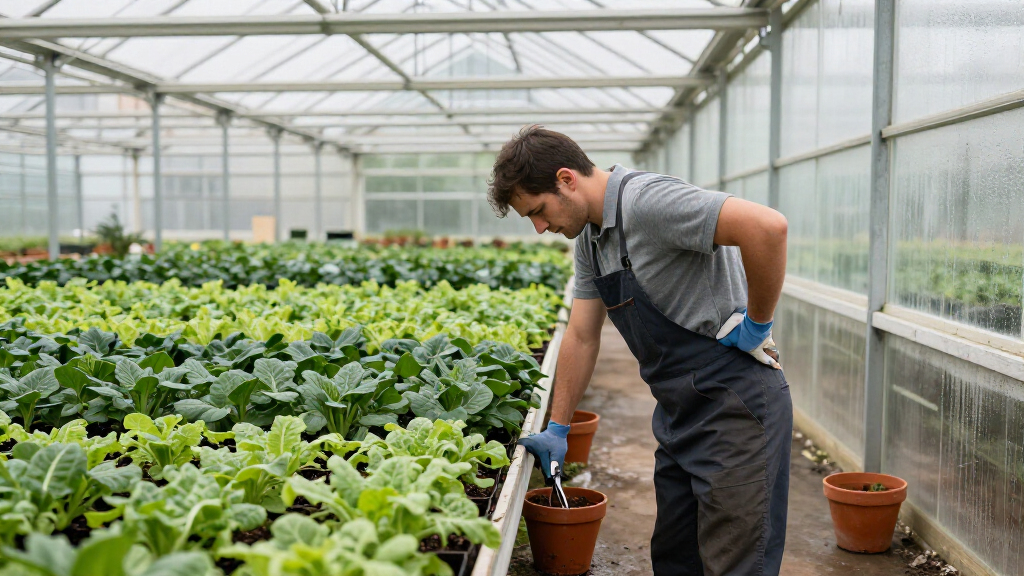
In the first phase, researchers spoke with industry stakeholders, including workers, supervisors and insurance consultants. They reported that many employees continue working despite back pain, which some regard as an expected part of the job. Workers described long hours lifting heavy plants, carrying materials, digging and working in bent or awkward positions.
Lead researcher Kim Dunleavy, a clinical professor of physical therapy at UF, said pain can affect workers who depend on physical labor for income, while also contributing to reduced productivity, loss of experienced employees and injury costs for businesses. She also said pain can lead people to rely on prescription medicines such as opioids and muscle relaxers, or over-the-counter pain relievers, which can have negative health effects.
Reducing Strain Across Nursery Work
Back pain can carry consequences for both employees and employers. Workers may keep working in the short term, but participants described possible longer-term costs such as injuries, burnout and lost productivity. Businesses may also face difficulty retaining experienced staff and costs associated with injuries.
The study’s early interviews suggest that interventions need to fit the industry’s working conditions. Horticulture workloads can vary by season and weather, so strategies must be practical for changing tasks and schedules. Participants said preventing injuries may not require major workplace changes, but they identified a need for more awareness and guidance on pain and injury prevention, areas where formal training is often limited.
Dunleavy said participants valued having options that could help them continue working while reducing pain. If the approaches under study prove useful, they could offer employers and workers ways to address discomfort before it develops into a more serious or lasting problem. The source does not report whether the findings have been evaluated across a large or representative group, so their broader applicability is not yet established.
Products Worth Considering

Rachio 3 Smart Sprinkler Controller, 16-Zone

Greenworks 60V 17-Inch Cordless Push Lawn Mower Kit

VEVOR 24-Pack Polycarbonate Greenhouse Panels, 2 × 4 ft
As an affiliate, we earn on qualifying purchases.
What Workers Told Researchers
The project began by gathering perspectives from people connected to nursery and landscape work. That first phase included workers and supervisors as well as insurance consultants, giving researchers input on both daily job demands and workplace concerns. The source says these stakeholders confirmed that workers often remain on the job while experiencing pain.
Interviewees linked physical strain to tasks common in the trade, including lifting, carrying, digging and prolonged bending. They also described seasonal and weather-related shifts in workload, which may complicate efforts to apply one fixed approach across job sites. The study is intended to examine self-management and ergonomic modifications in light of those conditions.
The report describes preliminary findings as encouraging, citing improvements in work-task difficulty and pain. It does not give numerical results, a comparison group, the number of participants or the length of follow-up. Those details would be needed to assess the size and durability of the reported changes.
““Not only is back pain debilitating for workers who rely on their bodies for income, reduced productivity, losing experienced workers, and overall costs for injury have major consequences for companies.””
— Kim Dunleavy, study lead and clinical professor in UF’s Department of Physical Therapy
Details Behind Early Results
The source does not specify how many workers took part, which interventions each participant received, how pain and task difficulty were measured, or how large the reported improvements were. It also does not state whether results were compared with a control group or how long participants were followed.
It is therefore unclear whether the early improvements will persist, whether they apply across different horticulture jobs and seasons, or which specific strategies contributed to them. The reported findings are preliminary and should not be read as proof that a particular intervention prevents back injuries.
Further Findings on Worker Strategies
The study is examining whether pain self-management and ergonomic modifications can address back pain in horticulture work. The source does not give a date for completion or a timetable for additional results. Further reporting from the researchers would clarify the interventions tested, participant numbers, outcome measures and whether benefits continued over time.
For now, Dunleavy said the preliminary findings point to the value of raising awareness about medication risks, encouraging simple pain-management approaches and tailoring strategies to protect workers before pain becomes more serious or long term.
Key Questions
What is the University of Florida study investigating?
It is examining whether pain self-management and ergonomic modifications can help nursery and landscape workers manage back pain.
What work activities did participants identify as physically demanding?
Workers described lifting heavy plants, carrying materials, digging and working in bent or awkward positions for long periods.
What have researchers reported so far?
Lead researcher Kim Dunleavy described preliminary improvements in pain and work-task difficulty. The source does not provide numerical results or detailed study methods.
Are the findings proof that a specific intervention prevents injury?
No. The findings are preliminary, and the source does not provide enough detail to determine which strategies were effective or whether they prevent injuries over time.
Source: rss