
Air circulation improves outdoor comfort by moving air to remove heat from your skin, making hot days feel cooler. Wind disperses moisture, reducing humidity and preventing stuffy conditions. Proper airflow promotes natural ventilation, which helps keep temperatures steady and prevents stagnant air. By designing spaces that channel breezes and placing seating in breezy spots, you can enhance your outdoor experience. Continue exploring how these natural processes can make your outdoor areas more comfortable all year round.
Key Takeaways
- Wind moves air, removing heat from skin and surfaces, which enhances cooling in outdoor spaces.
- Increased airflow disperses humidity and moisture, preventing discomfort from dampness and stagnation.
- Breezes facilitate evaporation and heat transfer, making hot environments feel cooler and more comfortable.
- Proper air circulation prevents stagnant air, improves air quality, and maintains consistent outdoor temperatures.
- Strategic landscape design channels natural wind patterns, optimizing outdoor comfort through enhanced airflow.
The Role of Wind in Cooling Outdoor Spaces

Wind plays a crucial role in cooling outdoor spaces by moving air and removing heat from your skin. It’s driven by differences in air pressure, creating wind patterns that influence how air flows around you. When high-pressure areas push air toward lower-pressure zones, wind forms, helping to disperse heat and humidity. These wind patterns vary based on geographic features and weather systems, shaping the strength and direction of breezes you experience outdoors. As wind moves across open areas, it accelerates heat loss from your skin, making you feel cooler. Additionally, the presence of high wind speeds can significantly enhance the cooling effect by increasing air circulation. Understanding how air pressure and wind patterns work together helps explain why some breezes feel invigorating while others are gentle or gusty. This natural airflow is essential for improving outdoor comfort, especially during hot weather.
How Airflow Influences Temperature and Humidity

When airflow moves across an outdoor area, it can substantially impact both temperature and humidity levels. This process involves thermal exchange, where moving air absorbs heat from surfaces or cools warm air, helping to lower the overall temperature. As airflow increases, it aids humidity regulation by dispersing moist air, preventing humidity from building up and making the environment feel muggy. You’ll notice that breezes make hot days feel cooler because they accelerate heat loss from your skin and the surrounding surfaces. Additionally, airflow helps evaporate moisture from surfaces and your skin, further reducing humidity and enhancing comfort. Proper air circulation also plays a crucial role in outdoor comfort by ensuring consistent temperature and humidity levels. By promoting thermal exchange and humidity regulation, proper air circulation creates a more pleasant outdoor environment, especially during hot, humid days.
The Science Behind Natural Ventilation

Natural ventilation leverages the movement of outdoor air to improve indoor comfort without relying on mechanical systems. This process relies on thermal buoyancy, where warmer air rises and cooler air sinks, creating a natural airflow that promotes air exchange. As warm air accumulates indoors, it rises and escapes through vents or open windows, drawing in cooler, fresher air from outside. This continuous cycle helps regulate temperature and reduces humidity levels naturally. Your environment benefits from this process because it maintains a steady flow of fresh air, preventing stale, stagnant conditions. Additionally, understanding how AI safety measures are integrated into modern building designs can further enhance the reliability and effectiveness of natural ventilation systems. By understanding how thermal buoyancy drives air exchange, you can better appreciate how natural ventilation creates a healthier, more comfortable outdoor space without the need for artificial cooling or ventilation devices.
Designing Outdoor Areas for Optimal Air Circulation

Effective outdoor area design takes advantage of existing air currents to enhance comfort and freshness. To do this, focus on landscape integration by positioning plants, trees, and structures strategically to channel breezes and create natural airflow paths. Incorporate shading strategies like pergolas, awnings, or lattice panels to block direct sunlight without obstructing airflow, helping maintain cooler temperatures. Use open layouts that avoid clutter and barriers, allowing air to flow freely across the space. Elevate or arrange seating areas in breezy spots identified through observation or wind maps. Additionally, remote hackathons can be a valuable method for gathering diverse ideas and expertise to optimize outdoor airflow strategies in community or commercial projects. By thoughtfully combining landscape features with shading techniques, you optimize natural ventilation, ensuring your outdoor area remains comfortable, fresh, and inviting even on warmer days.
Practical Tips to Enhance Comfort Through Air Movement
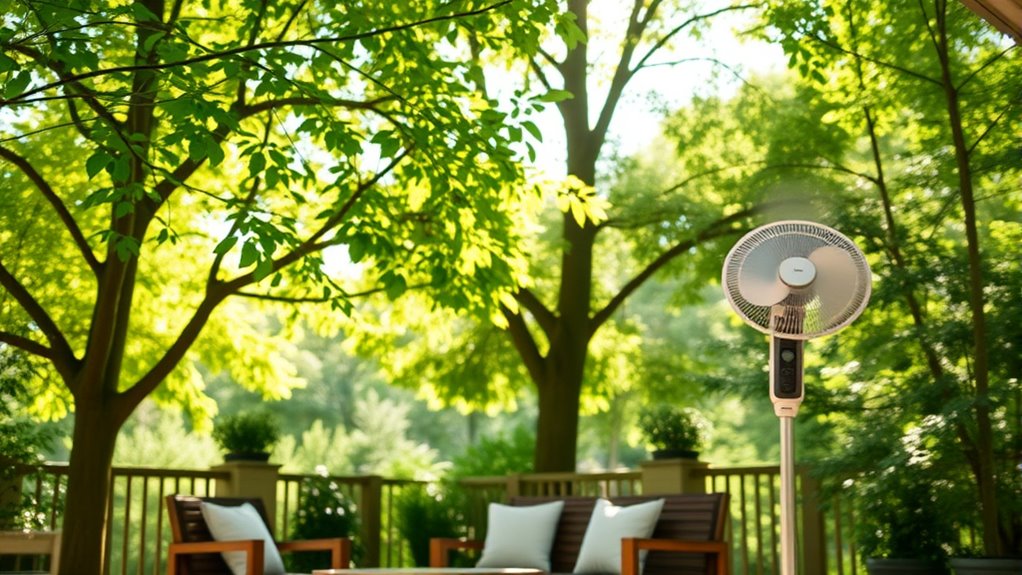
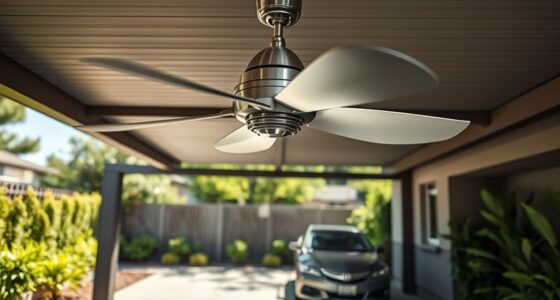
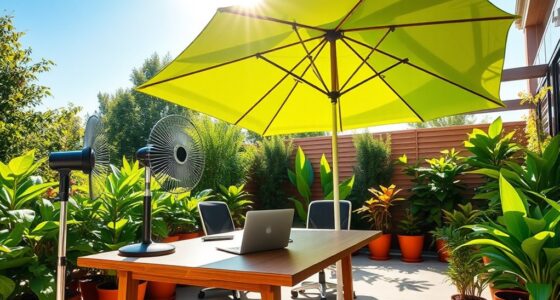
To enhance outdoor comfort through air movement, start by identifying the prevailing breezes in your space and positioning seating and activity areas accordingly. Use natural wind patterns to maximize airflow, which helps with air purification by reducing stagnant, stuffy air. Consider planting shrubs or trees to direct breezes where you want them, creating a natural wind corridor. Installing fans or outdoor vents can also boost air circulation, especially in areas with limited airflow. Keep pathways clear of obstructions to allow wind to flow freely. By understanding and working with wind patterns, you can create a cooler, more comfortable environment that feels fresh and inviting. Proper air movement not only cools but also improves air quality, making outdoor spaces more enjoyable.
Frequently Asked Questions
Can Artificial Fans Replicate Natural Airflow Benefits Outdoors Effectively?
Artificial fans can effectively replicate natural airflow benefits outdoors, but their ventilation efficiency depends on fan technology and placement. Modern fans use high-quality blades and adjustable settings to create a steady breeze, improving comfort. While they may not perfectly mimic natural wind patterns, strategic positioning and high-performance fans can markedly enhance outdoor spaces, providing relief from heat and making the environment more pleasant.
How Does Air Circulation Impact Outdoor Allergy and Pollution Levels?
You might notice that good air circulation reduces outdoor allergy and pollution levels by dispersing airborne allergens and pollutants more effectively. When breeze moves through, it helps dilute pollen, dust, and vehicle emissions, preventing their buildup in one area. This natural airflow decreases the concentration of airborne allergens and enhances pollution dispersion, making outdoor spaces more comfortable and healthier for you. Proper circulation guarantees cleaner, fresher air around you.
What Plants or Landscape Features Naturally Boost Outdoor Air Movement?
You might think plants or landscape features can naturally boost outdoor air movement, and they do. Plant barriers, like hedges or tall grasses, create channels that guide breezes through spaces. Thoughtful landscape design, such as positioning trees and shrubs strategically, enhances airflow and reduces stagnant air. By choosing these features carefully, you can improve outdoor comfort, lower pollution buildup, and encourage fresh air circulation naturally.
Does Increased Airflow Influence Outdoor Noise Levels and Privacy?
You’ll find that increased airflow can help with noise reduction, making your outdoor space quieter and more peaceful. As air moves, it disperses sound waves, lessening the impact of noise sources nearby. This natural circulation also enhances privacy by creating a buffer that blocks direct lines of sight and sound, giving you a more secluded and comfortable environment. So, better airflow directly supports noise reduction and privacy enhancement in your outdoor area.
How Do Seasonal Changes Affect Outdoor Air Circulation Strategies?
Think of seasonal changes like a dance partner shifting steps. You’ll find that seasonal wind patterns and temperature-driven convection vary throughout the year, influencing your outdoor air circulation strategies. In warmer months, harness breezes to cool spaces, while in colder seasons, focus on windbreaks to block chilly drafts. Adjusting your setup based on these seasonal shifts guarantees comfort and efficiency, no matter the time of year.
Conclusion
By understanding how air circulation works, you can transform outdoor spaces into invigorating retreats that breathe life into your surroundings. Think of wind as nature’s gentle hand, sweeping away discomfort and inviting cool breezes to flow freely. When you harness this science, you turn your outdoor area into a haven of comfort, where every gust whispers a promise of relief. Embrace the power of air, and let your outdoor space become a symphony of fresh, invigorating breezes.