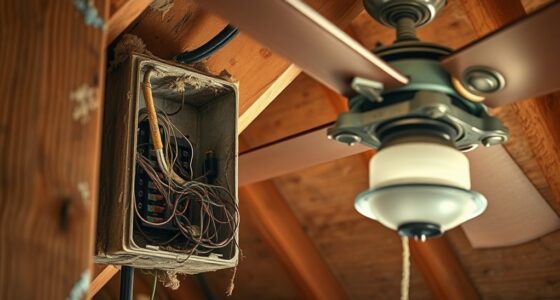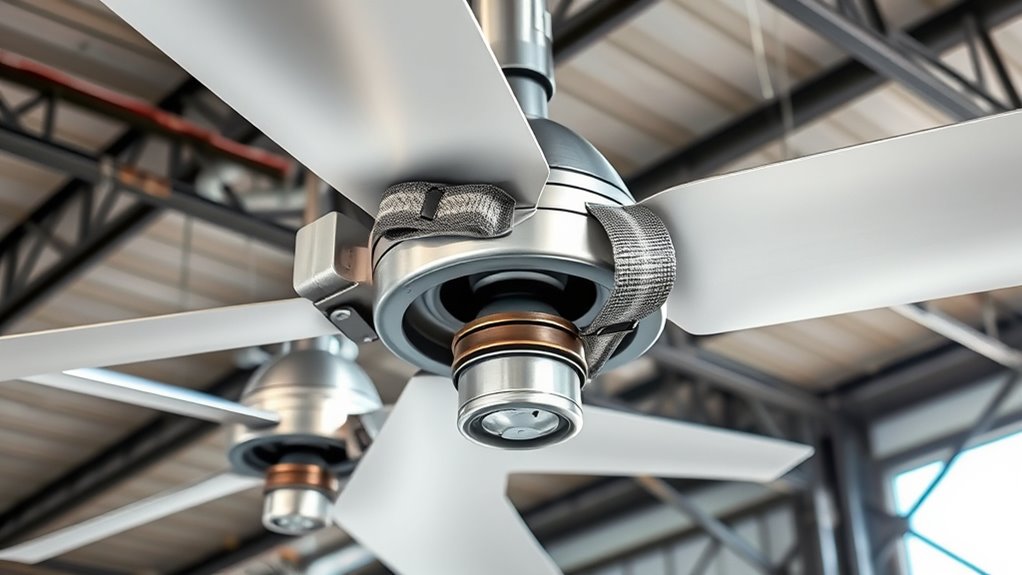

In high-wind zones, securing your fans with earthquake straps is essential to prevent them from becoming projectiles during storms or seismic activity. Choose straps rated for seismic safety and suitable for your fan’s size, then anchor them firmly to wall studs or ceiling joists. Make sure to tighten all connections and regularly inspect the straps for wear. This simple step greatly enhances your safety, and if you continue, you’ll learn more about installing them correctly.
Key Takeaways
- Choose earthquake straps rated for seismic safety and suitable for fan size and weight.
- Install straps around the fan’s base or neck, securing them to wall studs or ceiling joists.
- Space straps evenly (top, middle, bottom) to distribute forces and improve stability.
- Regularly inspect and tighten straps, replacing damaged components immediately.
- In high-wind zones, ensure straps are rated for wind forces to prevent fan displacement during storms.

During an earthquake, unsecured fans can become dangerous projectiles that threaten your safety and damage property. When strong tremors hit, a loose fan can be hurled across a room, potentially striking someone or breaking valuable items. To protect yourself and your home, it’s vital to improve your seismic safety by securing fans properly. One of the most effective methods is using earthquake straps, which are specially designed to hold appliances firmly in place during seismic activity. These straps are simple to install and provide peace of mind, especially in high-wind zones where additional forces can complicate stability.
Secure fans with earthquake straps to prevent dangerous projectiles during seismic activity.
When considering installation tips, focus on making sure the straps are tightly anchored to both the fan and the wall or ceiling. Start by selecting straps that are rated for seismic safety and appropriate for the weight and size of your fans. Before attaching, turn off the power, unplug the fan, and carefully remove any covers if needed. Position the straps around the base or neck of the fan, making sure they’re snug but not overly tight. Secure the straps to wall studs or ceiling joists using appropriate fasteners—preferably screws or bolts designed for your wall material. This ensures the straps won’t pull loose during a quake. If you’re mounting a ceiling fan, attach the straps directly to the mounting bracket and ensure the bracket itself is anchored securely into a ceiling joist, not just drywall.
Another vital installation tip involves spacing the straps evenly around the fan to distribute the force of any movement. Typically, placing straps at the top, middle, and bottom of the fan provides the best stability. After installation, double-check all connections to make sure they’re tight and secure. Regular maintenance is also key; inspect the straps periodically, especially after any seismic activity or high winds, and replace any worn or damaged components immediately. Additionally, selecting straps that are rated for seismic safety can greatly enhance the effectiveness of your securing efforts.
In high-wind zones, the combination of wind pressure and seismic activity increases the risk of appliances becoming hazards if not properly secured. By following these installation tips, you greatly reduce that risk. Properly secured fans won’t only protect your property but also keep you safe from flying debris during an earthquake. Remember, seismic safety isn’t just about strong structures; it’s also about securing everyday items that can turn dangerous during a quake. Using earthquake straps is a simple, effective step you can take today to enhance your safety and peace of mind.
Frequently Asked Questions
How Do Earthquake Straps Differ From Standard Fan Mounts?
Earthquake straps differ from standard fan mounts by focusing on vibration absorption and enhanced stability. They use flexible, durable materials that absorb seismic energy, preventing damage during movement. Installation techniques involve anchoring straps securely around the fan and attaching them to structural elements, ensuring the fan stays in place during vibrations or high winds. Unlike standard mounts, these straps provide extra security, making your fan more resilient in challenging conditions.
Are Earthquake Straps Suitable for Outdoor Fan Installations?
Like a sturdy ship braving stormy seas, earthquake straps can be suitable for outdoor fan installations if they offer outdoor durability and UV resistance. These straps are designed to withstand harsh weather conditions, protecting your fans from wind and sun damage. Make certain you select straps specifically rated for outdoor use, so they maintain their strength and flexibility over time, keeping your fans secure no matter what the weather throws at you.
What Maintenance Is Required for Straps After Installation?
You should perform an inspection routine regularly to guarantee the straps remain secure and in good condition. Look for signs of wear, corrosion, or damage, and tighten any loose straps promptly. If you notice significant deterioration or damage, it’s best to replace the straps immediately to maintain safety and stability. Consistent maintenance helps prevent fan failure during high winds or earthquakes, ensuring your installation stays secure over time.
Can Earthquake Straps Be Used for Ceiling Fans?
Think of earthquake straps as sturdy guardians for your ceiling fan. Yes, you can use them to secure fans, especially for vibration reduction and safety. They help prevent wobbling and protect your decor’s aesthetic by keeping everything in place during storms or earthquakes. Installing these straps guarantees your fan stays put, offering peace of mind and a smooth, quiet operation while maintaining the beauty of your space.
Are There Any Building Code Requirements for These Straps?
Yes, building code requirements often mandate securing ceiling fans with earthquake straps to meet compliance standards, especially in high-wind zones. You should check local codes, as they specify the type and installation methods for straps to guarantee safety. Non-compliance can lead to fines or safety hazards. Always follow manufacturer instructions and consult a professional if you’re unsure about meeting the building code standards for securing your fans properly.
Conclusion
Just as a seasoned sailor ties down his vessel before a storm, securing your fans with earthquake straps prepares your home for nature’s unpredictable tempests. These straps act as sturdy anchors, holding your fans steady amid high winds and shaking tremors. Don’t leave your comfort and safety to chance—think of earthquake straps as the vigilant lighthouse guiding your belongings safely through turbulent weather. With this simple measure, you’re steering your home toward resilience and peace of mind.