
When installing outdoor fans, avoid common mistakes like neglecting to turn off power, using incorrect wiring, and skipping weatherproof components. Make sure your fan is mounted at the right height and clear of obstacles to guarantee proper airflow and safety. Don’t forget to follow the manufacturer’s instructions and use outdoor-rated materials to prevent corrosion. To verify a safe, efficient setup, it’s important to understand all these key points—continue exploring to learn more.
Key Takeaways
- Ensure power is turned off and double-check that the circuit is dead before wiring.
- Mount the fan at the recommended height with sufficient clearance for safe operation.
- Use weatherproof electrical components and protect connections from moisture and corrosion.
- Choose a sturdy, level surface capable of supporting the fan’s weight and prevent blade obstructions.
- Follow manufacturer instructions carefully and consider professional help for electrical or structural concerns.
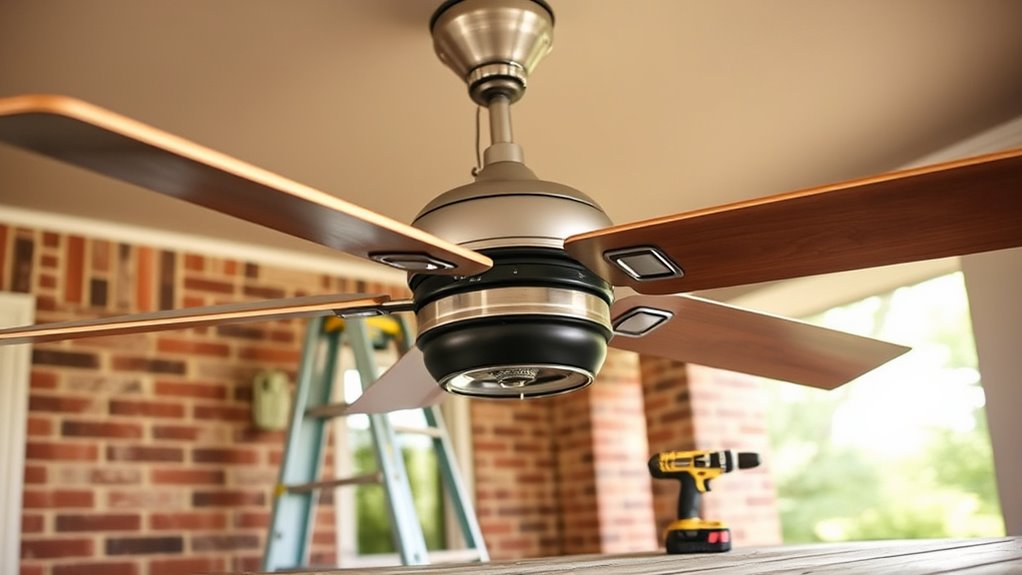
Installing outdoor fans might seem straightforward, but many people make common mistakes that can compromise safety and performance. One of the most critical errors involves electrical wiring. If you don’t follow proper wiring procedures, you risk electrical shorts, shocks, or even fires. Always turn off the power supply before beginning installation, and double-check that the circuit is dead. Use the correct gauge of wire recommended for outdoor use, and ensure all connections are secure and weatherproof. Loose or exposed wiring can lead to dangerous situations, especially in damp or wet conditions typical of outdoor settings. It’s essential to use outdoor-rated electrical components, such as junction boxes and waterproof connectors, to prevent moisture from causing corrosion or short circuits. If you’re unsure about handling electrical wiring safely, consulting a professional electrician is the best way to avoid hazards.
Another common mistake relates to mounting placement. Choosing the wrong location for your outdoor fan can considerably impact its effectiveness and longevity. You want to position the fan in a spot with adequate clearance — typically at least 7-8 feet above the ground and away from obstructions like trees, walls, or furniture that can block airflow. Proper mounting placement also involves selecting a sturdy, weather-resistant surface that can support the weight of the fan. Avoid mounting your fan on weak or uneven surfaces, as this can cause wobbling or even falling. Keep in mind that the fan’s blades should have enough space to rotate freely without hitting nearby objects. Placing the fan too close to walls or ceilings can restrict airflow and diminish cooling efficiency. Proper height and clearance not only optimize airflow but also reduce the risk of accidents or damage caused by wind or storms. Additionally, reviewing the manufacturer’s guidelines for installation instructions can help prevent these mistakes and ensure correct setup.
Many overlook these aspects during installation, but paying attention to electrical wiring and mounting placement ensures your outdoor fan works safely and effectively. Take your time to plan and execute each step carefully, respecting the manufacturer’s instructions. Proper wiring connections, weatherproofing, and strategic placement are fundamental to avoiding costly mistakes later on. Remember, outdoor fans are meant to enhance your comfort, not create hazards or maintenance headaches. When in doubt, don’t hesitate to seek professional help or advice. By doing so, you’ll ensure your outdoor fan provides reliable cooling, adds aesthetic appeal, and remains safe for years to come.
Frequently Asked Questions
Can Outdoor Fans Be Installed Without Professional Help?
You can install outdoor fans yourself, but you need to prioritize DIY safety and understand electrical wiring. Make sure to turn off power at the breaker before starting, follow the manufacturer’s instructions carefully, and use the correct tools. If you’re uncomfortable with electrical wiring or unsure about the process, it’s safer to seek professional help. Proper installation guarantees your outdoor fan operates safely and efficiently, preventing potential hazards.
What Tools Are Essential for Outdoor Fan Installation?
Think of installing your outdoor fan as assembling a puzzle—you’ll need the right pieces. Essential tools include a drill, screwdriver, level, and pliers. Make sure you have your mounting brackets ready to secure the fan firmly. Don’t forget to check your power sources—ensure they’re safely connected and compatible. With these tools and attention to detail, you’ll have your outdoor fan up and running smoothly, ready to cool your outdoor space.
How Do I Choose the Right Height for Installation?
When choosing the right height for your outdoor fan, consider the fan height and mounting height for ideal airflow and safety. Ideally, install the fan so blades are about 8 to 9 feet above the ground, providing good circulation without obstruction. Make sure the fan is mounted high enough to avoid hitting anyone and low enough to effectively cool the area. Proper fan height enhances comfort and prevents potential hazards.
Are There Specific Outdoor Fan Models for Different Climates?
You should look for climate-specific fans when choosing outdoor fan models, as different climates demand different features. For example, coastal areas benefit from corrosion-resistant fans, while humid regions may require models with better airflow. By selecting outdoor fan models designed for your specific climate, you guarantee durability and peak performance. Always check product descriptions for climate suitability, so your outdoor fan functions well and lasts longer in your environment.
How Often Should Outdoor Fans Be Inspected After Installation?
You should inspect your outdoor fan regularly, ideally every few months, to guarantee safe and peak performance. Follow a maintenance schedule and use an inspection checklist to check for loose blades, rust, or wiring issues. Regular inspections help catch problems early, prevent damage, and extend your fan’s lifespan. Always turn off the power before inspecting, and address any issues promptly to keep your outdoor space comfortable and safe.
Conclusion
Think of installing outdoor fans like planting a sturdy tree—you want a strong foundation that will stand the test of time. Avoid rushing, skipping safety checks, or neglecting proper placement, and your fan will thrive instead of falter. When you pay attention to each step like tending a garden, your outdoor space will flourish with cool breezes and lasting comfort. A well-installed fan is your garden’s gentle guardian—trust the process, and enjoy the breeze for years to come.