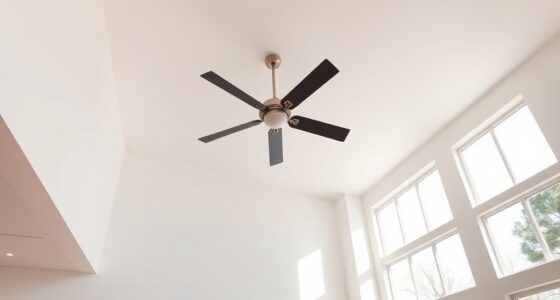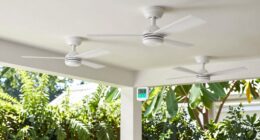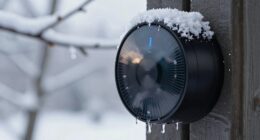
For winter, it’s safest to remove or winterize your gazebo fan to prevent damage from snow, ice, and moisture. Leaving it outdoors can lead to electrical problems, corrosion, or broken blades if snow or ice accumulates. Protect your investment by storing the fan indoors or covering it with weatherproof equipment. Proper winter care extends the lifespan and keeps your outdoor space safe. If you’d like tips on winterizing your gazebo fan effectively, there’s more to contemplate.
Key Takeaways
- Remove or store the fan in harsh winter climates to prevent weather-related damage and ensure safety.
- Use weatherproof covers or shields if you plan to keep the fan installed outdoors during mild winters.
- Regularly check and clear snow or ice buildup on the fan to prevent mechanical damage.
- Ensure electrical components are protected from moisture, snow, and ice to avoid short circuits or fire hazards.
- Consider climate conditions and usage to decide whether leaving the fan operational or removing it is more practical.
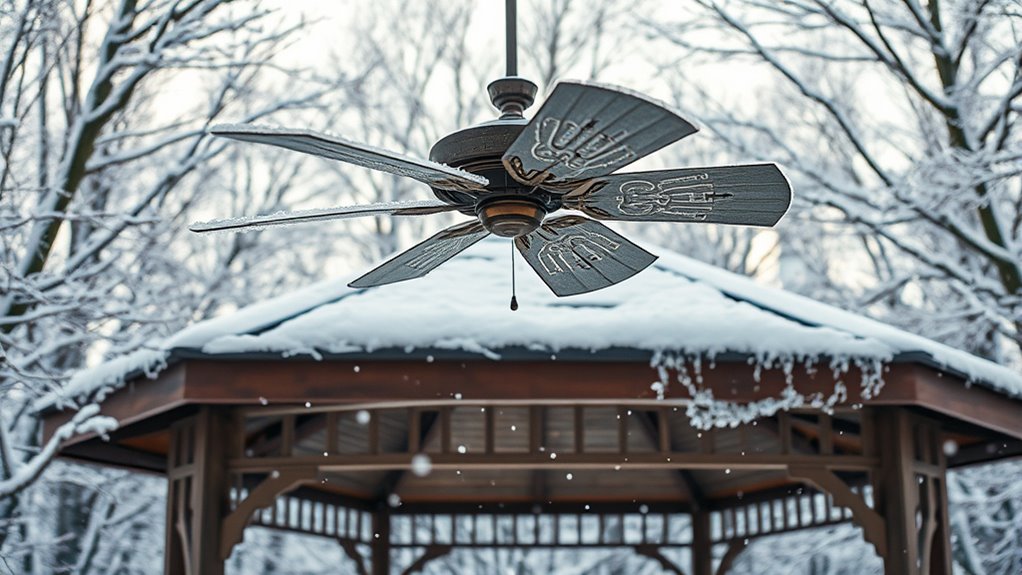
Even though gazebo fans are typically used during warmer months, they can also be valuable in winter when properly configured. This is especially true if your fan has adjustable settings that allow for safe operation outside of peak season. This way, you can continue to benefit from your gazebo fan without sacrificing energy efficiency or safety. First, consider the purpose of your fan in winter. Unlike summer, when a fan helps circulate cool air, in winter, it can be used to evenly distribute warm air from a heater or fireplace. This improves energy efficiency because it prevents hot spots and drafts, ensuring the heat reaches all corners of your gazebo. Instead of running the fan at full speed, you can set it to a low or oscillating mode, reducing power consumption and keeping energy use minimal. This way, you create a cozy environment without increasing your heating costs. However, safety concerns are paramount when operating a fan during colder months. If your fan is electric, make sure it’s rated for outdoor use and protected from moisture and snow. Water and electricity don’t mix well, and exposure to the elements could cause short circuits or fire hazards. Before leaving the fan outside, inspect the wiring and ensure it’s properly grounded, and consider installing weatherproof covers or shields. If you’re unsure about electrical safety, it’s best to disconnect the fan during winter or store it indoors. Additionally, understanding outdoor electrical safety can help prevent accidents and damage. Another safety aspect involves preventing ice buildup or damage caused by snow accumulation. If your fan has blades or components exposed outside, heavy snow or ice can impair its function or cause damage. Remove snow regularly and consider covering your fan with a weatherproof cover when not in use. This not only helps maintain the fan’s longevity but also prevents potential safety hazards like falling ice or debris. Additionally, understanding proper maintenance techniques can help extend the lifespan of your outdoor fan and ensure safe operation throughout the year. It’s also wise to periodically check for weatherproofing integrity to keep your electrical components safe from winter elements. Moreover, assessing energy efficiency options can help you decide whether it’s more practical to remove or leave the fan in place during winter, aligning with your safety and cost-saving goals. If you live in an area with harsh winters, removing or storing the fan might be the safer and more energy-efficient choice. Conversely, if your gazebo is sheltered and you use a safe, weatherproof fan, leaving it in place can help extend the usability of your outdoor space year-round. Regular maintenance and inspection can further ensure the fan’s safe operation during winter months.
Frequently Asked Questions
Can I Leave My Gazebo Fan Outside During Snowstorms?
You shouldn’t leave your gazebo fan outside during snowstorms. Snow and moisture can damage the fan’s motor and blades, especially if it’s not rated for outdoor weather. Instead, consider indoor cooling options or remove and store the fan during winter. When you do fan installation, pick weatherproof models designed for outdoor use. Protecting your fan guarantees it stays in good shape for next season and avoids unnecessary repairs.
Will Freezing Temperatures Damage My Gazebo Fan?
Freezing temperatures can be as tough on your gazebo fan as a winter storm. They can damage the fan motor and cause blade corrosion. When temperatures drop below freezing, the moisture can freeze inside the motor, leading to potential failure. To protect your fan, it’s best to take it down and store it indoors during winter, preventing ice from causing costly damage and keeping your equipment in top shape for spring.
How Do I Store My Gazebo Fan Properly in Winter?
To store your gazebo fan properly in winter, start by turning it off and cleaning it thoroughly. Remove the blades and motor, then store them in a dry, protected area. Follow fan safety tips by keeping it away from moisture and extreme temperatures. Use a cover or plastic wrap for extra protection. These storage tips help prevent damage and make sure your fan stays in good shape for next season.
Is It Safe to Run the Fan in Cold Weather?
Running your gazebo fan in cold weather isn’t safe, as it can cause damage and pose safety risks. While it might seem energy-efficient to keep it on, the safety considerations outweigh the benefits. The fan’s motor and blades aren’t designed for low temperatures, which could lead to malfunction or fire hazards. For your safety and energy efficiency, it’s best to turn off and store your fan during winter.
What Maintenance Is Needed for Winterizing My Gazebo Fan?
You should clean your gazebo fan thoroughly, removing dust and debris, and check for any damaged parts. Apply outdoor protection by covering the fan or storing it indoors if possible, especially in harsh weather. Guarantee electrical safety by unplugging the fan and inspecting cords for wear. Lubricate moving parts if needed, and verify that all components are secure before winter. Proper maintenance keeps your fan in good shape for next season.
Conclusion
If you leave your gazebo fan up for winter, think of it like leaving a boat in the water during a storm — it’s more vulnerable to damage. I once left my old fan outside, and come spring, it was corroded and useless. Taking it down now is like packing away your summer clothes — it protects your investment and keeps everything in good shape. So, unless you plan to brave the cold, it’s best to store your fan for winter.