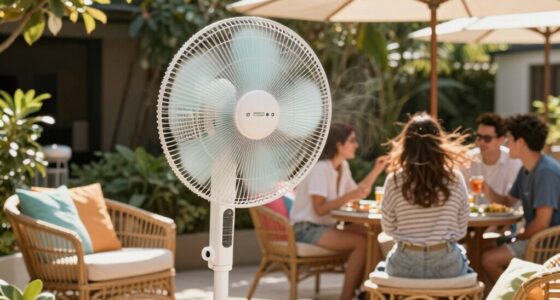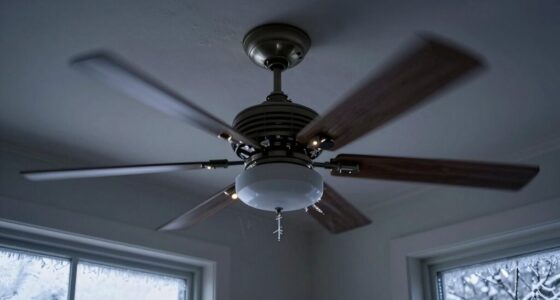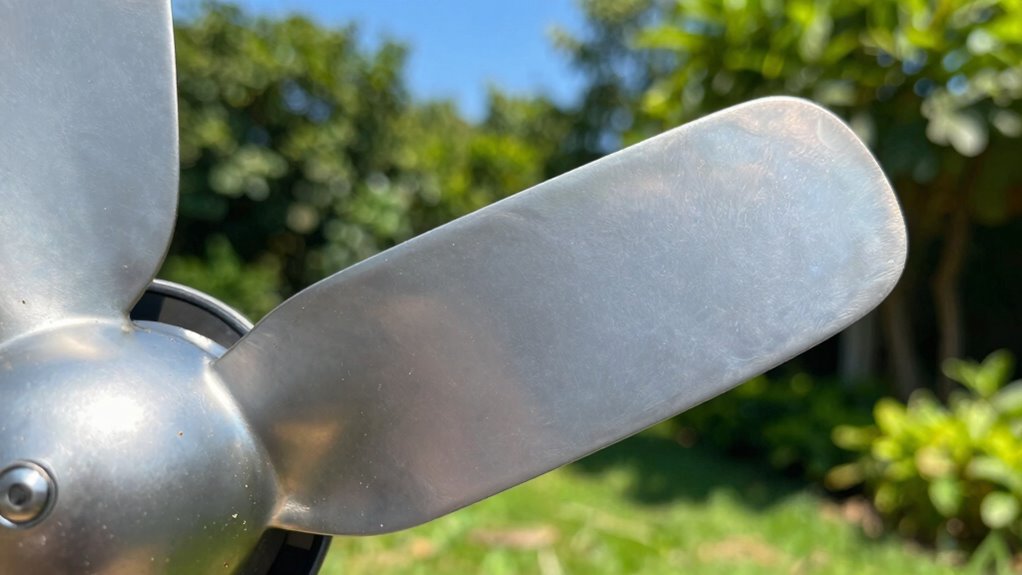
When you choose fan blade finishes for outdoor use, durability matters more because they face exposure to moisture, sunlight, dirt, and other harsh elements. These environments can cause finishes to fade, corrode, or chip quickly if not protected properly. Indoor finishes don’t face such challenges, so they focus more on style and ease of maintenance. By understanding these differences, you can select the right finish that offers both longevity and aesthetics. Keep exploring to find out how to make the best choice.

Get garden gear delivered free with Prime
- Fast, free delivery on millions of items
- Prime Video, Amazon Music and more included
- Member-only deals all year
Key Takeaways
- Outdoor fan blades face moisture, sunlight, and dirt, requiring durable finishes to resist corrosion and fading.
- Protective outdoor coatings extend fan lifespan by preventing damage from harsh environmental elements.
- Indoor fan blades are less exposed, so aesthetic finishes are prioritized over environmental resistance.
- Outdoor finishes are designed for practicality, ensuring minimal maintenance despite exposure to weather conditions.
- The durability of outdoor fan blade finishes is critical to maintaining performance and appearance over time.

Choosing the right fan blade finish can make a significant difference in both the appearance and durability of your ceiling fan, especially when installing indoors versus outdoors. When you’re selecting a finish, it’s crucial to factor in how it will hold up under environmental conditions and how it will complement your space’s aesthetic appeal. Outdoors, your fan is exposed to elements like moisture, sunlight, and dirt, which can quickly wear down finishes that aren’t designed for such conditions. For outdoor settings, finishes like oil-rubbed bronze, weathered bronze, or powder-coated options are better suited because they resist corrosion and fading. These finishes guarantee your fan remains visually appealing over time and reduce the frequency of maintenance required to keep it looking fresh.
These protective coatings are often formulated to withstand environmental wear, making them more practical for outdoor use. Indoor, the stakes are a bit different. You generally don’t have to worry about moisture or UV damage, so your focus shifts more toward achieving a specific style or coordinating with your interior design. Finishes like brushed nickel, white, or matte black can enhance the aesthetic appeal of your indoor space without the need for heavy-duty protective coatings. Since indoor fans are less exposed to harsh elements, their finishes tend to require less maintenance, meaning you won’t have to clean or refinish them as often. This can save you time and effort while keeping your fan looking pristine for years.
However, even indoors, some finishes can still benefit from regular cleaning to maintain their luster. The key difference is that outdoor finishes often need to be more durable and resistant to environmental damage, which can come with a trade-off in style options. For instance, a glossy or polished finish might look stunning indoors but could be more prone to scratches or fingerprints, requiring more frequent cleaning. Conversely, outdoor finishes are typically designed to withstand these issues, making them more practical for rougher conditions even if they might not match every indoor decor style. It’s important to consider finish durability when choosing between indoor and outdoor options to ensure longevity and style.
Products Worth Considering

Orbit B-hyve Smart Indoor/Outdoor 12-Zone Sprinkler Controller

Orbit B-hyve XR 16-Zone Indoor/Outdoor Smart Sprinkler Controller

Solo Stove 52.6 Fire Pit Surround – Protective Barrier & Outdoor Tabletop
As an affiliate, we earn on qualifying purchases.
Frequently Asked Questions
How Does Weather Affect Outdoor Fan Blade Finishes Over Time?
Weather considerably affects outdoor fan blade finishes over time because harsh conditions can cause deterioration. You should choose finish types with high weather resistance, like powder coating or marine-grade paints, to protect against rain, sun, and humidity. These finishes prevent rust and fading, ensuring your fan maintains its appearance and functionality longer. Regular maintenance and choosing durable finishes are key to preserving outdoor fan blades amid varying weather conditions.
Can Outdoor Fan Blade Finishes Be Used Indoors Without Issues?
Using outdoor fan blade finishes indoors is like fitting a square peg into a round hole—you might get by, but it won’t match the environment perfectly. Outdoor finishes are designed to withstand weather, so they can sometimes look out of place indoors, impacting your aesthetics. If the finish matches your decor and you like the style, it can work, but generally, indoor finishes offer a cleaner, more cohesive look for your space.
What Maintenance Is Needed for Outdoor Fan Blades’ Finish?
To maintain outdoor fan blades’ finish, regularly clean them with mild soap and water to prevent dirt buildup that can affect blade aesthetics. Inspect the finish for signs of chipping or corrosion, and touch up as needed to prolong finish longevity. Protect the blades from harsh weather by covering or relocating the fan during storms, ensuring they stay attractive and durable over time.
Are Certain Finishes Better for Humid Outdoor Environments?
You want the best outdoor fan blade finish types that offer superior environmental resistance in humid conditions. Opt for powder-coated or marine-grade finishes, as they resist corrosion, moisture, and rust better than standard paints. These finishes create a tough barrier against humidity, rain, and UV rays. By choosing finishes designed for outdoor use, you guarantee your fan blades stay beautiful and durable, even in the harshest weather, giving you peace of mind.
How Do Finishes Impact Fan Blade Durability Outdoors?
Finish impacts outdoor fan blade durability by protecting against corrosion and weather damage. You should choose finishes that resist moisture and UV rays, ensuring longevity. Proper finish application techniques, like spraying or coating, create a smooth, even layer that enhances fan blade aesthetics while providing a durable shield. This helps prevent rust and deterioration, especially in humid outdoor environments, keeping your fan looking good and functioning well over time.
Conclusion
So, while a sleek finish might impress indoors, outdoors, it’s the durability that truly counts. Think of it like a delicate piece of art versus rugged outdoor gear—you wouldn’t leave your artwork out in the storm. Your fan blades face harsher elements outside, demanding a tougher finish to prevent rust and corrosion. Remember, what looks good inside might not withstand the outdoors’ challenges. Choose wisely, and your fan will perform beautifully, rain or shine.