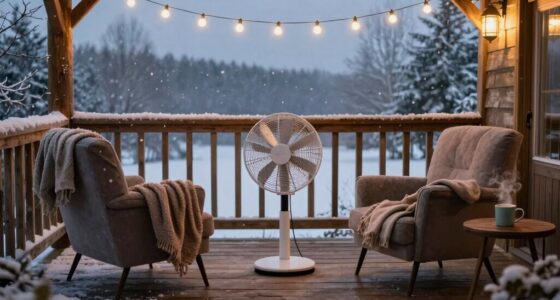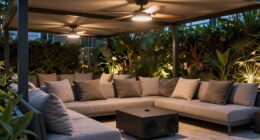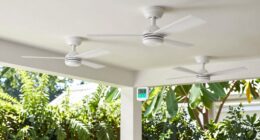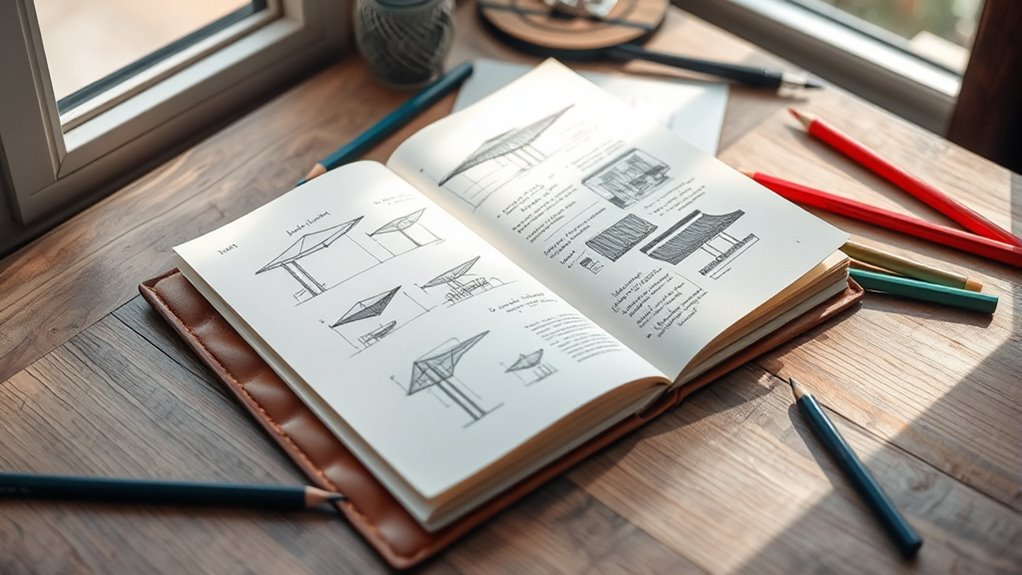

Inside a designer’s notebook, sketching outdoor cooling concepts helps you quickly explore new ideas that blend function and style. You can visualize airflow strategies, experiment with sustainable materials, and develop structures like louvers or green walls. These sketches allow you to compare approaches and refine designs for better natural cooling and aesthetics. As you continue, you’ll uncover how to integrate elements seamlessly for comfortable, eco-friendly outdoor spaces that respond to climate and user needs.
Key Takeaways
- Sketching outdoor cooling concepts explores innovative designs that integrate ventilation, materials, and aesthetics for natural cooling solutions.
- Designers use sketches to experiment with elements like louvers, green walls, and water features to enhance airflow and comfort.
- Visualizations help assess the interaction of sustainable materials with ventilation strategies for eco-friendly outdoor environments.
- Rapid sketch iterations enable comparison of different cooling approaches, optimizing functionality and visual appeal.
- Notebook sketches document the design process, guiding sustainable, effective, and aesthetically pleasing outdoor cooling solutions.
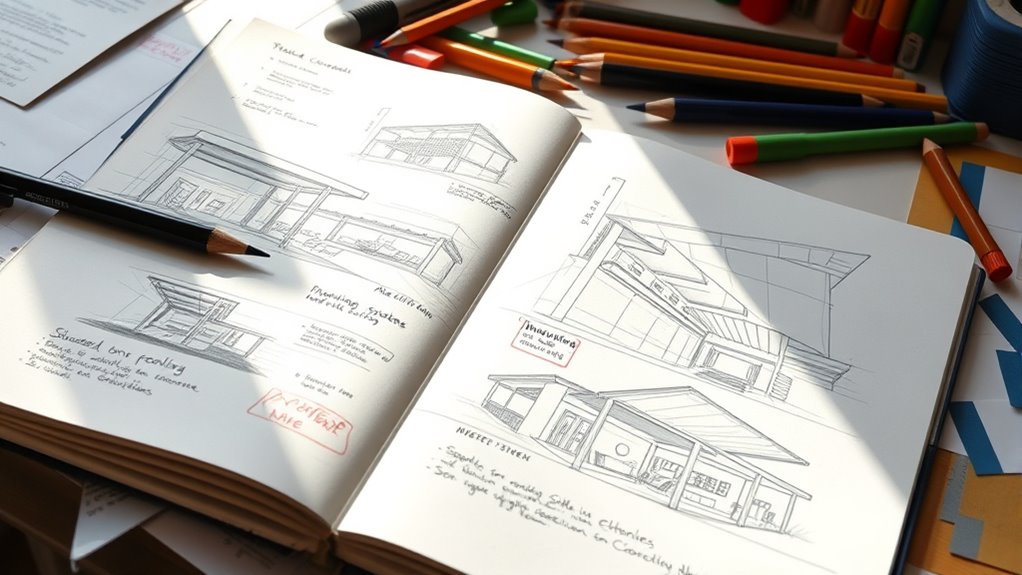
Sketching outdoor cooling concepts allows designers to quickly explore innovative solutions that blend functionality with aesthetics. When you begin to draft these ideas, you’re not just visualizing how a space will feel but also how it will perform in real-world conditions. Ventilation strategies become central to this process, guiding you to design structures and shading devices that optimize airflow and natural cooling. Incorporating effective ventilation means considering the direction of prevailing winds, creating open yet sheltered spaces, and integrating adjustable features that respond to seasonal changes. Your sketches help you experiment with elements like louvers, perforated screens, and open-air pavilions that promote continuous air circulation, reducing reliance on energy-consuming mechanical systems.
Sketching outdoor cooling ideas enhances airflow, aesthetics, and sustainability for innovative, eco-friendly spaces.
Sustainable materials play a pivotal role in your outdoor cooling concepts, aligning your designs with eco-friendly principles. When you sketch with sustainability in mind, you prioritize materials that are renewable, locally sourced, or have low embodied energy. Imagine using bamboo, recycled metals, or reclaimed wood to craft shading structures that not only look appealing but also minimize environmental impact. Your sketches allow you to evaluate how these materials will age outdoors, how they can be maintained, and how they contribute to the overall aesthetic. By exploring different textures, colors, and construction techniques, you can create spaces that feel natural, inviting, and environmentally responsible.
As you work through your sketches, you’ll experiment with how different materials and ventilation strategies interact. For instance, you might draw a pergola with adjustable slats made from sustainably harvested wood, designed to catch breezes and direct airflow. Or you could explore the placement of green walls or water features that enhance evaporative cooling, all while using eco-conscious materials. Your sketches serve as a testing ground for combining these elements seamlessly, allowing you to refine the balance between comfort, sustainability, and visual appeal.
Additionally, understanding the role of Efficient General Ledger Coding can streamline project documentation and resource tracking, making your design process more organized and compliant. In this process, you’re not just creating static images but envisioning dynamic outdoor environments that respond to climate and user needs. Sketching outdoor cooling concepts enables you to iterate quickly, compare different approaches, and develop innovative solutions that are both functional and beautiful. By emphasizing ventilation strategies and sustainable materials, you’re ensuring your designs are forward-thinking, environmentally sound, and capable of providing long-lasting comfort. It’s this hands-on, experimental phase that ultimately leads to outdoor spaces that are as sustainable as they are inspiring.
Frequently Asked Questions
What Materials Are Most Effective for Outdoor Cooling Structures?
When choosing materials for outdoor cooling structures, you should consider material durability and cost. Durable options like aluminum, treated wood, or certain plastics resist weather and last longer. These materials may have higher upfront costs but save money over time. Cheaper options might not withstand outdoor conditions, leading to frequent replacements. Balance durability and cost to select materials that provide effective, long-lasting cooling while fitting your budget.
How Do Weather Conditions Influence Cooling Design Choices?
Imagine weather as a mischievous artist shaping your cooling design. You must consider climate adaptability—hot, humid, or windy conditions—and how wind considerations can enhance or hinder your efforts. When designing, adapt materials and structures to weather patterns, maximizing natural cooling. By understanding how weather influences outdoor spaces, you craft solutions that are resilient, efficient, and perfectly suited to the environment, turning nature’s whims into your greatest ally.
Can These Sketches Be Adapted for Small-Scale Residential Projects?
You can adapt these sketches for small-scale residential projects by focusing on landscape integration and effective shading techniques. Incorporate natural elements like trees and shrubs to enhance cooling and create a seamless outdoor experience. Simplify the design to suit smaller spaces, ensuring shading structures align with the home’s aesthetic. This approach maximizes comfort while maintaining functionality, making your outdoor areas more enjoyable and energy-efficient.
What Are the Sustainable Options for Outdoor Cooling Solutions?
You can explore sustainable outdoor cooling options by incorporating green technologies and renewable resources. Consider installing solar-powered misting systems or shade structures made from recycled materials. Green technologies like evaporative coolers that use minimal water also help reduce environmental impact. Using renewable resources, such as solar panels, not only cools outdoor spaces but also promotes energy efficiency. These solutions make your outdoor areas eco-friendly, reducing reliance on traditional energy sources.
How Do You Prioritize Functionality Versus Aesthetics in Sketches?
Think of your sketches as a symphony, where functionality is the steady rhythm and aesthetics are the lively melody. You prioritize by establishing a clear visual hierarchy, ensuring the essential cooling features stand out, like a soloist. Use color harmony to blend form and function seamlessly, creating designs that are both practical and pleasing. Balance these elements so your sketches sing with purpose and visual appeal, mesmerizing both mind and eye.
Conclusion
Remember, a picture is worth a thousand words. As you sketch outdoor cooling concepts, trust your creativity and keep experimenting. Each line and idea brings you closer to innovative solutions that can transform outdoor spaces. Never be afraid to think outside the box—sometimes, the best ideas come from unexpected sketches. Keep refining your concepts, and you’ll create designs that truly cool and inspire. After all, Rome wasn’t built in a day, and great ideas take time to develop.