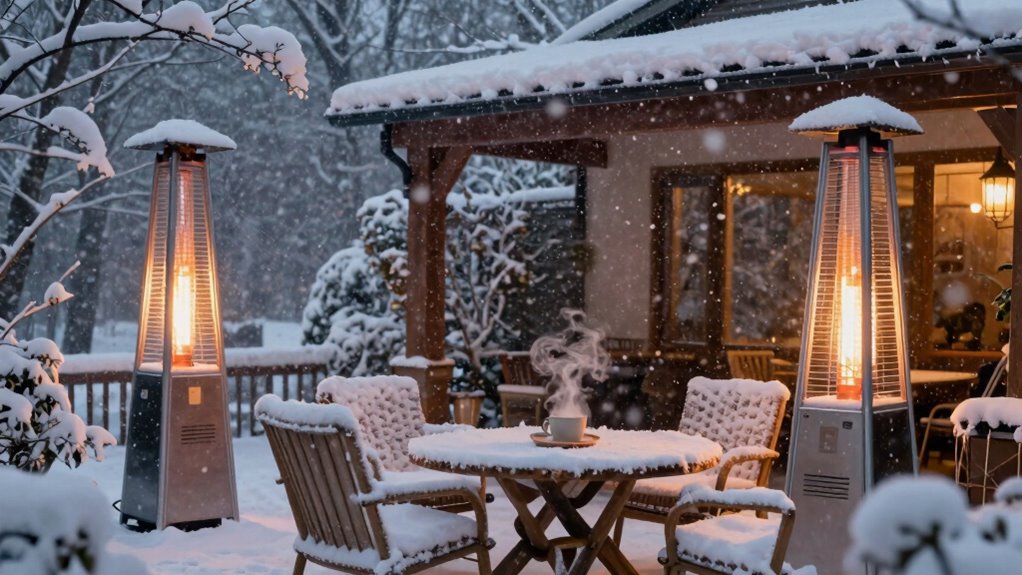

During a winter storm, you monitor the weather forecast early, ensuring outdoor heaters are working and clear of debris. You inspect connections, clean vents, and test the heating system to confirm it’s producing enough heat. You cover furniture, secure outdoor cords, and clear pathways of snow and ice for safety. Throughout the storm, you watch for issues, troubleshoot as needed, and after, re-inspect and clean equipment. Keep going for more tips to keep your patio safe and cozy.
Key Takeaways
- Conduct early weather forecasts and prepare outdoor heating equipment for snow and ice conditions.
- Inspect and test heating systems to ensure proper operation before the storm arrives.
- Cover furniture, secure outdoor accessories, and clear pathways to maintain safety and prevent damage.
- Monitor weather and system performance throughout the storm, troubleshooting issues as needed.
- After the storm, re-inspect equipment, clear debris, and ensure safety for continued outdoor use.
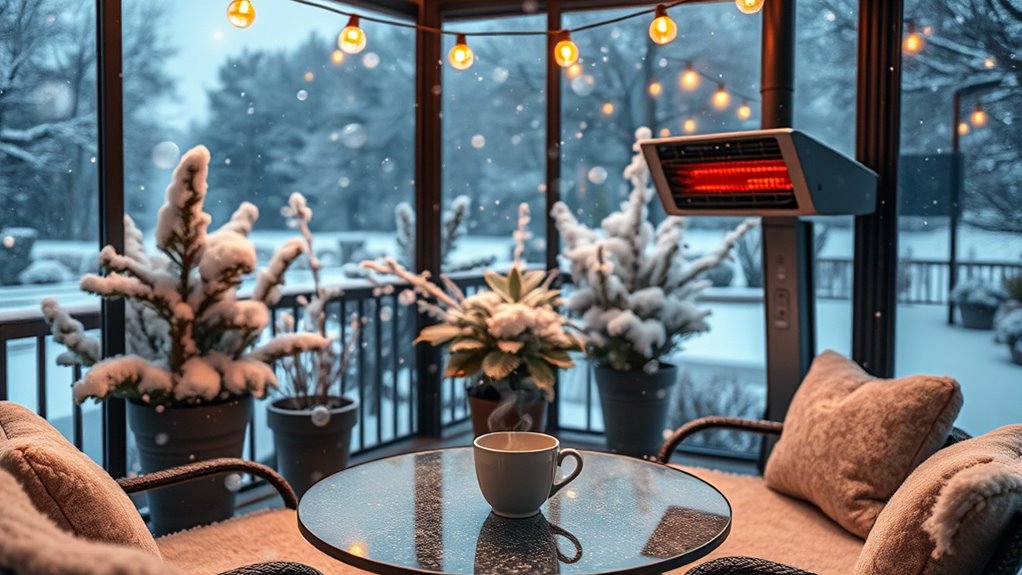
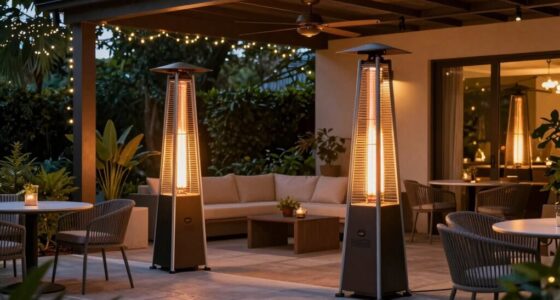
Winter can turn your outdoor space into a chilly, unusable area, but maintaining a heated patio keeps it inviting year-round. To make this happen, you need to stay on top of outdoor heating and winter preparation, especially when a storm hits. Your day begins early, checking the weather forecast to anticipate any incoming snow or ice. You know that proper winter preparation is key to keeping your heated patio functional and safe. If you haven’t already, you’ve installed reliable outdoor heating equipment—be it gas heaters, electric radiant panels, or a fire pit—designed to withstand winter conditions. Now, it’s about ensuring everything is in tip-top shape before the storm arrives.
You head outside to inspect your outdoor heating units. First, you verify that all connections are secure, checking for any leaks or damage. You clear away any debris—leaves, snow, or ice—that could hinder the operation of heaters or pose safety hazards. If you’ve got gas heaters, you double-check the propane or natural gas supply, ensuring there’s enough fuel to last through the storm. For electric systems, you confirm that cords and outlets are free of damage and properly grounded. Your goal is to ensure your outdoor heating setup is ready to operate efficiently when temperatures plummet. Proper maintenance of outdoor heating equipment is essential to prevent unexpected failures during winter storms. Additionally, inspecting your ventilation system helps ensure safe operation and prevents the buildup of harmful gases.
Inspect connections, clear debris, and check fuel or cords to ensure your outdoor heating system is winter-ready.
Next, you prepare your outdoor furniture and accessories. Covering tables, chairs, and cushions with weatherproof covers keeps everything dry and prevents damage from snow and moisture. You also double-verify that your outdoor power sources are protected from moisture and that extension cords are rated for outdoor use. During winter preparation, you make sure pathways around your patio are clear of snow and ice, so you can access your heating units easily and safely during the storm. This minimizes the risk of slips and falls, making sure everyone stays safe while enjoying your heated outdoor space. Additionally, considering the integration of energy-efficient systems can help reduce energy costs during winter months. Regularly evaluating your heating setup can also enhance safety and efficiency. Incorporating proper insulation around your heating equipment and patio area can further improve energy retention and performance during cold weather.
As the storm approaches, you turn on your outdoor heating system to test its operation. You check for proper heat output and listen for any irregular noises that could indicate a problem. If you notice issues, you troubleshoot immediately—perhaps resetting circuit breakers or cleaning vents. You also keep a close eye on the weather, ready to make adjustments as needed, whether that’s turning up the heat or clearing accumulated snow. Monitoring water chemistry is also important to prevent damage and ensure your system operates smoothly during winter. Throughout the day, you remain vigilant, making sure your outdoor heating remains functional and your patio stays cozy despite the winter storm. Your proactive approach ensures your outdoor space remains an inviting retreat, even in the harshest weather.
Frequently Asked Questions
How Energy-Efficient Are Heated Patios During Prolonged Storms?
Heated patios can be quite energy-efficient during prolonged storms if you integrate solar energy systems and humidity control. Solar integration reduces reliance on grid power, saving energy and costs. Humidity control prevents heat loss caused by excess moisture, maintaining warmth more effectively. By combining these features, you optimize your heated patio’s efficiency, ensuring comfort during winter storms without excessive energy use, making it a smart, eco-friendly choice.
What Safety Precautions Should Be Taken With Outdoor Heating Systems?
You should prioritize fire safety by keeping flammable materials away from outdoor heaters and regularly inspecting for leaks or damage. For electrical safety, make certain all wiring is weatherproof and installed by a professional. Always turn off and unplug heaters when not in use, especially during storms. Keep a fire extinguisher nearby, and never leave heaters unattended to prevent accidents. Regular maintenance and cautious use help keep your heated patio safe.
Can Heated Patios Withstand Extreme Cold Temperatures Long-Term?
Heated patios can brave extreme cold if you armor them with proper patio insulation and choose the right heating fuel types. Think of your patio as a fortress, shielding warmth from winter’s icy grip. Long-term resilience depends on quality insulation and fuel efficiency, ensuring your outdoor space stays cozy regardless of harsh temperatures. With the right setup, your heated patio becomes a warm haven that withstands winter’s relentless assault.
What Is the Typical Lifespan of Outdoor Heating Equipment?
Your outdoor heating equipment typically lasts 5 to 10 years, depending on winter maintenance and heater durability. Regularly cleaning the unit, protecting it from snow and ice, and servicing it annually can prolong its lifespan. Proper winter maintenance ensures your heater continues to perform efficiently, even during extreme cold. By caring for it, you maximize durability and get the most value out of your investment in outdoor comfort.
Are There Eco-Friendly Options for Outdoor Patio Heating?
You might be surprised to find eco-friendly outdoor heating options that work efficiently. Solar-powered heaters harness sunlight, keeping your patio warm sustainably. Bioheat solutions, like biomass or bioethanol fireplaces, burn renewable fuels with minimal emissions. These options not only reduce your carbon footprint but also add a cozy, natural touch to your outdoor space. Embrace these sustainable choices and enjoy warmth with peace of mind.
Conclusion
Sure, keeping your heated patio warm during a winter storm might seem like a hassle, but with a little prep, it becomes manageable. Don’t let the cold keep you indoors—your cozy outdoor space is worth the effort. Plus, with the right precautions, you’ll stay warm and safe without breaking a sweat. Embrace the chill, enjoy your heated oasis, and make winter evenings memorable. After all, comfort is just a few simple steps away.