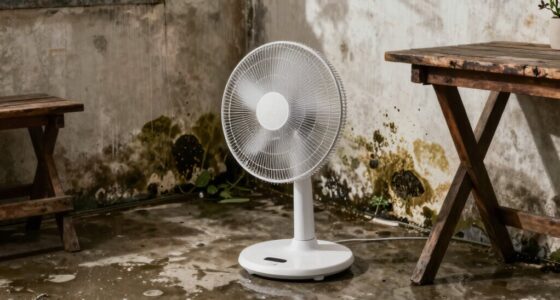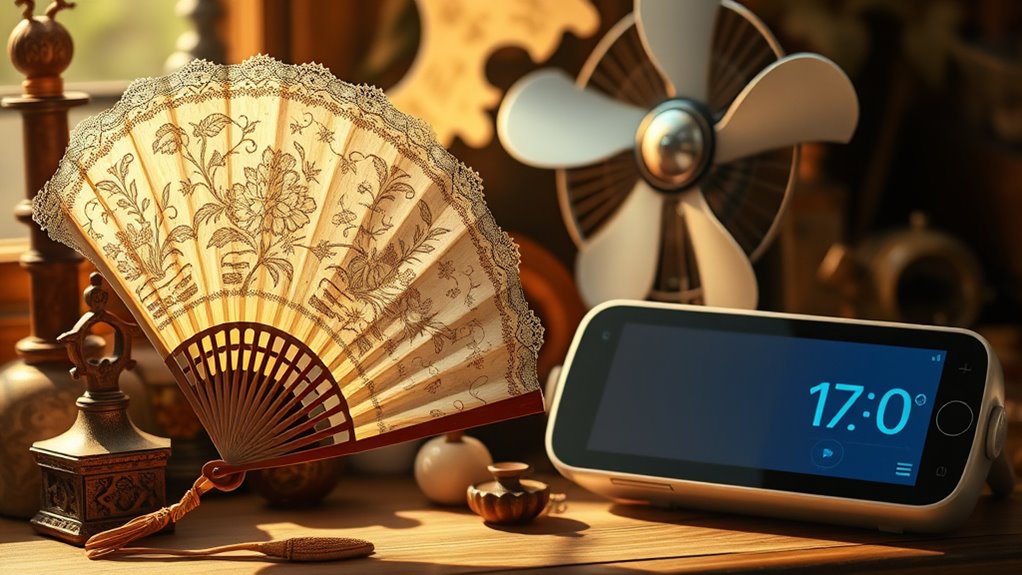

Throughout history, cultures around the world have developed unique outdoor cooling methods, from elegant hand fans in Asia and Europe to water features and shaded spaces influenced by Middle Eastern architecture. Technological advances brought electric and smart fans that continue tradition while improving comfort. Understanding these innovations reveals how societies adapt to climate challenges and express their values through cooling devices. If you explore further, you’ll discover more about how these practices shaped modern outdoor comfort solutions.
Key Takeaways
- Hand fans have served as both practical cooling devices and symbols of social status across diverse cultures.
- Traditional outdoor cooling methods, like water features and shaded spaces, evolved alongside technological innovations.
- Cultural practices shaped the design and use of cooling devices, reflecting artistic expression and social etiquette.
- The development of electric and smart fans integrates historical cooling principles with modern technology.
- Understanding historical cooling practices reveals human adaptation and ingenuity in managing outdoor heat through culture and innovation.
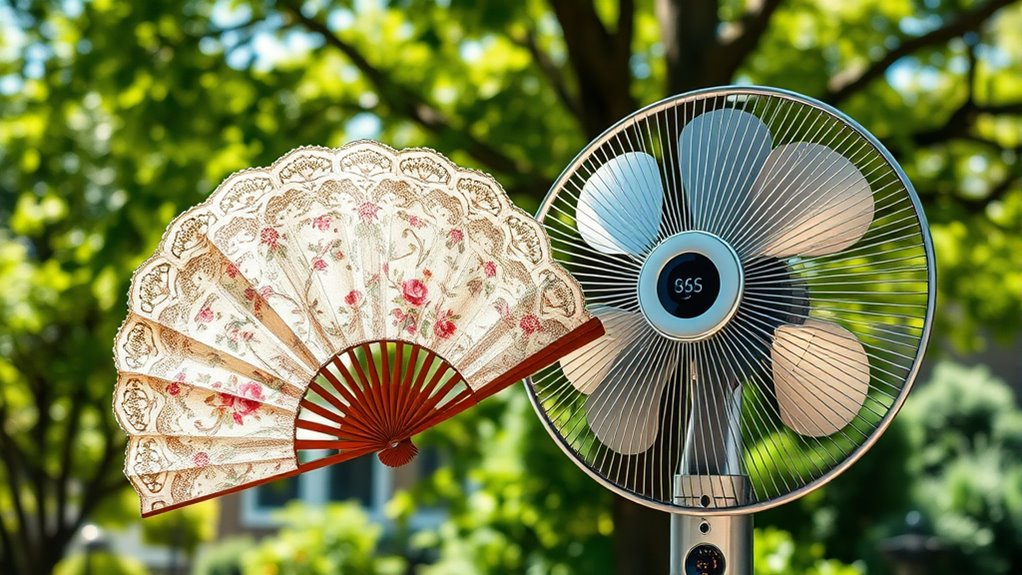
Have you ever wondered how people kept cool outdoors before modern air conditioning? Long before the invention of electric fans and cooling systems, humans relied on a combination of technological innovations and cultural adaptations to beat the heat. These methods reflect not only the ingenuity of different societies but also their unique responses to climate and social customs. Technological innovations like hand fans, water misters, and early ventilators played a crucial role in outdoor cooling. Hand fans, crafted from materials like silk, paper, or feathers, were portable and symbolized elegance in many cultures, especially in Asia. They served practical purposes and often carried cultural significance, with intricate designs and symbolism reflecting social status or regional artistry. In warmer climates, water-based cooling techniques such as misters and sprinklers emerged, utilizing simple physics to lower ambient temperatures around outdoor gatherings. These innovations were often combined with natural ventilation, like shaded courtyards and open-air pavilions, which became staples in architecture across the Mediterranean, Middle East, and Asia. Additionally, the use of portable cooling devices**** and the adaptation of architectural features helped societies develop effective outdoor cooling strategies.
Cultural adaptations further shaped outdoor cooling practices. In the Middle East, traditional architecture incorporated thick walls, courtyards, and water features to foster cool microclimates that made outdoor social life more comfortable. Similarly, in East Asia, the use of folding fans became not only a practical cooling tool but also an element of social etiquette and artistic expression. In Europe, the rise of handheld fans during the Renaissance aligned with fashion trends, transforming them into symbols of sophistication and flirtation. These adaptations weren’t just about comfort—they also reinforced social identity and cultural values. Even in the Americas, indigenous communities used natural materials and landscape features to create shaded outdoor spaces and cool breezes, demonstrating that cooling strategies often intertwined with cultural practices and environmental understanding.
Throughout history, these cultural adaptations and technological innovations evolved hand in hand. As societies expanded and traveled, they exchanged ideas, refining cooling devices and techniques. The development of electric fans in the late 19th and early 20th centuries marked a significant leap, but even then, traditional methods persisted, often integrated into modern designs. Today, while smart fans and advanced cooling systems dominate, many of these historical practices influence contemporary outdoor cooling solutions. Understanding this cultural history reveals how human ingenuity and social customs have shaped our continual quest to stay cool outdoors, blending technology with tradition in a timeless dance against the heat.
Frequently Asked Questions
How Did Ancient Civilizations Cool Outdoor Spaces Before Fans?
Before fans, ancient civilizations used shading techniques like canopies, awnings, and trees to cool outdoor spaces. They also incorporated natural water features such as fountains, pools, and waterfalls, which helped lower ambient temperatures through evaporation. You can imagine how these methods created shady, cool environments, making outdoor areas more comfortable. These timeless strategies show how early societies ingeniously managed heat using natural and architectural solutions.
What Materials Were Traditionally Used in Early Hand Fans?
You’ll find that early hand fans were crafted using a variety of materials chosen for their durability and beauty. Wood, ivory, and bamboo served as sturdy frames, while materials like silk, paper, and fine textiles made the fan leaves lightweight and elegant. Skilled artisans paid close attention to craftsmanship, ensuring each fan was both functional and decorative, reflecting cultural values and artistic traditions of the time.
How Did Cultural Differences Influence Outdoor Cooling Methods Globally?
Cultural differences act like different brushes painting unique cooling landscapes, shaping outdoor cooling methods worldwide. You see regional adaptations and innovations driven by climate, customs, and available materials. For instance, Asian hand fans blend art and function, while European breezeways prioritize architecture. These diverse approaches reveal how societies adapt cooling techniques to their environment, creating a rich tapestry of regional innovations that reflect cultural values and resourcefulness in staying comfortable outdoors.
When Did the Transition From Manual to Mechanical Outdoor Cooling Devices Occur?
You’ll see that the shift from manual to mechanical outdoor cooling devices happened during the late 19th to early 20th century, driven by mechanical innovation. This cooling device evolution introduced electric fans and air conditioning, transforming outdoor comfort. As you observe modern cooling methods, it’s clear how technological advances revolutionized outdoor cooling, making it more efficient and accessible, marking a significant milestone in the history of outdoor comfort solutions.
Are There Traditional Outdoor Cooling Techniques Still Used Today?
Imagine sitting under a giant leafy tree, sipping cool water as natural shade and evaporative cooling do all the work. Yes, traditional outdoor cooling techniques still thrive today! People use natural shade from trees or umbrellas, and evaporative cooling methods like water misters remain popular, especially in dry climates. These methods prove you can beat the heat without modern gadgets—just nature’s simple, effective solutions.
Conclusion
As you’ve seen, outdoor cooling has evolved from simple hand fans to sophisticated smart fans, each step a brushstroke in a vibrant cultural canvas. Imagine standing beneath a centuries-old tree, feeling the gentle breeze that once cooled royalty, now replaced by sleek devices whispering modern comfort. This journey isn’t just about technology; it’s a reflection of humanity’s relentless quest for relief and connection with nature’s ever-changing palette. Your comfort, like history, is a masterpiece in progress.