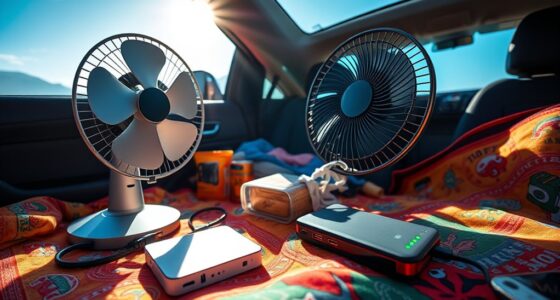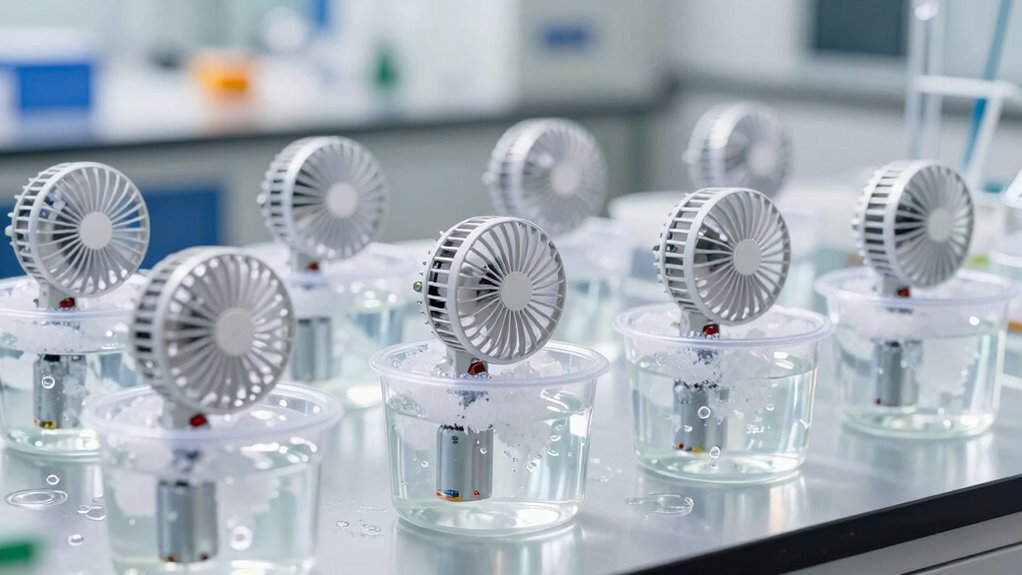

Battery fans mainly just move air around and don’t produce enough heat to prevent pipes from freezing. While they can help circulate warm air from other sources, they aren’t a reliable solution on their own. Proper insulation and heating methods are far more effective in protecting your pipes during cold weather. Curious about whether a creative experiment could prove their usefulness or showcase their limitations? Keep exploring to uncover more insights into freezing prevention strategies.
Key Takeaways
- Battery fans mainly circulate air but do not produce enough heat to prevent pipe freezing.
- Proper insulation is more effective than fans alone for protecting pipes in cold weather.
- Fans can help distribute warm air from heating sources but cannot substitute for heating or insulation.
- Relying solely on battery fans without insulation is unlikely to prevent freezing during severe cold.
- Combining insulation, heating appliances, and airflow strategies offers the best protection against frozen pipes.
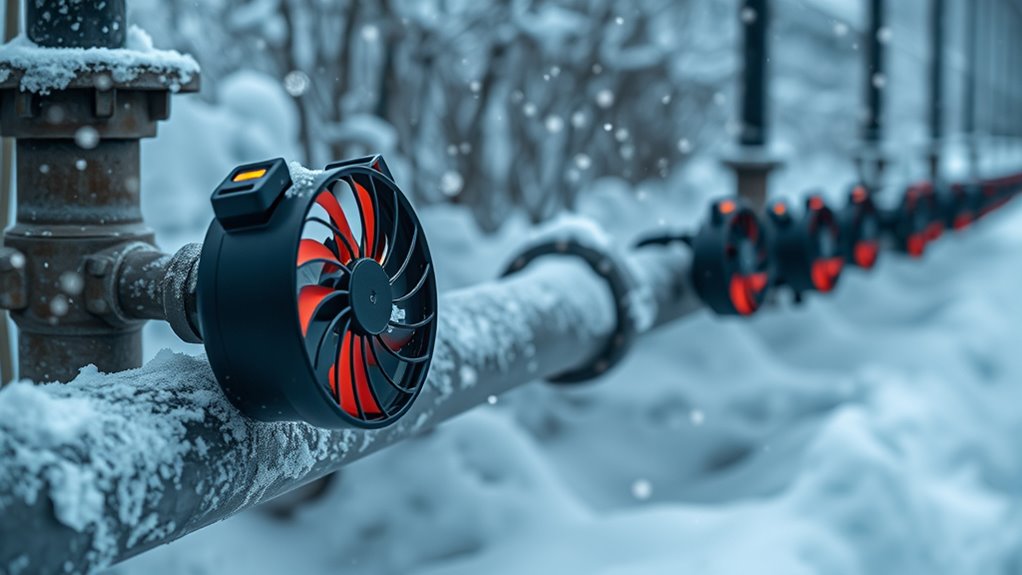
During cold weather, battery fans and pipe freezing become common concerns that can disrupt your daily routine. When temperatures drop sharply, you worry about your pipes freezing and the effectiveness of your heating appliances. You might have heard that battery fans could help prevent pipes from freezing, but is that really true? To figure this out, you decide to explore whether these fans can play a role in your overall insulation strategies. While battery fans are typically designed for ventilation or cooling, some believe they might generate enough airflow or warmth to keep pipes from freezing. However, their actual impact depends on various factors like the fan’s placement, the size of the space, and the existing insulation.
It’s important to understand that proper insulation strategies are the most reliable way to prevent pipes from freezing. Insulation materials like foam pipe covers, fiberglass wrap, or even household items like towels or blankets can considerably reduce heat loss. When your pipes are well-insulated, they’re better protected against the cold, regardless of whether a fan is running or not. Relying solely on battery fans without adequate insulation might not be effective because they generally don’t produce enough heat to make a meaningful difference in freezing temperatures. Instead, these fans might help circulate warm air from your heating appliances, but they shouldn’t replace proper insulation. Proper insulation can greatly enhance your winter preparedness and help prevent costly damage caused by frozen pipes. Additionally, adequate ventilation can help reduce humidity and condensation issues that sometimes contribute to cold-related problems. Furthermore, combining insulation with efficient heating increases the likelihood of keeping your pipes above freezing point during severe cold spells.
Speaking of heating appliances, these are your first line of defense against freezing pipes. Space heaters, baseboard heaters, or central heating systems can maintain a warm environment around your pipes, keeping them above freezing temperatures. During extreme cold snaps, it’s essential to keep your thermostat at a temperature that prevents pipes from freezing, especially in unheated areas like basements, garages, or crawl spaces. Battery fans might assist in moving air around these heated spaces, but they won’t generate heat on their own. They can be part of a broader strategy—helping to distribute warm air from your heating appliances more evenly—but they shouldn’t be relied upon as the primary solution. Additionally, understanding the role of insulation can greatly improve your chances of keeping pipes thawed and functional during winter.
Frequently Asked Questions
How Long Do Battery Fans Typically Last During a Cold Snap?
Battery fans typically last between 4 to 8 hours during a cold snap, depending on their battery life and power consumption. If you use a fan with higher power consumption, expect shorter runtimes. To maximize lifespan, choose energy-efficient models and keep spare batteries handy. Monitoring the fan’s performance and reducing unnecessary features can also help extend usage, ensuring you have continuous airflow when needed most during freezing temperatures.
Are There Specific Battery Fan Models Best for Preventing Pipe Freezing?
Yes, certain battery fan models are better for preventing pipe freezing. Look for fans with higher battery capacity, so they last longer during cold spells. Fans with adjustable fan speed give you control to optimize airflow without draining the battery quickly. Choose models with reliable performance, lightweight design, and sturdy build quality, ensuring they operate efficiently and last through cold snaps, helping keep your pipes warm and safe.
Can Battery Fans Be Safely Used Indoors Near Plumbing?
Yes, you can safely use battery fans indoors near plumbing if you prioritize indoor safety. Make certain the fan is well-ventilated and kept away from water sources to prevent electrical hazards. Regular battery maintenance is essential to avoid leaks or malfunctions. Always follow the manufacturer’s instructions and keep the fan in a dry, stable location, so it operates effectively without risking damage to your plumbing or indoor environment.
What Other DIY Methods Can Complement Battery Fans for Pipe Protection?
You can enhance pipe protection by using insulation wraps and thermal tapes alongside battery fans. Wrap your pipes with insulation to trap heat and prevent cold air from reaching them. Apply thermal tapes for an extra layer of warmth, especially in vulnerable areas. Combining these methods creates a thorough barrier against freezing, increasing your chances of keeping pipes warm during cold snaps. Always check regularly for any damage or wear.
Do Battery Fans Work Better Than Traditional Heating Methods?
Battery fans can be more energy-efficient than traditional heating methods, especially when used as an alternative power source. They work well for localized pipe protection, reducing energy waste. However, their effectiveness depends on the severity of the cold and the size of the area. While battery fans are portable and energy-efficient, for long-term or extreme cold, conventional heating methods might provide more reliable protection.
Conclusion
Will battery fans truly keep your pipes from freezing? As you ponder this innovative solution, remember that experimenting with new ideas can lead to unexpected results. While the proof isn’t in yet, the possibility of a simple, portable fix is intriguing. Just imagine the moment when, in the dead of winter, your pipes stay warm because of a device you created. The answer remains uncertain, but the potential for discovery keeps you enthusiastic to test further.