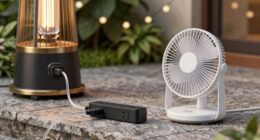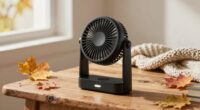
To clear foggy windows quickly, position a small, portable fan near your windshield or side windows and turn it on. This creates a steady airflow that directs moisture away from the glass, speeding up evaporation and reducing humidity inside your vehicle. Using a portable fan combines targeted ventilation with improved air circulation, making defogging faster and more efficient. Keep exploring for more practical tips to keep your windows clear and visibility perfect.
Key Takeaways
- Position a small, battery or USB-powered fan near foggy windows to direct airflow and accelerate moisture evaporation.
- Turn on the fan to create steady airflow, improving ventilation and reducing humidity inside the vehicle.
- Use the fan alongside existing defrosters for quicker, targeted clearing of foggy windows.
- Combine portable fan use with window treatments like anti-fog sprays for long-term fog prevention.
- Increase vehicle ventilation by switching to fresh outside air, helping to lower interior humidity levels.
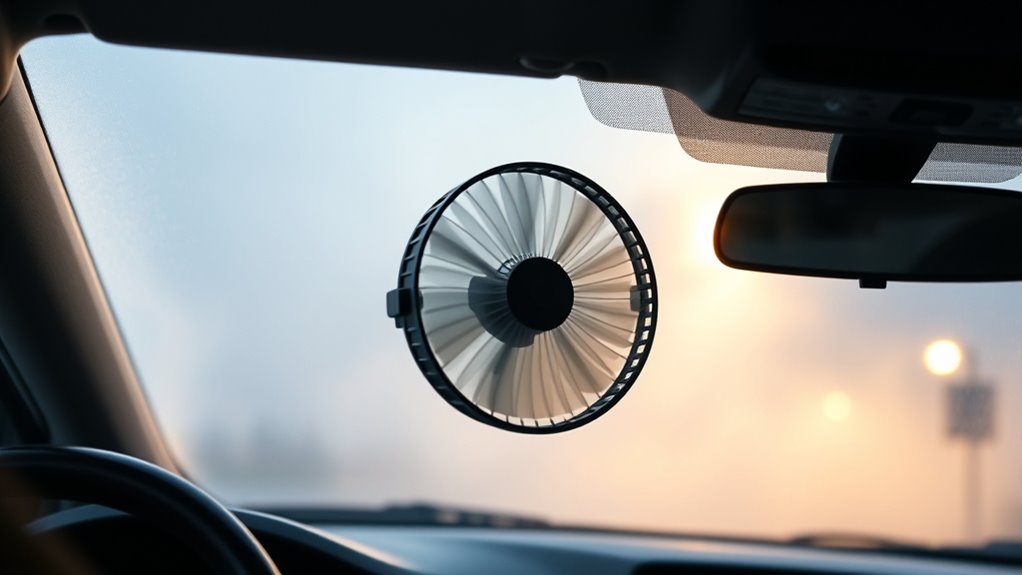
Car Defogging Hack
When your car windows fog up unexpectedly, it can be frustrating and even dangerous. Visibility drops sharply, making it harder to see other vehicles, pedestrians, or traffic signals. Luckily, there’s a simple hack you can try: using a portable fan to clear foggy windows quickly. This method leverages ventilation improvements to disperse humid air inside your vehicle, helping your windows defog faster than relying solely on your car’s defroster.
Start by positioning a small, battery-powered or USB-powered portable fan near the inside of your windshield or side windows. Turn the fan on to create a steady airflow directed at the foggy surface. The moving air encourages moisture to evaporate from the glass, especially when combined with existing heat from your vehicle’s heater. This simple step enhances airflow circulation, which is vital in reducing humidity levels inside the car and preventing future fogging episodes. It’s a quick, effective way to improve ventilation without waiting for the built-in defrost system to warm up or clear the fog. Using a portable fan also allows you to target specific areas that fog up more quickly, providing a more tailored approach to defogging.
Use a portable fan to direct airflow and quickly clear foggy windows inside your car.
Alongside using a portable fan, consider your window treatment options to combat fogging more permanently. Applying anti-fogging sprays or treatments designed for automotive glass can create a thin, transparent barrier that resists condensation. These products are easy to apply and can considerably reduce the frequency of fogging, especially in humid or cold weather. If you prefer a more physical solution, using a microfiber cloth or specialized anti-fog cloth to wipe down your windows regularly can also help. These treatments and cleaning routines work in tandem with ventilation improvements to keep visibility clear in challenging conditions. Additionally, maintaining proper ventilation practices inside your vehicle can further reduce moisture buildup and improve overall visibility. Using moisture-reducing techniques can help keep windows clear longer and make your driving experience safer.
You can also improve your ventilation by adjusting your vehicle’s air circulation settings. Switch to fresh air intake rather than recirculating the interior air. Bringing in drier outside air helps reduce internal humidity, especially if you’re parked in a damp environment. Combining this with a portable fan creates an effective mini ventilation system that directs moisture away from the glass surface. Additionally, utilizing modern climate control systems that monitor and adjust humidity levels can further enhance your defogging efforts. Properly maintaining your vehicle’s ventilation system and filters can also improve air quality and moisture control over time. Incorporating humidity sensors into your vehicle’s climate system can help optimize conditions for clear windows automatically.
This hack is especially helpful when your built-in defrost system isn’t enough or if you’re in a hurry. It’s portable, inexpensive, and easy to implement—making it perfect for quick fixes on the go. Just remember, the key lies in increasing air movement and managing moisture levels through ventilation improvements and window treatment options. By doing so, you’ll keep your windows clear, your visibility sharp, and your driving safer, no matter the weather outside.
Frequently Asked Questions
Can Using a Portable Fan Damage My Car’s Interior?
Using a portable fan won’t damage your car’s interior if you keep the fan noise and power consumption in check. Choose a fan with adjustable speed to avoid excessive noise or power use, which could strain your car’s electrical system. Be careful not to position it directly on delicate surfaces or near sensitive electronics. As long as you use it wisely, a portable fan is a safe tool for defogging your windows.
How Long Does It Typically Take to Clear Foggy Windows?
It usually takes about 2 to 5 minutes to clear foggy windows, depending on ventilation efficiency and fan placement. You should position the fan near the vents or windows for maximum airflow, directing it toward the foggy areas. Keep the fan on high speed and guarantee the car’s interior is well-ventilated. Proper fan placement boosts airflow and speeds up the defogging process, so adjust as needed for faster results.
Is This Hack Effective in Extremely Cold Weather Conditions?
In icy battles against fog, this hack fights with mixed results. In extremely cold weather, the fan’s warmth may struggle to thaw thick frost, making it less effective. Weather effectiveness drops because the fan’s limitations become apparent—cold air can’t melt stubborn fog as quickly. To improve results, combine it with defrosting techniques or increase interior heat, turning your car into a warm fortress against winter’s chill.
Should I Turn off the Fan Once the Windows Are Clear?
Yes, you should turn off the fan once your windows are clear. Continuing fan operation isn’t necessary and can cause distractions, reducing safety precautions. When your visibility improves, stopping the fan helps maintain focus on the road. Always guarantee the fan is used safely, avoiding overheating or electrical issues. Prioritize clear windows over continuous fan operation to ensure safe driving conditions and prevent any potential hazards.
Are There Safety Concerns When Using a Portable Fan in the Car?
Think of your car as a delicate dance floor; safety is the rhythm that keeps it steady. Using a portable fan can be safe if you guarantee its stability and avoid placement near flammable materials, as a fire hazard could arise from overheating or loose wiring. Always turn it off when not in use, and check that it’s securely positioned to prevent accidents. Your caution keeps the dance safe and smooth.
Conclusion
Next time fog clouds your view, remember this simple trick. A portable fan gently whispers away the mist, turning cloudy obstacles into clear horizons. With a little patience and the right touch, your windows will soon welcome the world outside again. Embrace this easy hack—sometimes, the smallest actions bring the brightest clarity. Before you know it, you’ll be gliding smoothly, your path unobstructed and your journey a little clearer every time.