
In winter, your power bank’s performance drops because cold temperatures slow down chemical reactions inside its batteries. This means less capacity and shorter run times for your USB fans, which may shut off sooner or struggle to stay powered. You might notice initial operation, but efficacy diminishes quickly outdoors. To keep things running smoothly, you can take quick steps like warming your power bank. Keep exploring to learn practical tips for maintaining performance in chilly conditions.
Key Takeaways
- Cold temperatures slow chemical reactions inside power banks, reducing capacity and efficiency.
- USB fan performance declines in winter, with shorter run times and potential power interruptions.
- Prolonged cold exposure can cause permanent battery damage, decreasing long-term lifespan.
- Keeping the power bank warm in insulated pockets helps maintain better performance outdoors.
- Proper storage and gentle warming before use can mitigate cold weather effects on power bank efficiency.
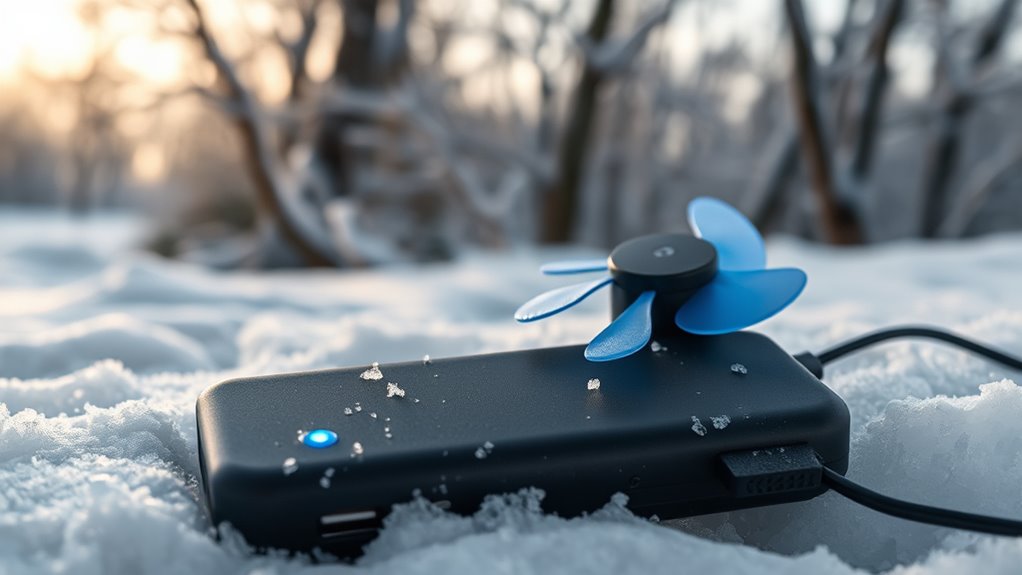
During winter, your power bank’s performance can decline markedly due to cold temperatures. When the weather drops, the battery efficiency of your device takes a hit, making it less capable of delivering the same charge as it does in warmer conditions. The temperature impact on batteries is significant because chemical reactions inside the power bank slow down in cold environments. This slowdown results in reduced capacity and less power available to charge your USB fans or other devices. You might notice that your power bank drains faster or fails to fully charge your gadgets, especially after prolonged exposure to chilly air.
Cold temperatures cause the internal chemistry of your power bank’s battery to become less active, which directly affects its ability to hold and transfer energy efficiently. This isn’t just a minor inconvenience; it’s a real issue that can leave you stranded without power when you need it most. For example, if you’re outdoors during winter, your power bank might seem to work fine initially but quickly lose its ability to provide sustained power. As a result, your USB fans won’t run as long, and your devices might shut off sooner than expected. This decreased battery efficiency in cold weather underscores how sensitive these devices are to temperature fluctuations. Battery chemistry plays a crucial role in how well your power bank performs in different climates. Additionally, the use of temperature regulation methods can help improve performance in cold environments. Being aware of climate effects on batteries can help you better prepare for winter conditions.
Cold weather hampers power bank efficiency, causing devices to drain faster and lose power sooner.
To mitigate this, it’s best to keep your power bank warm whenever possible. Storing it in a pocket close to your body or inside a bag with insulation can help maintain a more stable temperature. When you’re ready to use it, warm it up gently by holding it in your hands for a few minutes before connecting your USB fans. Avoid exposing your power bank to extreme cold for extended periods, as this can permanently damage the battery or diminish its lifespan. Additionally, using insulating cases can help safeguard your power bank from rapid temperature drops. If you’re planning outdoor activities in winter, consider using a portable case with insulation or a heated pouch designed for electronics.
Always remember that the temperature impact on your power bank isn’t just about immediate performance; it can also influence the long-term health of the battery. Repeated exposure to cold environments can reduce the overall lifespan of your device’s battery, leading to less effective charging over time. Proper battery storage and handling can help preserve its longevity and performance. Hence, taking simple precautions—like keeping your power bank warm and avoiding prolonged cold exposure—can help ensure it performs reliably throughout the winter months. By understanding how temperature affects battery efficiency, you can better prepare and extend the usability of your power bank, ensuring your USB fans and other gadgets stay powered when you need them most.
Frequently Asked Questions
How Does Cold Weather Affect Power Bank Charging Speed?
Cold weather reduces your power bank’s thermal efficiency, which slows down its charging speed. When temperatures drop, the battery capacity also diminishes, meaning it can’t hold as much charge. As a result, your power bank may take longer to recharge and deliver power. To minimize this, keep your power bank warm and avoid exposing it to extreme cold, ensuring better performance and quicker charging times.
Can Winter Conditions Cause Power Banks to Malfunction?
Winter’s chill can turn your power bank into a frosty fortress, risking malfunction if you don’t keep it warm. Cold storage accelerates battery degradation, making it less reliable over time. While brief exposure to low temperatures might not cause immediate failure, prolonged cold can impair performance and lead to malfunctions. To protect your device, keep it in a warmer place, avoiding the icy grip of winter’s freeze.
What Safety Precautions Should I Take in Winter?
You should wear warm winter clothing and plan your outdoor activities carefully to stay safe. Keep your power bank protected from extreme cold, as it can affect performance, and avoid exposing it to moisture or snow. Always carry your power bank in an insulated bag or pocket, and be mindful of outdoor safety by staying visible and aware of your surroundings. These precautions help guarantee your devices work well and keep you safe.
Are There Specific Power Banks Designed for Winter Use?
Think of winter power banks as your trusty winter coat for electronics. Yes, there are cold resistant batteries designed specifically for winter use, ensuring your USB fans stay powered even in freezing temps. These winter power banks are built to withstand low temperatures without losing charge or performance. So, when you’re braving the cold, choose a device with cold resistant batteries to keep your gadgets running smoothly.
How Can I Maximize Battery Life During Winter Months?
To maximize battery life during winter, focus on battery conservation by reducing unnecessary device usage and lowering brightness. Use thermal management techniques like keeping your power bank and devices in a warm environment to prevent cold-related efficiency drops. Avoid exposing your power bank to extreme cold for prolonged periods, and consider insulating it with thermal sleeves. These steps help maintain ideal performance and extend your power bank’s operational time.
Conclusion
As winter bites, remember that even the sturdiest power bank can face challenges. Cold weather can sap its strength, just like a fire struggling to stay lit in the wind. To keep your USB fans running smoothly, store your power bank warm and give it a little extra care. After all, a little preparation goes a long way—think of it as tending a flame that keeps you cool when the heat’s gone.