Using two portable fans together can boost airflow and improve cooling in your space. Stacking or positioning them strategically enhances air circulation and prevents stagnation. Make sure fans are placed a few feet apart and angled properly to encourage steady airflow. This setup can be more effective than a single fan, especially in larger rooms or hot days. Want tips on how to maximize their efficiency? Keep exploring for smart arrangements and tricks to get the best results.
Key Takeaways
- Stacking fans can increase airflow by creating vertical airflow pathways, enhancing overall room circulation.
- Proper positioning prevents airflow interference, ensuring fans work together effectively without turbulence.
- Elevating fans on shelves or tables improves circulation and directs airflow at different heights.
- Using multiple fans allows for customizing airflow patterns, such as cross breezes, for better cooling.
- Ensure fans are well spaced and angled correctly to maximize efficiency and avoid dead zones or turbulence.
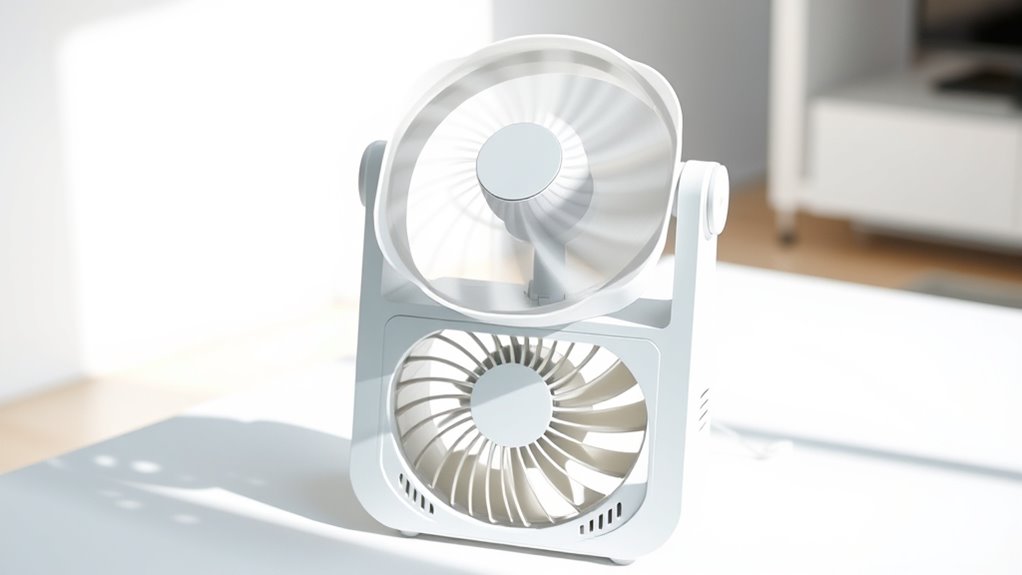
Have you ever wondered if using two fans is better than just one? It’s a common question, especially when you’re trying to improve airflow in a room or workspace. The answer depends largely on how you set them up. When you stack portable fans or place multiple units strategically, you can substantially boost airflow efficiency. The key is understanding how fan placement impacts how air moves around a space. Instead of just turning on two fans and hoping for the best, you want to position them so they work together, not against each other. Proper placement creates a breeze that circulates more effectively, cooling down the area faster and more evenly.
Proper placement of multiple fans boosts airflow and cooling efficiency effectively.
First, think about the goal: do you want to cool a specific spot or circulate air throughout the room? If it’s the latter, stacking fans or placing them in different locations can help create a flow pattern that covers more ground. For example, placing one fan near a window to draw in fresh air, while another blows toward the center of the room, encourages a steady circulation. This setup prevents stagnant pockets of warm air and maximizes airflow efficiency. Additionally, effective airflow management can make a significant difference in how well the fans perform. Proper airflow management involves understanding how to direct air currents for optimal cooling and circulation.
Fan placement is vital. Positioning fans too close to walls or corners can disrupt airflow, causing turbulence or dead zones. Instead, keep them a few feet apart and at an angle that encourages air to move across the room rather than bouncing back. Elevating fans slightly, such as on a sturdy table or shelf, can also improve circulation by directing airflow at different heights. When stacking portable fans, ensure they’re stable and that their airflow direction complements each other. For instance, one fan blowing inward and another outward can create a balanced system that pushes air through the space more effectively. Using fans with adjustable settings can further enhance airflow control and efficiency.
Furthermore, using multiple fans can help you customize airflow according to your needs. If you’re working or relaxing, point fans toward you for direct cooling. For general room circulation, position them to create a cross breeze. Experimenting with different fan placements allows you to find the most efficient way to move air, rather than just increasing the number of fans. Remember, the goal is to optimize airflow efficiency. Simply adding more fans won’t necessarily improve comfort if they’re not positioned correctly. A well-thought-out setup ensures each fan contributes to a cohesive airflow pattern, making the entire space cooler and more comfortable with less energy use. Properly strategic placement can also help reduce energy consumption while maximizing airflow. Additionally, understanding the impact of fan technology can guide you in choosing fans that perform better and last longer. Selecting energy-efficient fans with modern technology features can further enhance airflow effectiveness and reduce your overall energy footprint.
Frequently Asked Questions
Can Stacking Fans Improve Energy Efficiency?
Stacking fans can improve energy efficiency by enhancing airflow distribution without increasing overall energy consumption. When you stack fans, they work together to circulate air more effectively, reducing the need for multiple devices running separately. This setup helps you save energy while maintaining a cooler, more comfortable space. Just make certain the fans are stable and aligned properly to maximize airflow and prevent unnecessary energy waste.
Are Stacked Fans Safe for Children and Pets?
Stacked fans can pose safety risks for children and pets if not set up properly. Imagine a toddler reaching for a tall, unstable tower—it’s risky. To protect child safety and pet protection, secure fans firmly, keep cords out of reach, and avoid stacking too high. Always supervise, and consider enclosed fans or safety covers. Proper precautions guarantee you enjoy better airflow without compromising safety.
How Do Noise Levels Change With Multiple Fans?
When you stack multiple fans, noise levels can increase due to noise amplification, making the sound louder overall. However, sound dispersion can help distribute the noise more evenly across the room, potentially reducing the perception of loudness in any one spot. Keep in mind that the combined noise might be more noticeable, but strategic placement and lower fan speeds can minimize discomfort and maintain a comfortable environment.
Is There an Optimal Distance Between Stacked Fans?
Imagine a gentle breeze flowing smoothly around you; that’s what ideal fan placement creates. Keep stacked fans about 3 to 6 inches apart to maximize airflow and prevent turbulence. Too close, and they clash, reducing efficiency; too far apart, and the airflow weakens. Find that sweet spot, and you’ll enjoy a powerful, invigorating breeze. Proper fan placement is key to airflow enhancement, turning your space into a cool, inviting oasis.
Can Stacking Fans Help in Cooling Larger Rooms Effectively?
Stacking fans can help cool larger rooms effectively by improving fan placement and airflow distribution. When you position fans properly, stacking creates a stronger, more widespread breeze that reaches more areas. Make sure to keep the fans at an ideal distance to avoid airflow obstruction. By doing so, you maximize cooling efficiency, ensuring the entire room benefits from increased airflow, making your space cooler and more comfortable quickly.
Conclusion
So, if you’re looking to keep things comfortably cool, stacking two fans might just be the secret ingredient to better airflow. It’s like giving your space a gentle breeze boost without much hassle. Just remember, sometimes a little extra effort brings the biggest refresh. Next time you need a cool escape, consider this simple trick—you might find that a touch more breeze makes a world of difference. Stay cool and enjoy the breeze!