TL;DR

Get garden gear delivered free with Prime
- Fast, free delivery on millions of items
- Prime Video, Amazon Music and more included
- Member-only deals all year
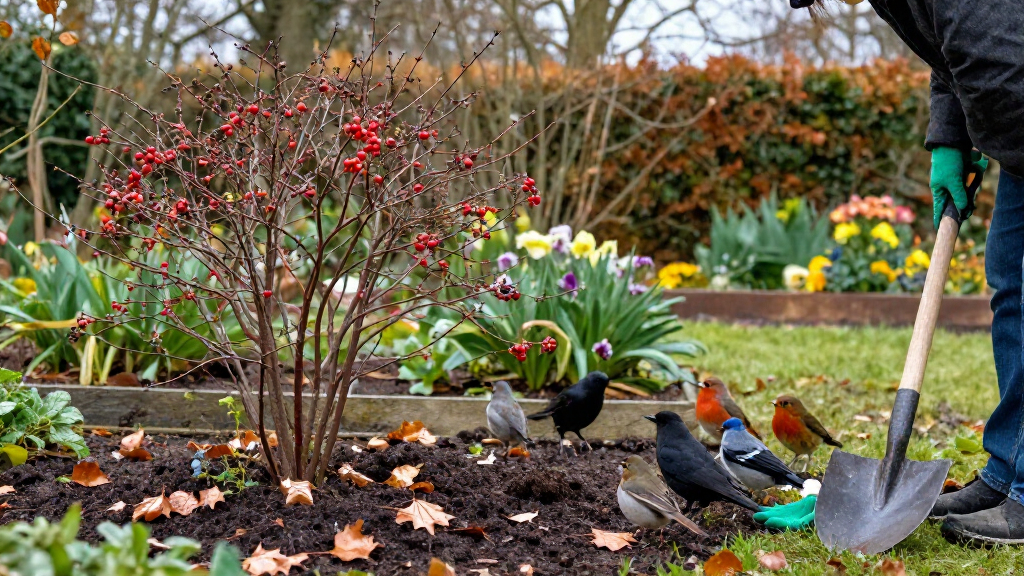
An Ideal Home report identifies five plants to add in October that can provide birds with food, shelter or both during winter: holly, rowan, hawthorn, crab apple and ivy. The benefits depend on plants establishing and producing berries or dense cover; the report does not guarantee that planting now will feed birds this winter.
Holly, rowan, hawthorn, crab apple and ivy are five plants gardeners can plant in October to provide food or shelter for birds during winter, according to wildlife experts quoted by Ideal Home. The recommendations name robins, finches, redwings and blackbirds among the birds gardeners may hope to support, although the report does not say that every plant benefits every species or that new plants will produce food immediately.
The plants offer different kinds of support. Holly and ivy provide dense foliage that can offer birds cover, while their berries may supply food later in the year. Holly berries are described as a winter food source for thrushes, robins and pigeons. Mature ivy produces berries that ripen later than many other fruits, potentially extending food availability into winter.
Rowan and crab apple are recommended for their fruit. Designers of the Lifted By Birds Garden in Gloucester told Ideal Home that rowan berries feed fieldfares, redwings and blackbirds through early winter. The designers also said crab apples can persist into winter, offering food to thrushes and winter migrants. Rowan can add autumn colour, while crab apple trees also flower in spring.
Hawthorn is presented mainly as a shelter and hedging option. Amber Tunney, a plant buyer at Cherry Lane Garden Centres, said its dense, thorny growth gives birds places to rest and take cover. The report does not specify planting methods, local growing conditions or whether each plant is suitable for every garden.
Food and Cover in Winter Gardens
Winter can make food and safe cover harder for garden birds to find. A garden with fruit-bearing plants and dense growth may contribute to both, rather than relying on one type of resource. The recommendations also span different planting forms: trees such as rowan and crab apple, a hedging plant such as hawthorn, and evergreen or climbing plants such as holly and ivy.
The practical value will vary. Existing mature plants may already provide berries or shelter, while newly planted specimens may need time to establish and may not fruit in their first season. Gardeners should treat the list as longer-term habitat guidance, not a promise of an immediate supply of winter food. The report gives no measurements of bird numbers or evidence comparing the plants’ effects.
Holly berry plants for winter birds
As an affiliate, we earn on qualifying purchases.
As an affiliate, we earn on qualifying purchases.
Five Plants, Different Benefits
Ideal Home’s report focuses on planting in October as a way to prepare gardens for colder months. It draws on comments from Amber Tunney and the designers of the Lifted By Birds Garden, a project created by Greenfingers for James Hopkins Hospice in Gloucester. The article presents their advice as practical recommendations, not results from a controlled study.
The plants are not interchangeable. Holly’s evergreen foliage can offer shelter as well as berries; rowan and crab apple are highlighted for fruit; hawthorn is valued for thick, protective growth; and ivy can provide cover and late-ripening berries when mature. The report also notes that crab apple is native to the UK and identifies the cultivar ‘Red Sentinel’ as one whose fruits can last for a long time. It does not provide a detailed guide to choosing cultivars or planting conditions.
“Holly is a great choice for a bird-friendly garden, offering both food and shelter.”
— Amber Tunney, plant buyer at Cherry Lane Garden Centres
Rowan tree saplings for wildlife garden
As an affiliate, we earn on qualifying purchases.
As an affiliate, we earn on qualifying purchases.
Planting Does Not Guarantee Winter Food
The source does not establish that planting these species in October will provide birds with berries during the same winter. Fruit production depends on maturity and growing conditions, and the report’s description of ivy specifically refers to mature plants. It gives no expected time to establish, planting instructions, regional guidance or advice on how to select plants for a particular garden.
The article also does not quantify how much food the plants provide, report measured effects on bird populations, or confirm that robins, finches, redwings and blackbirds will all use each species. The benefits are presented as expert guidance about potential food and shelter, rather than a guarantee of visits or survival outcomes.
Hawthorn hedging plants for bird shelter
As an affiliate, we earn on qualifying purchases.
As an affiliate, we earn on qualifying purchases.
Choosing Plants for October
Gardeners considering the recommendations can match plants to the resource they want to add: fruit for feeding, dense foliage for cover, or a combination of both. The report does not prescribe a planting schedule beyond its October focus, so readers should check suitability and care requirements for their site before buying. Any berries or shelter available will depend on how plants grow and mature.
Over the coming months, the relevant measure is whether established plants retain fruit or provide cover as temperatures fall. The report sets out no follow-up study or later assessment, so the actual effect on birds in individual gardens remains something gardeners would need to observe themselves.
As an affiliate, we earn on qualifying purchases.
Key Questions
Which five plants does the report recommend?
Holly, rowan, hawthorn, crab apple and ivy are the five plants named by Ideal Home.
Which plants are described as food sources for birds?
The report identifies holly, rowan, crab apple and mature ivy for berries or fruit. Hawthorn is described mainly as a source of dense shelter and cover.
Will plants put in during October feed birds this winter?
That is not guaranteed. The source gives no timeline for plants to establish or fruit, and its description of ivy’s berries refers to mature plants.
Which birds are mentioned in the recommendations?
The report names robins, redwings and blackbirds, as well as fieldfares, thrushes and pigeons. It does not specify which of the five plants attracts finches.
Source: rss
Halloween Picks
halloween
As an affiliate, we earn on qualifying purchases.