TL;DR
A Planet Natural gardening report describes a Thanksgiving centerpiece that uses a sound, stable pumpkin as a temporary decorative surround for a removable vase. The vase holds water and flowers; the pumpkin should be checked for deterioration, and an uncut pumpkin beside a separate vase is the simpler option.
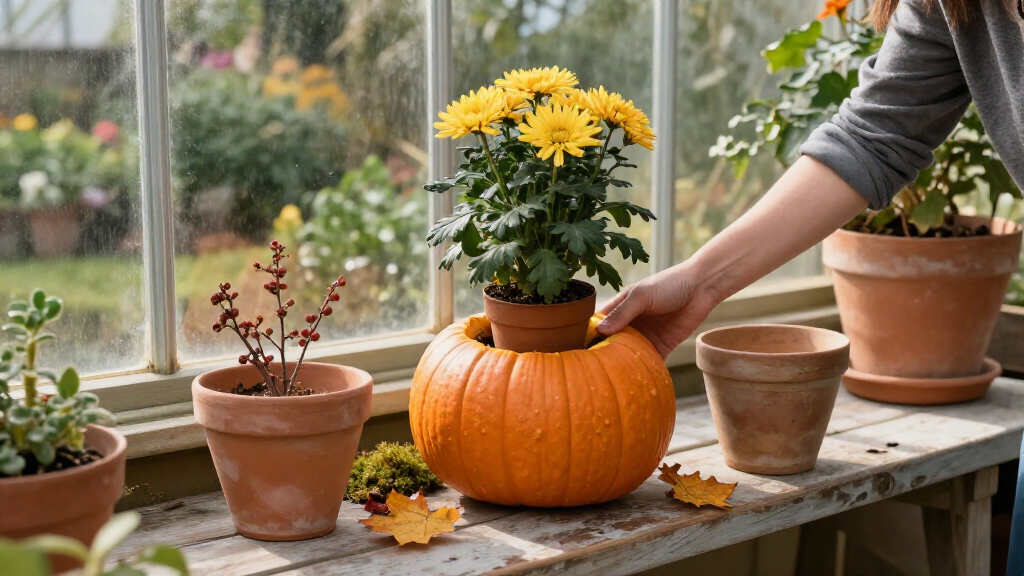
Planet Natural’s Thanksgiving arrangement report recommends using a sound pumpkin as a decorative shell around a separate, removable vase, rather than putting flower water or soil directly into the pumpkin. The approach lets people remove the flowers for care and inspect the pumpkin as it changes, while avoiding an arrangement that depends on a deteriorating shell to hold water.

Get garden gear delivered free with Prime
- Fast, free delivery on millions of items
- Prime Video, Amazon Music and more included
- Member-only deals all year
The report says to reject a pumpkin with visible mold, soft or collapsing areas, leaking liquid, or an unpleasant smell. It should also sit securely on a level surface. These checks are an initial screen, not a guarantee that the pumpkin will remain sound; the report advises checking it again during assembly and while it is on display. If the pumpkin is unstable or deteriorating, it should not be used for the arrangement.
For a carved version, choose a clean, watertight vase or jar that can stand upright inside the pumpkin and lift out easily. The opening should be large enough for the vase to pass through without catching. Add water and fresh flower stems to the vase away from the pumpkin, then set it in place. The pumpkin is only a decorative surround, and the tray beneath it protects the surface but does not remove the need to check for leaks.
The arrangement should be tested before flowers are added: put the empty vase inside, then take it out again. If it rocks, tips, catches, or needs improvised supports, the report recommends leaving the pumpkin uncut and placing it beside a separate vase on a protective tray. Keep the finished display stable, leave a clear route for removing the vase, and keep it away from open flames and heat sources.
A Centerpiece That Can Come Apart
The method makes flower care and pumpkin checks possible without dismantling the whole display. Because the vase holds the water, people can lift it out to refill it or replace the flowers. The pumpkin can be inspected separately, rather than treated as a watertight container whose condition is easy to overlook.
That distinction also offers a practical alternative when a pumpkin looks suitable but cannot safely support a fitted arrangement. A separate vase beside an uncut pumpkin keeps the decorative idea while removing the need to carve, fit, or stabilize a vessel inside the shell. The report presents simplicity and removability as design aims, not as a guarantee that every pumpkin will stay sound through the holiday.
For a busy holiday table, size and placement matter as well as appearance. The source advises setting the pumpkin on its intended tray before cutting and checking whether the arrangement leaves room for plates, can be moved without catching the flowers, and allows guests to see one another. If the setup requires elaborate supports or crowds the table, the simpler display is the more manageable choice.
Products Worth Considering

Blackstone 2364 Portable Camping Griddle with Side Burner, 12 x 14 Inches

Husqvarna Automower 550 Commercial Robotic Lawn Mower

EGO POWER+ LM2114 21-Inch Cordless Electric Lawn Mower with Battery and Charger
As an affiliate, we earn on qualifying purchases.
The Vase Holds the Water
The Planet Natural report draws on Texas A&M AgriLife pumpkin decorating guidance, which it describes as carving only enough space to hold a vase and arranging and watering the flowers in that vase. It also cites Illinois Extension guidance for pumpkin arrangements, which includes purchased flowers, garden-cut flowers, and dried material. Those options are a menu, not a promise that garden flowers will be available in every location or season.
The report’s author notes that Thanksgiving choices depend on local garden conditions and weather, including the possibility of frost. It recommends using suitable stems that are actually available, buying a small bunch, or choosing already-dried material rather than planning around flowers that may not survive. For dried arrangements, the report relays Illinois Extension’s advice to collect material when it is dry and free of insect and disease damage; the vessel should remain dry if no fresh flowers are used.
The piece also recounts a personal example of putting cut zinnias and cosmos in a clean pickle jar for a neighbor. That anecdote illustrates the report’s central practical point: a simple vessel can do the functional work, leaving the pumpkin as decoration. It is an example, not evidence that those flowers will be available for Thanksgiving in other regions.
How Long the Pumpkin Stays Sound
The report does not specify how long a carved pumpkin will remain in good condition, set a safe display period, or offer a way to determine what is happening inside the shell. Its exterior checklist is described as a first screening rather than a guarantee. Condition can change after assembly, so the source advises checking the pumpkin and the surface beneath it rather than relying on the tray as a safeguard.
The guidance also does not prescribe a measured opening size, a particular vase, or a universal flower selection. Those choices depend on the pumpkin, the vessel, the flowers available, and the space where the centerpiece will sit. It does not claim that the arrangement prevents leaks, decay, or other problems; if the pumpkin becomes unstable or shows signs of deterioration, the report’s advice is to stop using it as the surround.
Check the Display Through Thanksgiving
Before assembling the centerpiece, select a stable pumpkin and tray, test the vase for fit and easy removal, and decide whether a carved or uncut display is more reliable. Add fresh flowers only after arranging them in the vase with water, and keep dried material in a dry vessel. Recheck the pumpkin and the surface beneath it as the display remains on the table; remove the vase or replace the pumpkin if its condition changes.
Keep the centerpiece away from candles and other heat sources, and make sure it does not obstruct plates, movement, or guests’ view of one another. The source gives no specific schedule for inspections or next formal milestone. Its practical next step is to monitor the arrangement and use the simpler side-by-side setup whenever a fitted vase cannot stand securely and come out easily.
Key Questions
Should flowers and water go directly into the pumpkin?
No. The report says the pumpkin should be a decorative shell, while the flowers and water stay in a clean, watertight vase or jar.
Which pumpkins should not be used?
Avoid pumpkins with visible mold, soft or collapsing patches, leaking liquid, an unpleasant smell, or an unstable base. The report advises checking again because an initial inspection cannot guarantee the pumpkin will remain sound.
What if the vase does not fit securely?
Do not wedge it into place or suspend it from the cut rim. Use an uncut pumpkin beside a separate vase on a protective tray instead.
Can dried flowers or other materials be used?
Yes. The report cites Illinois Extension guidance that includes purchased flowers, garden-cut flowers, and dried materials. For an all-dried arrangement, it says to use a dry vessel and leave out the water.
Where should the finished arrangement sit?
Place it on a stable, protected surface, leave room for table use, and keep it away from open flames and heat sources, including nearby candles.
Source: planetnatural.com