
TL;DR
Gardening Know How reports that a shallow tray of pebbles and water can create a more humid microclimate around a houseplant in dry indoor air. The pot must sit above the water, not in it; the method may help humidity-sensitive plants, but the report does not establish that it will restore glossy leaves or replace a humidifier.
Gardening Know How has published a guide to making a low-cost humidity tray for houseplants as indoor heating can dry the air during fall and winter. The method uses a shallow dish, small pebbles and water to create a more humid area around a plant, with the pot kept above the water; its effectiveness for a particular home or plant is not quantified in the report.

Get garden gear delivered free with Prime
- Fast, free delivery on millions of items
- Prime Video, Amazon Music and more included
- Member-only deals all year
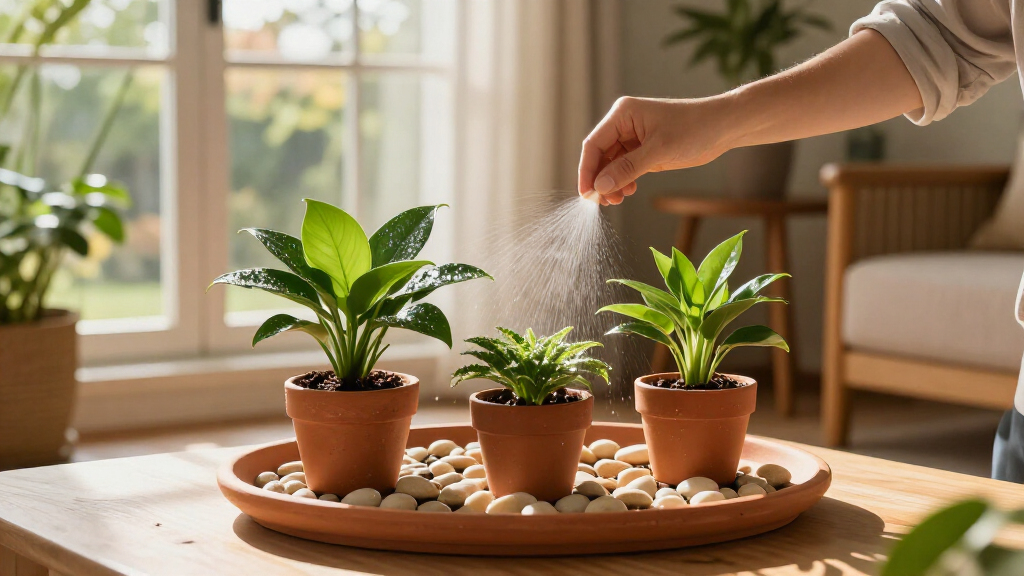
A humidity tray, also called a pebble tray, is a shallow container wider than the plant pot, filled with pebbles and water. The pot rests on the pebbles, with the water level below its base. According to Gardening Know How, water then evaporates into the air around the plant rather than being drawn directly into the potting mix. The publication suggests an old plant saucer, a deep plate or another shallow dish, along with small stones or pea gravel.
The article says indoor humidity can fall during winter because cold air holds less moisture and home heating dries indoor air further. It gives a typical winter home range of 20% to 40% humidity, compared with 40% to 60% as a range in which a number of adaptable houseplants thrive. It says more humidity-sensitive plants may do well at 55% to 80%, though actual conditions vary by home and plant.
Gardening Know How lists Boston and maidenhair ferns, elephant ears, prayer plants, calatheas, anthuriums, nerve plants and orchids among plants that may benefit from extra humidity. It also names peace lilies, monsteras, spider plants, snake plants, pothos and philodendrons as more adaptable plants that may still benefit. The article identifies brown leaf tips or edges, smaller or discolored leaves, and slow growth as possible signs associated with low humidity, not a diagnosis: other growing conditions can also affect plant health.
A Local Humidity Boost for Winter Plants
Heated indoor air can be a challenge for plants adapted to humid environments. A tray offers a simple way to add moisture to the air immediately around a pot, using household materials rather than a dedicated humidifier. Grouping plants together may also create a more humid local environment, the report says.
The advice matters most to readers caring for humidity-sensitive plants, but it does not promise a particular leaf finish or recovery. The source describes trays as a way to raise nearby humidity; it does not provide controlled measurements of how much humidity they add, how large an area they affect, or whether they produce glossier leaves. Readers should treat improved foliage as a possibility, not a guaranteed result.
Products Worth Considering

EGO Power+ 21 Self-Propelled Cordless Electric Lawn Mower Kit (LM2135SP)

Orbit B-hyve XR 8-Zone Indoor/Outdoor Smart Sprinkler Controller

Greenworks 40V 16-inch Push Lawn Mower with 4.0 Ah Battery and Charger
As an affiliate, we earn on qualifying purchases.
How the Pebble Tray Works
Plants lose water vapor through small openings in their leaves. Gardening Know How says dry air can increase moisture loss from foliage, with leaf tips and edges often showing symptoms first because they are farthest from water supplied by the roots. That explanation is the publication’s account; brown edges can also have causes beyond humidity, so a tray alone may not address every problem.
The tray’s basic setup is to fill a dish with pebbles, add water below the level of the pot’s base, and place the pot on top. Keep the potting soil and drainage holes out of standing tray water; the suggested effect comes from evaporation, not soaking the roots. The article advises topping up the water as it evaporates. It also suggests increasing the tray’s surface area if a larger humidity boost is desired, but supplies no measurements or performance comparison.
What the Tray Cannot Confirm
The source does not report tests comparing pebble trays with room humidifiers or give measured humidity changes around plants. It is therefore unclear how much difference a tray will make in a particular room, how long any local effect lasts, or whether it will resolve leaf damage. The article’s humidity ranges are presented as general guidance, not as a guarantee for every species or indoor setting.
It is also not possible to identify low humidity from brown leaf tips alone. The report names that symptom alongside smaller or discolored leaves and slow growth, but does not rule out other causes. Readers should check the plant’s overall conditions rather than assume a humidity tray will fix the problem.
Monitor Moisture Around the Plant
The practical next step is to set up the tray with the pot elevated above the water and watch both the water level and the plant’s condition. The article recommends a thermometer that also measures humidity as a way to monitor room conditions; it does not endorse a specific measurement as the right target for every plant.
If the air remains dry or the plant continues to show problems, gardeners can reassess its care and consider other ways of managing indoor humidity, including a humidifier. Gardening Know How also suggests grouping plants. No follow-up test or further publication milestone is identified in the source.
Key Questions
How do you make a houseplant humidity tray?
Use a shallow dish wider than the pot, fill it with small pebbles, and add water. Set the pot on the pebbles so its base remains above the water line, then top up the tray as water evaporates.
Which houseplants may benefit most?
The report highlights humidity-sensitive plants such as ferns, calatheas, prayer plants, elephant ears, anthuriums, nerve plants and orchids. It also lists adaptable plants, including pothos and monsteras, that may benefit from additional humidity.
Will a pebble tray make leaves glossy?
The source presents the tray as a way to raise humidity near a plant, but provides no measured results showing that it will make leaves glossy. Any improvement is not guaranteed, and other growing conditions may affect foliage.
What are signs of low humidity in a houseplant?
Gardening Know How lists brown leaf tips or edges, smaller or discolored leaves, and slow growth as possible signs. Those symptoms are not specific to humidity, so they should not be treated as proof that a plant needs a tray.
Source: gardeningknowhow.com