TL;DR

Get garden gear delivered free with Prime
- Fast, free delivery on millions of items
- Prime Video, Amazon Music and more included
- Member-only deals all year
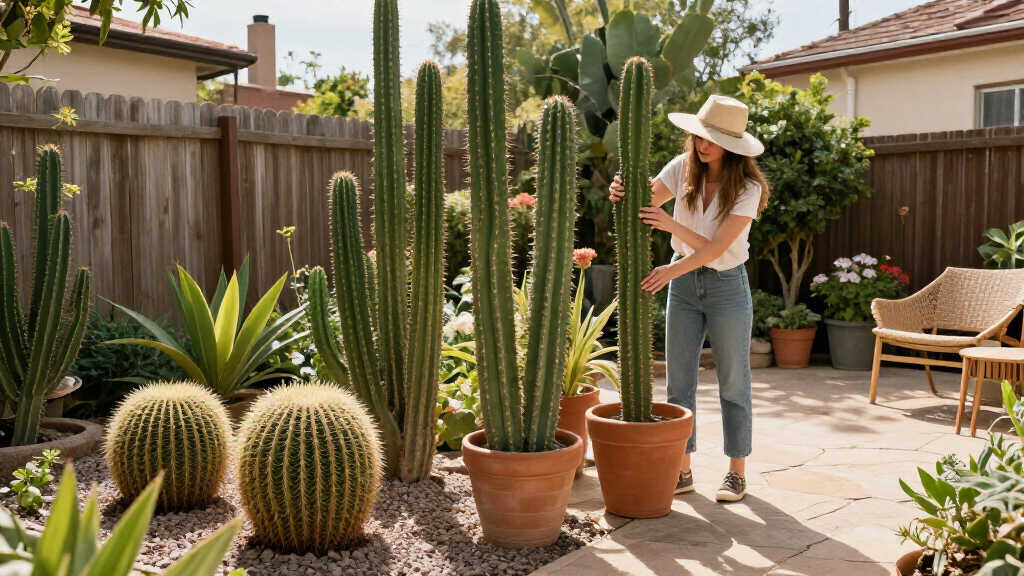
A Gardening Know How report uses the large cacti outside Mandy Moore’s former Pasadena home to explain how gardeners can create a similar focal point. Landscape and property experts recommend matching cactus varieties to local hardiness, giving large plants room, and using well-drained soil; cold-hardy prickly pears can suit some cooler gardens.
A Gardening Know How report has outlined how gardeners can use statement cacti to echo the sculptural outdoor planting visible from the living room of Mandy Moore’s former Pasadena home. The report says the look is not limited to hot climates, but emphasizes that plant choice, winter hardiness and drainage must fit local conditions.
The report describes large cacti outside Moore’s Pasadena property as a focal point framed by floor-to-ceiling windows. It does not identify the plants with certainty: the article says Moore was likely growing Euphorbia ammak, a plant it lists for USDA hardiness zones 9b through 11b. That identification is presented as an estimate, not a confirmed plant record.
Experts quoted in the report say cacti can provide shape and structure without relying on seasonal flowers. Marta Pawlik, co-founder and director of Laik, a luxury property management company, said she had used statement cacti at more than 50 premium properties. Landscape architect Noé Lerma of GreenMex also said a small number can create a strong visual effect, without needing to be surrounded by other plants.
The recommended varieties vary by space and climate. Pawlik points to golden barrel cacti for smaller gardens, prickly pears for medium-sized spaces, and blue columnar cacti for larger properties. The report says eastern prickly pear, Opuntia humifusa, can tolerate winters to USDA zone 4, while hardiness differs among cactus species. Lerma names organ-pipe forms, barrel cacti and Pachycereus as options for a more dramatic landscape.
Choosing Cacti for Local Winters
The advice matters to gardeners who like the architectural look but do not live in a desert climate. “Cactus” is not one hardiness category: a variety suited to southern California may not survive a colder garden, while some prickly pears can withstand much lower winter temperatures. A plant’s listed hardiness is only one part of the decision; local exposure and soil drainage also affect whether it will thrive.
The approach can also help homeowners avoid buying a striking specimen that overwhelms its setting. The experts advise treating a large cactus as the main feature, then adding restrained companions and ground cover. The goal is not to reproduce Moore’s garden plant-for-plant, but to use scale, spacing and contrast in a way that suits the site.
cold hardy eastern prickly pear cactus live plant zone 4
As an affiliate, we earn on qualifying purchases.
As an affiliate, we earn on qualifying purchases.
The Design Advice Behind the Look
The Gardening Know How report frames cacti as durable sculptural plants that can hold visual interest throughout the year. Pawlik said their forms can fill a space without waiting for blooms; Lerma said individual plants are easy to appreciate on their own. Those are the experts’ design assessments, rather than a guarantee that every cactus will require no care.
For planting combinations, Lerma recommends avoiding clusters of oversized specimens that compete for attention. He suggests softer companions such as fountain grass, natal plum, purple ruellia or desert rose, alongside crushed stone. Pawlik describes pairing blue fescue with a columnar cactus against dark wood. The report presents gravel as both a visual choice and a way to support drainage, but the planting site still needs to be prepared for the species selected.
Pawlik also warns about scale: she recalled an owner buying a six-foot saguaro that looked out of place in the yard. Her anecdote illustrates why gardeners should account for a plant’s mature size and the dimensions of the landscape before purchasing it. Lerma’s guidance is to give each statement plant room to stand out.
“Cacti serve as great focal points because they fill up the space they occupy without any effort.”
— Marta Pawlik, co-founder and director of Laik
golden barrel cactus live plant outdoor
As an affiliate, we earn on qualifying purchases.
As an affiliate, we earn on qualifying purchases.
Hardiness Depends on the Site
The report does not confirm which cactus species grows at Moore’s former home; it describes Euphorbia ammak only as a likely identification. It also does not provide the report’s publication date, a full planting plan for that property, or measured results for how the suggested varieties perform across different regions.
Claims about low maintenance are not universal care instructions. The source stresses drainage and species selection, but does not give a detailed watering schedule or guidance for every soil type and microclimate. Gardeners should check the hardiness range for the exact species and local growing conditions before planting; the examples cited are not interchangeable.
cactus and succulent well draining soil mix outdoor
As an affiliate, we earn on qualifying purchases.
As an affiliate, we earn on qualifying purchases.
Check Hardiness Before Planting
The next practical step is to identify the garden’s USDA hardiness zone, assess how water drains from the intended planting area, and select a cactus suited to those conditions. Gardeners seeking the tall, vertical look in Moore’s garden can compare columnar varieties, while those in colder areas may investigate hardy Opuntia species.
Before buying, check the plant’s mature size and leave room for it to develop. If the site is unsuitable for a particular cactus, Lerma advises looking for a species with a similar appearance that fits the climate. The report does not announce a new planting project or future update; it offers design and selection advice rather than a change in Moore’s garden.
cactus gravel top dressing landscaping
As an affiliate, we earn on qualifying purchases.
As an affiliate, we earn on qualifying purchases.
Key Questions
Which cactus was likely planted at Mandy Moore’s former home?
The report says it was likely Euphorbia ammak, but it does not confirm the identification. It lists that species as typically suited to USDA zones 9b through 11b.
Can statement cacti grow in colder climates?
Some can. The report says eastern prickly pear, Opuntia humifusa, can tolerate conditions down to USDA zone 4. Hardiness varies by species, so check the specific plant’s range and local conditions.
How should large cacti be arranged in a garden?
The experts recommend giving each large cactus space to act as a focal point. Lerma advises against placing too many large specimens close together, while the report suggests using a few softer plants or stones as companions.
Does a cactus garden need gravel?
The report suggests crushed stone or gravel for a desert-style finish and says it can support drainage. It does not establish that gravel is suitable for every soil or planting setup, so drainage needs should be considered at the specific site.
Source: rss
Halloween Picks
halloween
As an affiliate, we earn on qualifying purchases.