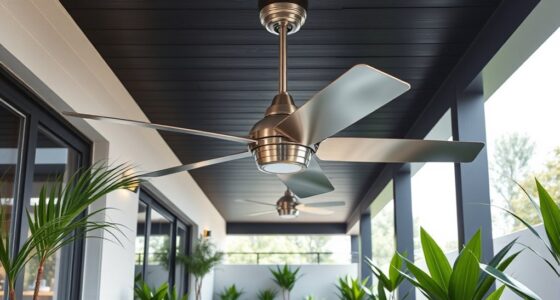

To create effective cross-ventilation with multiple ceiling fans, position them near windows or vents to promote airflow from one side of the room to the other. Use fans rotating counterclockwise in summer to push air downward and encourage fresh breezes, and space them adequately to prevent turbulence. Adjust fan speeds and directions to optimize airflow paths. If you keep exploring, you’ll discover how to fine-tune these strategies for maximum comfort.
Key Takeaways
- Position ceiling fans to promote airflow from open windows or vents, creating a flow across the room.
- Rotate fans clockwise or counterclockwise based on season to optimize air movement and cross-ventilation.
- Space fans strategically to establish a continuous breeze without causing turbulence or airflow obstruction.
- Place fans near openings to draw in fresh air and push stale air out effectively.
- Adjust fan speed and direction as needed, monitoring airflow to maximize ventilation efficiency.
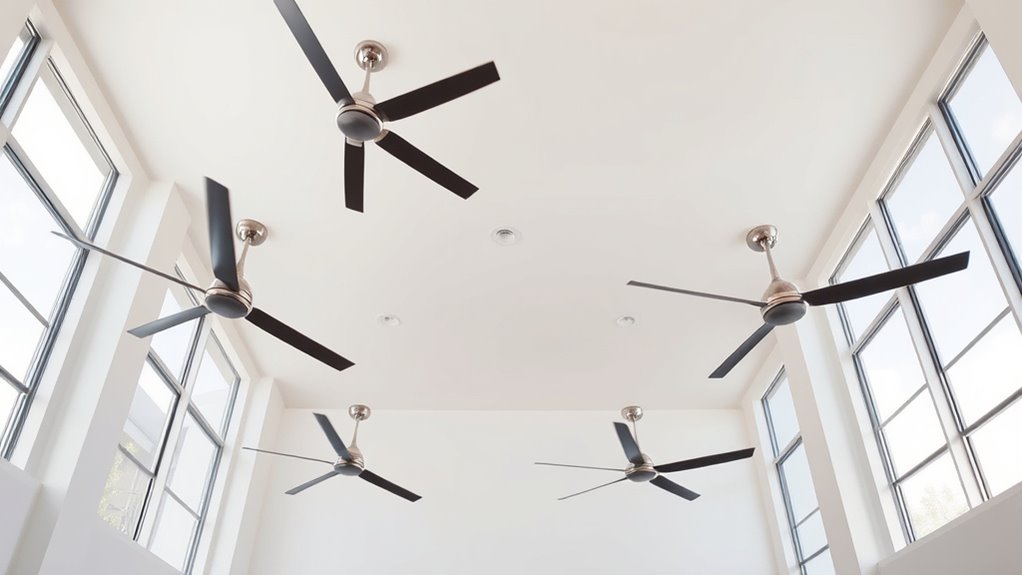
Creating effective cross-ventilation can substantially improve airflow and indoor comfort, especially during warm weather. When you understand air flow dynamics, you can optimize how multiple ceiling fans work together to move air efficiently throughout your space. The key is to create a flow pattern that encourages fresh air to enter while stale air exits, reducing indoor temperatures and humidity levels. To do this, you need to carefully consider fan placement strategies. Proper positioning is essential to maximize air circulation and ensure that each fan complements the others rather than working against them.
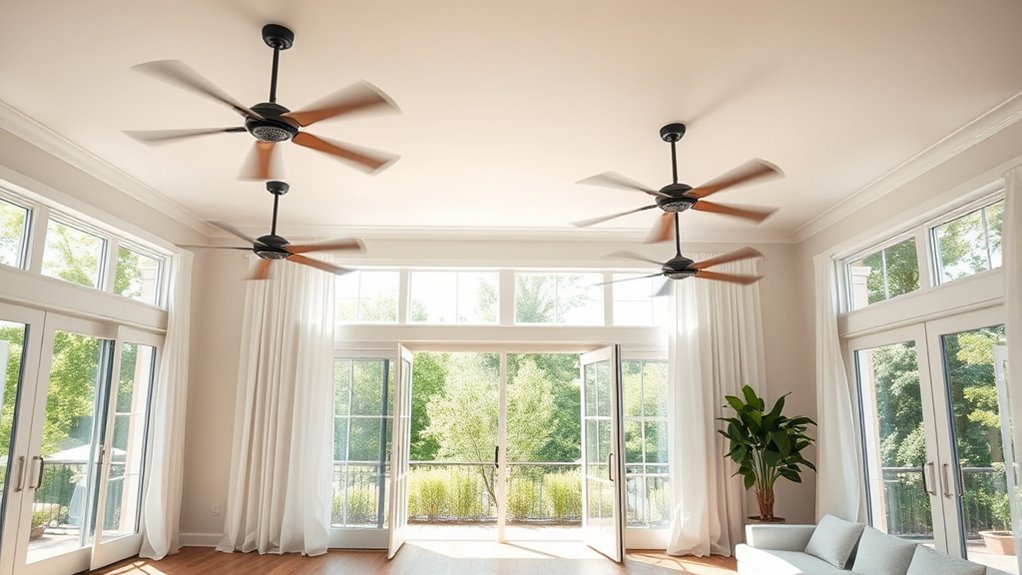
Start by identifying the natural flow of air in your room—whether from windows, doors, or existing vents. You want to position fans so that they promote a steady flow across the space, ideally from one side to the other. For example, if you have windows on opposite walls, place the fans near these openings. One fan should be set to draw air in, creating a cool inlet, while the other pushes air out, facilitating a continuous exchange. This setup harnesses air flow dynamics to establish a cross-ventilation pattern that refreshes your indoor environment. The placement strategy involves not only the location but also the direction in which fans blow. Ceiling fans should be set to rotate counterclockwise in summer, pushing air downward and creating a breeze that cools the room. Conversely, in winter, reversing the fans to clockwise helps circulate warm air trapped near the ceiling.
When planning your fan layout, consider the height and size of your ceiling. Higher ceilings may require larger or more strategically placed fans to ensure effective air movement. You should also avoid blocking airflow with furniture or fixtures that could impede the natural movement of air between fans. Positioning fans at ideal distances from each other is essential; placing them too close can create turbulent air, while too far apart might reduce overall effectiveness. The ideal spacing allows air to flow smoothly from one fan’s output to the next, establishing a continuous breeze that covers the entire room. Understanding air flow dynamics can help you better anticipate how air moves within your space and optimize your fan placement accordingly.
Finally, monitor how your ventilation setup performs and make adjustments as needed. Small changes in fan speed, direction, or placement can greatly impact air flow dynamics. With a clear understanding of these principles and thoughtful fan placement strategies, you’ll create a comfortable, well-ventilated space that stays cool even during the hottest days.
Frequently Asked Questions
How Many Ceiling Fans Are Ideal for Effective Cross-Ventilation?
You should use at least two ceiling fans for effective cross-ventilation. Proper fan placement is key; position them across from each other to optimize airflow. When fans work together, airflow is enhanced, creating a breeze that cools the space efficiently. To get the best results, make certain fans are set to oscillate or run in sync, maximizing airflow optimization and maintaining comfortable temperatures throughout your room.
Can Ceiling Fans Improve Indoor Air Quality Beyond Ventilation?
You might wonder if ceiling fans can do more than just move air. While they mainly promote ventilation, they also help with humidity control and air purification by circulating stale air and reducing indoor pollutants. Fans create a breeze that encourages moisture to evaporate and stale air to escape, improving air quality. So yes, ceiling fans can enhance your indoor environment by supporting cleaner, drier, and more comfortable air.
What Room Sizes Are Best Suited for Multiple Ceiling Fans?
Room sizes that work best for multiple ceiling fans typically have larger dimensions, like living rooms or open-concept areas. You should consider room dimensions to guarantee fans are spaced properly for ideal airflow. Fan placement is key—install fans evenly across the space, ideally along the length or width, to promote cross-ventilation. Smaller rooms may not need multiple fans, as it could cause excessive airflow or noise.
Are There Specific Fan Designs That Enhance Cross-Ventilation?
You’ll want fans with blade curvature and specific blade angles to improve airflow and enhance cross-ventilation. Fans with more pronounced blade curvature move air more efficiently, creating better drafts. Adjustable blade angles allow you to optimize airflow direction. By choosing ceiling fans with these features, you actively promote better air circulation, making your space cooler and more comfortable. Properly positioned fans with these design elements work together to maximize cross-ventilation effectively.
How Do Outdoor Elements Affect the Efficiency of Ceiling Fans?
Imagine outdoor airflow suddenly shifting—could it make your ceiling fan less effective? Wind resistance from outdoor elements considerably impacts your fan’s efficiency. Strong gusts can disrupt airflow, reducing its cooling power. You might notice less comfort when outdoor breezes are unpredictable. To maximize performance, consider positioning fans where outdoor airflow is calmer, and shield them from direct wind. This way, your fans work smarter, not harder, even amid fluctuating outdoor conditions.
Conclusion
By strategically using multiple ceiling fans to create cross-ventilation, you can markedly improve your home’s airflow and comfort. While some believe it only cools the room slightly, proper placement actually boosts air circulation and reduces indoor temperatures more effectively. Give it a try—you’ll likely notice a fresher, more comfortable space without cranking up the AC. So, go ahead, experiment with your fans, and enjoy a breezy, energy-efficient home all year round.