In snowy environments, choosing between damp-rated and wet-rated fans depends on exposure to water and moisture. Damp-rated fans are suitable for covered areas with humidity but no direct water contact, while wet-rated fans handle direct exposure to snow, rain, and ice. Wet-rated models are more durable for open, unprotected spaces. To guarantee safety and longevity, you’ll want the right type for your setting—more details can help you make an informed choice.
Key Takeaways
- Wet-rated fans are designed for direct water exposure and better suited for open, snowy outdoor areas.
- Damp-rated fans handle humidity and snow but are best for covered spaces without direct water contact.
- Proper installation, including weatherproofing, is essential to ensure durability in snowy environments.
- Materials like corrosion-resistant components extend the lifespan of both damp and wet-rated fans in winter conditions.
- Wet-rated fans generally offer superior protection against snow and ice, making them more reliable in harsh outdoor winter environments.
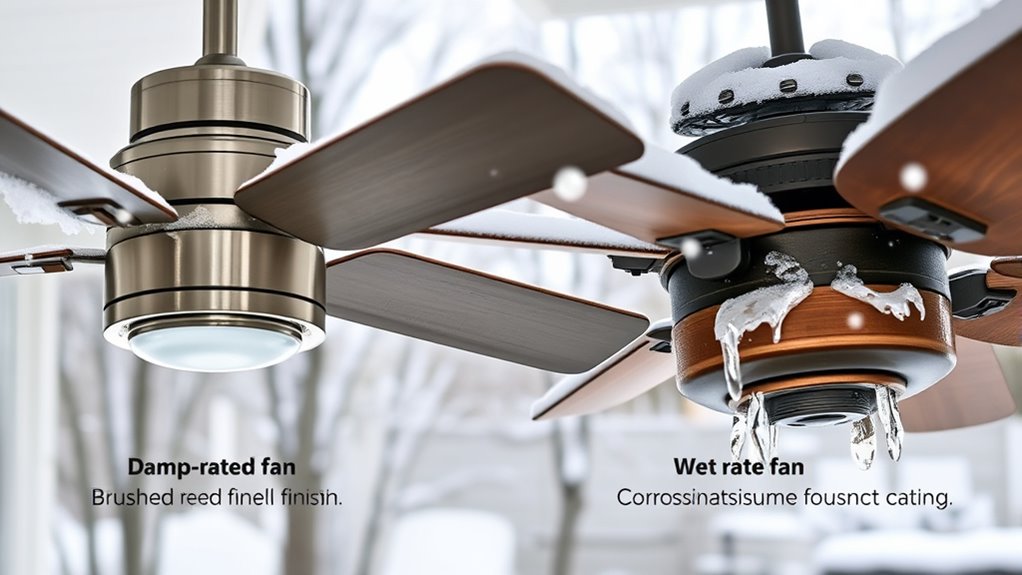
When choosing ceiling fans for outdoor or high-moisture areas, understanding the difference between damp-rated and wet-rated fans is fundamental. This knowledge helps you make informed decisions that guarantee safety, durability, and peak performance, especially in snowy environments. Snowy conditions introduce unique challenges, such as heavy snowfall, ice buildup, and fluctuating temperatures, which directly impact installation considerations and energy efficiency.
Understanding damp-rated versus wet-rated fans ensures safety and durability in snowy outdoor conditions.
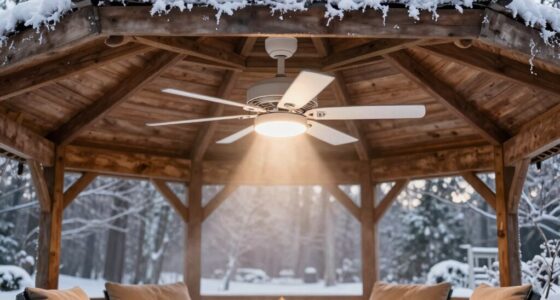
Damp-rated fans are designed to withstand moisture and humidity but are not built to endure direct contact with water. If you’re installing a fan on a covered porch, gazebo, or patio where the fan won’t be directly exposed to rain or snow, a damp-rated fan is typically sufficient. These fans are usually easier to install because they don’t require extensive waterproofing measures. However, in snowy environments, it’s vital to consider how snow accumulation or melting might affect the fan’s performance. Improper installation, such as mounting the fan too close to snow outlets or where snow can drift onto it, may lead to damage or safety hazards. For peak energy efficiency, choose models with efficient motors and blades designed to move air effectively without excessive power consumption. Proper installation ensures the fan operates smoothly and conserves energy, reducing long-term costs.
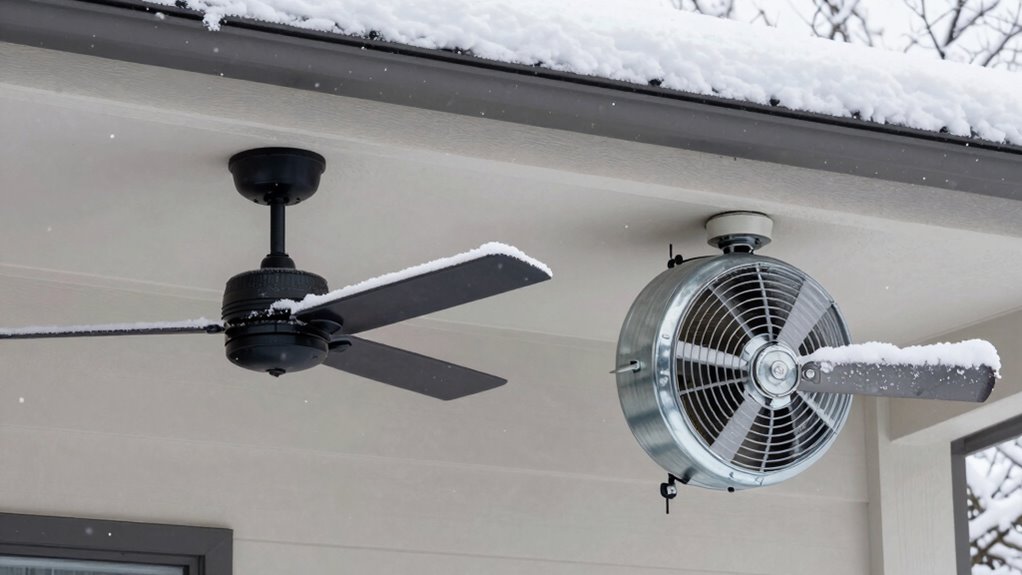
Additionally, selecting fans with corrosion-resistant materials can significantly extend their lifespan in snowy and icy conditions. When considering the fan’s design features, look for models that include sealed bearings and weatherproof housings to better withstand harsh weather. These features help prevent moisture ingress and mechanical wear caused by cold temperatures. Regular inspection and preventive maintenance are also crucial to identify potential issues early and ensure continued safe operation. Wet-rated fans, on the other hand, are built to endure direct exposure to water, making them suitable for unprotected outdoor settings such as open decks or areas where snow and rain can fall freely. When installing a wet-rated fan, you must pay close attention to installation considerations, ensuring the fan is mounted securely and weatherproofed properly. This might involve sealing electrical connections, using weather-resistant mounting hardware, and ensuring the fan’s housing is fully waterproof. In snowy environments, a wet-rated fan can handle snow and ice better, but you still need to consider how snow buildup might impact the blades’ movement or cause imbalance. Additionally, choosing energy-efficient wet-rated fans with high-quality motors and aerodynamic blades can help reduce energy consumption, even in cold conditions.
In snowy environments, both damp and wet-rated fans require careful installation to maximize safety and efficiency. While damp-rated fans are suitable for covered areas, wet-rated fans offer greater durability against direct exposure to snow and ice. Proper installation practices and maintenance are essential to ensure long-lasting performance and safety. Regardless of your choice, prioritizing energy-efficient models and following proper installation guidelines will guarantee your ceiling fan remains reliable and cost-effective over time. Properly installed fans not only enhance comfort but also help you save on energy bills, making them a smart investment in challenging weather conditions.
Frequently Asked Questions
Can Damp-Rated Fans Be Used Indoors and Outdoors Interchangeably?
Damp-rated fans can be used indoors and outdoors, but they’re best suited for covered outdoor areas where they won’t face direct exposure to rain or snow. For indoor comfort and aesthetic considerations, these fans work well without risking damage. However, if you need a fan for a fully exposed outdoor space, a wet-rated fan offers better durability. Always choose based on your specific environment to guarantee ideal performance and longevity.
How Do I Identify if a Fan Is Damp-Rated or Wet-Rated?
Think of fan identification like a traffic light—green means go, red means stop. To identify if a fan is damp-rated or wet-rated, check its rating labels usually found on the motor or mounting bracket. Wet-rated fans have more robust labels indicating suitability for direct exposure to water and harsh elements. Damp-rated fans have labels showing they’re designed for areas with moisture but not direct water contact, guiding you on proper use.
Are Wet-Rated Fans Suitable for Areas With Frequent Snow Accumulation?
Wet-rated fans are suitable for areas with frequent snow accumulation because they’re designed to handle moisture and keep working despite snow exposure. They offer superior corrosion resistance, ensuring they won’t rust or degrade over time from snow and moisture. If your space encounters regular snow buildup, installing a wet-rated fan helps maintain durability and airflow, making it a reliable choice for harsh winter conditions.
Do Damp-Rated Fans Require Special Maintenance in Snowy Environments?
Ever wonder if damp-rated fans need extra care in snowy conditions? They do require special maintenance, like corrosion prevention measures and ensuring proper insulation requirements. You should regularly inspect for rust or moisture buildup and keep the fan’s electrical components dry. Do you want your fan to last longer? Proper maintenance helps withstand snow’s moisture, reducing damage and maintaining safe, efficient operation year-round.
What Safety Precautions Should I Take When Installing Fans Outdoors in Snow?
When installing outdoor fans in snow, you should clear snow accumulation from the area first. Make sure the power is turned off before installation to prevent electrical safety hazards. Use outdoor-rated, damp or wet-rated fans suitable for snowy conditions, and verify all connections are secure and weatherproof. Additionally, consider installing a safety switch or breaker to avoid potential electrical issues caused by moisture or snow.
Conclusion
Choosing between damp-rated and wet-rated fans helps you navigate the delicate balance of outdoor comfort. Think of damp-rated fans as gentle rain showers that keep things cozy without overwhelming, while wet-rated fans are like a invigorating splash on a snowy day, ready for harsher conditions. By selecting the right type, you create a welcoming space that whispers tranquility even in the chilliest moments. With the right fan, you turn outdoor spaces into a serene retreat, no matter the weather.