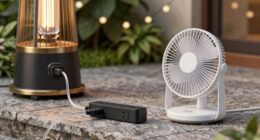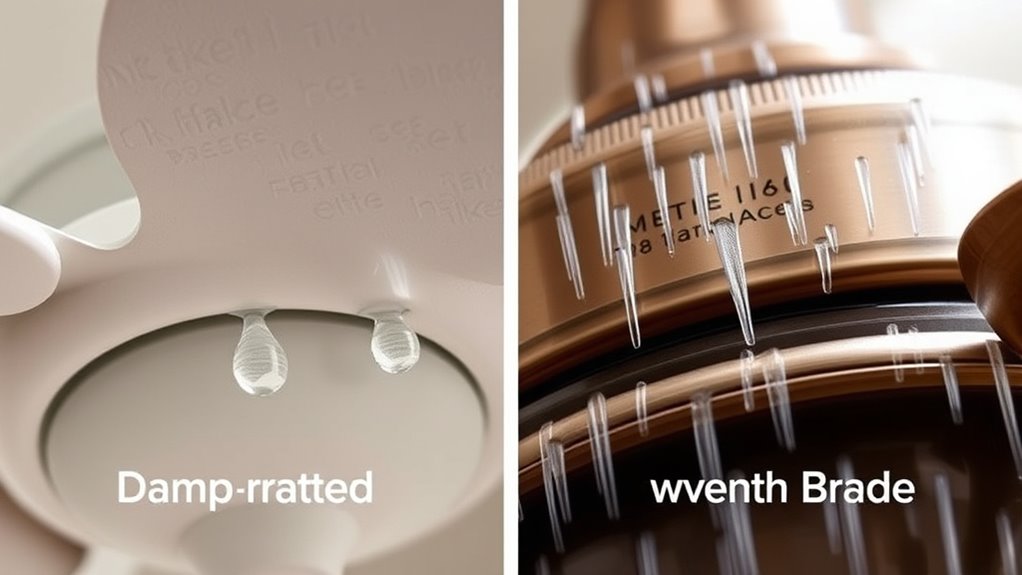

Choose damp-rated blades for areas with high humidity but limited water contact, like covered porches or bathrooms. Use wet-rated blades for outdoor spaces exposed to rain, snow, or direct water spray. The key is matching the blade’s rating to the environment to prevent damage and guarantee longevity. If you’re unsure about your space’s conditions, you’ll discover more details and guidance to make the best choice as you look further.
Key Takeaways
- Choose damp-rated blades for covered outdoor areas or high-moisture indoor spaces with limited direct water contact.
- Opt for wet-rated blades in fully exposed outdoor environments subject to rain, snow, or harsh weather conditions.
- Consider environmental exposure: damp-rated blades suit humid but sheltered areas, while wet-rated blades handle direct water exposure.
- Use damp-rated blades where occasional moisture occurs; switch to wet-rated blades for continuous water exposure.
- Select blade material and rating based on whether the space is protected or fully exposed to water and weather elements.
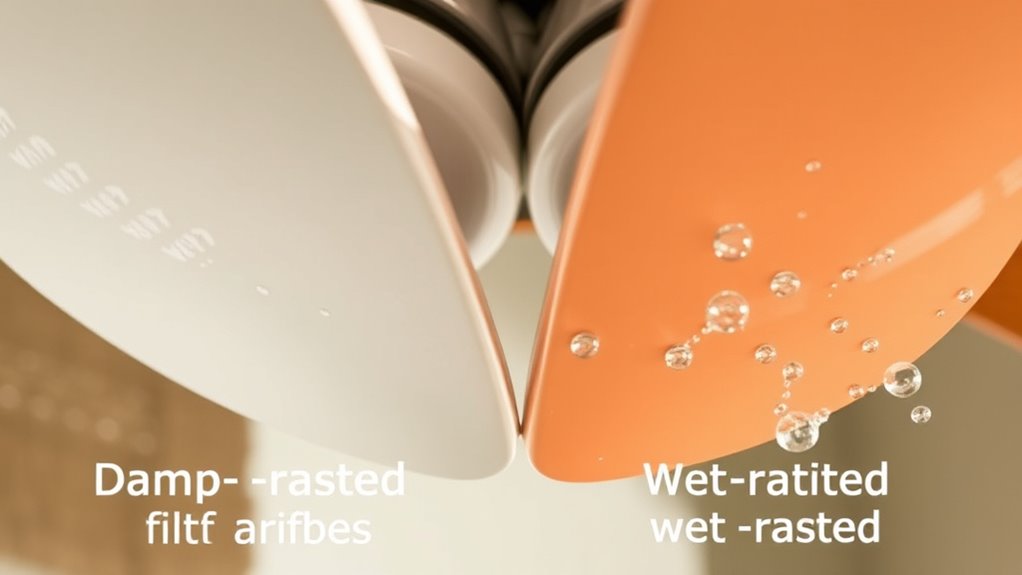
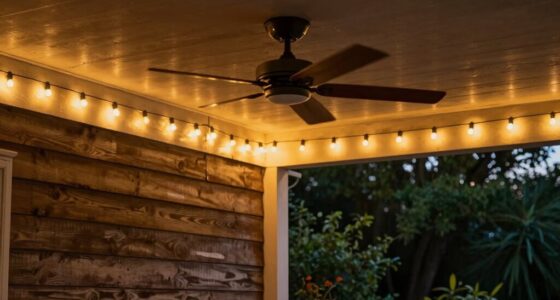
When choosing ceiling fan blades, understanding the difference between damp-rated and wet-rated options is vital, especially if your fan will be installed outdoors or in areas exposed to moisture. Damp-rated blades are designed to withstand humidity and occasional splashes of water, making them suitable for covered porches, patios, or indoor spaces with high moisture levels. Wet-rated blades, on the other hand, are built to handle direct exposure to rain, snow, and harsh weather conditions, making them ideal for fully exposed outdoor areas.
Blade material durability plays an important role here. Damp-rated blades are typically made from materials like treated wood, composite, or PVC, which resist moisture but aren’t intended for direct contact with rain. These materials help maintain the blade’s structural integrity over time, preventing warping, rotting, or corrosion. Wet-rated blades are constructed from highly durable, weather-resistant materials such as metal, specially coated wood, or composite with protective finishes. These materials are designed to endure constant exposure to water and the elements without degrading or losing their strength. Choosing the right material for your environment guarantees your fan maintains ideal airflow efficiency, providing consistent cooling and air circulation without frequent replacement or repairs.
Additionally, considering the environmental conditions is essential to selecting the appropriate blades, as it ensures longevity and optimal performance of your ceiling fan.
Frequently Asked Questions
Can Damp-Rated Blades Be Used Outdoors?
Damp-rated blades are designed to handle moisture, so you can use them outdoors if your installation location isn’t exposed to direct rain or standing water. Check the blade material—stainless steel or other corrosion-resistant materials are best for outdoor use. If your blades are installed in a covered area or protected from direct weather, damp-rated blades work well. For exposed outdoor environments, wet-rated blades are the safer choice.
Are Wet-Rated Blades Suitable for Indoor Use?
Imagine a blade gliding smoothly through air, its sturdy blade materials ready for any environment. Wet-rated blades are designed for harsh outdoor conditions, so they’re not suitable for indoor use where moisture levels are low. These blades are built for installation locations exposed to rain or water splashes. Using them indoors can cause unnecessary wear, so choose blades specifically rated for indoor or damp environments to guarantee safety and longevity.
How Do I Maintain Damp-Rated Blades?
To maintain damp-rated blades, you should regularly clean them to prevent dust buildup and corrosion. Use a soft cloth or a gentle brush to wipe the blades, avoiding harsh chemicals that could damage the coating. Check for any signs of rust or corrosion and address them promptly. Proper blade maintenance and cleaning tips will ensure your blades stay in top condition, enhancing performance and longevity, especially in damp environments.
What Are the Safety Concerns With Wet-Rated Blades?
Like stepping into the rain with a sword, using wet-rated blades poses safety risks. You must guarantee blade durability and proper installation safety because exposure to moisture can cause corrosion, weakening the blade over time. If not installed correctly, it increases the risk of electrical hazards or blade failure. Always follow manufacturer guidelines and use blades designed for wet environments to keep yourself safe and equipment functioning properly.
Are There Cost Differences Between Damp-Rated and Wet-Rated Blades?
You’ll find that wet-rated blades tend to be more expensive than damp-rated ones because they offer higher blade durability and corrosion resistance suited for harsh environments. These increased costs can also affect installation, as wet-rated blades may require specialized equipment or extra protective measures. Ultimately, investing in wet-rated blades could save you money long-term by reducing maintenance and replacement needs, especially in outdoor or wet conditions.
Conclusion
Now that you know the difference between damp-rated and wet-rated blades, picture your fan blades slicing through the mist on a rainy porch or gliding smoothly in a humid outdoor space. Choosing the right blades means your fan can brave the elements without hesitation, keeping your space comfortable and safe. So, next time you’re installing or replacing, trust your eye for environment—your fan will thank you, and so will your space’s durability.