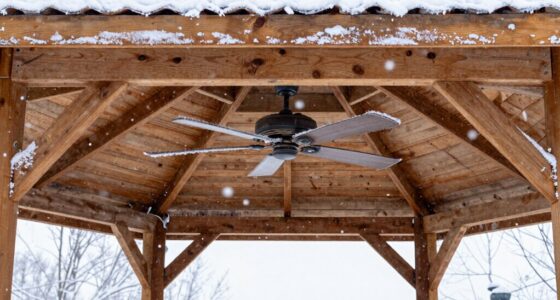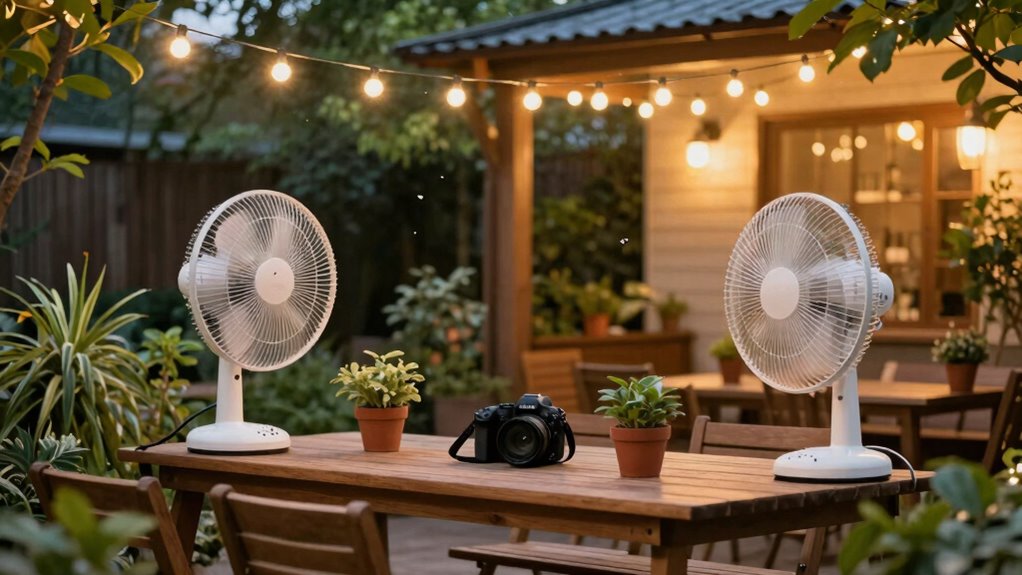
To create a pest barrier for bug-free spring evenings, position your fans at key entry points and along your outdoor space’s perimeter, aiming them slightly above waist level. Use oscillating fans or multiple units to cover larger areas, angling them to blow across seating zones rather than directly at people. Steady airflow disrupts bug flight paths and pushes pests away, making your outdoor time more comfortable. Keep exploring to discover even more tips for an enjoyable, pest-free outdoor experience.
Key Takeaways
- Position fans at waist level or slightly above, aimed to blow across seating areas for effective airflow.
- Place fans at entry points and perimeter zones to create a barrier that deters pests from entering outdoor spaces.
- Use oscillating or multiple fans to ensure consistent airflow across larger outdoor areas.
- Angle fans to direct airflow across gathering spots rather than directly at people for maximum pest disruption.
- Combine fan placement with yard maintenance, like eliminating standing water, for enhanced pest prevention.
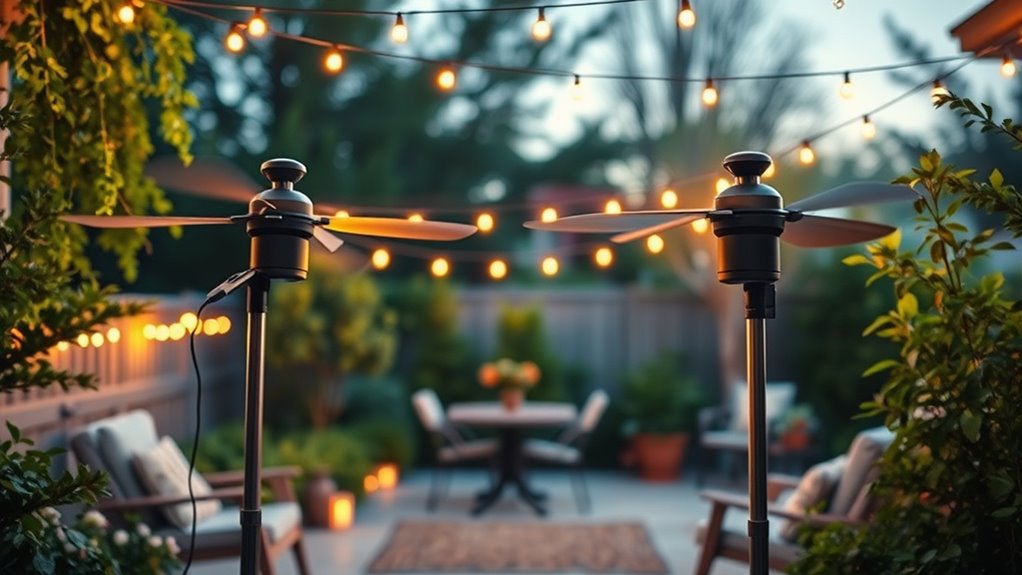
Spring evenings are meant to be enjoyed outdoors, but pesky bugs can quickly ruin the experience. One of the most effective ways to keep those bugs at bay is by strategically positioning fans around your outdoor space. Not only do fans help with outdoor cooling, creating a more comfortable environment as temperatures rise, but they also serve as a formidable barrier against mosquitoes and other pests. When you set up fans correctly, you create airflow that disrupts the flight paths of bugs, making it difficult for them to land or even approach you.
Start by placing fans at key entry points and along the perimeter of your patio or deck. Positioning them at waist level or slightly above is ideal since it maximizes airflow across the space. Make sure the fans are angled to blow across seating areas rather than directly at them, which promotes a gentle breeze rather than a constant wind that could be uncomfortable. This airflow not only cools you naturally but also serves as mosquito prevention because mosquitoes are weak flyers. They rely on still air to land and feed, so a steady breeze effectively keeps them from settling nearby.
Position fans at waist level, angled to blow across seating areas for effective mosquito prevention.
It’s important to use oscillating fans or multiple fans working in tandem to cover larger areas. This creates a consistent barrier of moving air, making it difficult for bugs to navigate through the space. Keep in mind that outdoor cooling isn’t just about comfort; it’s about creating an environment where pests can’t thrive. When mosquitoes encounter the turbulence caused by fans, they struggle to fly and are pushed away from your gathering spot. This single step markedly reduces the risk of bites and the annoyance of buzzing insects, allowing you to relax and enjoy the evening.
To maximize mosquito prevention, combine fan placement with other tactics like eliminating standing water around your yard and using citronella candles. But fans are one of the most straightforward, chemical-free solutions for pest control. As you set up your outdoor space, remember that well-positioned fans do double duty: they keep you cool and create a pest barrier. This simple adjustment can transform your spring evenings, letting you savor the outdoors without constantly swatting away bugs or worrying about pesky bites. With a little planning, you’ll enjoy bug-free, comfortable, and cool spring nights whenever you choose to spend time outside.
Frequently Asked Questions
Can Fans Be Used to Repel All Types of Pests Effectively?
Fans can help repel many pests by disrupting insect behavior and acting as mosquito deterrents. They create airflow that makes it difficult for pests to fly or land, especially mosquitoes. However, fans aren’t effective against all pests, like flies or ants. To maximize protection, combine fans with other methods. While fans are useful, they work best as part of an integrated pest management approach, not as a standalone solution.
What Is the Ideal Distance to Position Fans for Pest Control?
Think of your fans as gentle guardians warding off pests. You should position fans about 3 to 4 feet apart, creating a barrier that disrupts pests’ flight paths. Keep the pest deterrent distance consistent, ensuring airflow covers your entire outdoor area without leaving gaps. This strategic fan placement keeps insects at bay, letting you enjoy spring evenings pest-free and peaceful.
Do Outdoor Fans Consume a Lot of Energy During Pest Prevention?
Outdoor fans don’t consume a lot of energy during pest prevention, making them quite cost-efficient. You’ll find that their energy consumption is moderate, especially if you choose energy-efficient models. To maximize cost efficiency, run the fans only when needed and at lower speeds. This way, you help keep pests away without considerably increasing your energy bills, ensuring an effective and affordable pest control solution for your outdoor evenings.
Are There Safety Concerns When Using Fans Around Children and Pets?
You should be aware that around 40% of indoor accidents involve children and pets, so safety is vital. Fans can pose risks if they’re within reach or if cords are accessible. To protect child safety and pet protection, keep fans out of their reach, secure cords, and use fans with safety features like grills. Always supervise outdoor fan use to prevent accidents and guarantee everyone stays safe.
How Long Should Fans Be Kept Running to Maintain a Pest Barrier?
You should keep fans running for at least a few hours in the evening, ideally from dusk until late at night, to maintain an effective pest barrier. Regular fan maintenance guarantees ideal airflow patterns, which help deter bugs. Adjust the fans if needed to cover the entire area evenly. Continuous operation during peak pest activity hours maximizes the barrier, but remember to turn them off safely when not in use or if safety concerns arise.
Conclusion
As the evening fades, let your carefully placed fans be your gentle guardians, softly guiding the tiniest intruders away like whispers in the breeze. With a touch of your thoughtful touch, you create a peaceful sanctuary where insects drift elsewhere, leaving you to enjoy the serenity of spring nights. Embrace this dance of air and calm, knowing your quiet vigilance keeps the pests at bay, so you can savor every bug-free, starry moment.