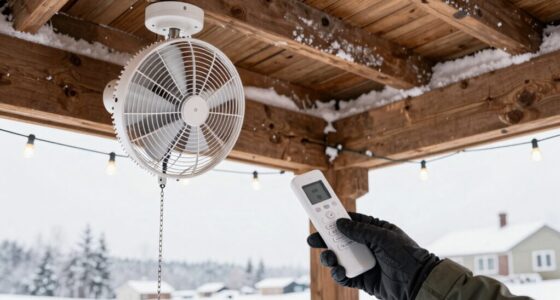
Garage ceiling fans often go unnoticed during winter, but they’re actually a smart way to keep your workspace comfortable. Running fans clockwise at a low speed pushes warm air trapped near the ceiling down to your level, reducing cold spots. This helps you stay cozy without cranking up the heat and can even lower energy bills. Want to discover how choosing the right fan and proper placement can maximize your winter comfort? Keep exploring for more tips.
Key Takeaways
- Garage ceiling fans improve air circulation, preventing cold spots and maintaining consistent warmth during winter projects.
- Running fans clockwise at low speed pushes warm air downward, enhancing comfort without extra heating.
- Properly installed fans can reduce energy costs by decreasing reliance on space heaters or additional heating sources.
- Ceiling fans help distribute heat evenly, creating a more comfortable and productive workspace.
- Selecting energy-efficient models ensures long-term savings and environmentally friendly operation for winter use.
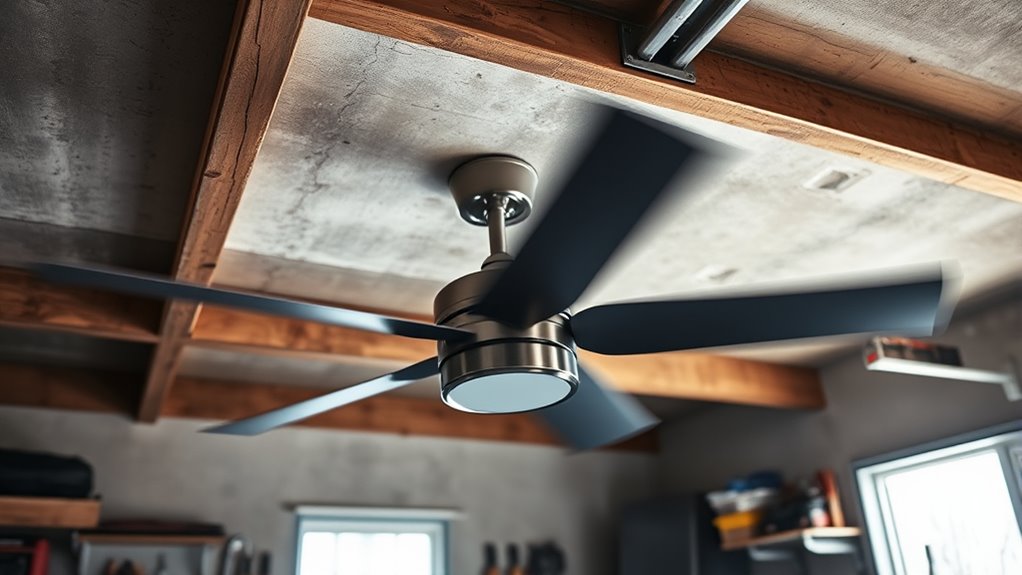
A garage ceiling fan can be a game-changer for your workspace, helping to keep the area cool and comfortable year-round. Even in winter, when you’re working on projects that generate heat or simply need better air circulation, a ceiling fan enhances your environment. It’s a simple addition that can make your garage more efficient and enjoyable, especially during those long weekends or DIY sessions. When choosing a fan, energy efficiency should be at the top of your list. Look for models with high-quality motors and blades designed to maximize airflow while consuming less power. Energy-efficient fans not only cut down on your electricity bills but also reduce your environmental impact, making them a smart investment in the long run.
Installing a garage ceiling fan might seem intimidating, but with a few straightforward tips, you can do it yourself and save some money. First, ensure your ceiling can support the weight of the fan. Use a sturdy mounting bracket and confirm the electrical box is rated for ceiling fan installation. Before starting, turn off the power at the circuit breaker to avoid any shocks. Follow the manufacturer’s instructions carefully, paying attention to the wiring diagram. Proper installation tips include mounting the fan at an ideal height—about 8 to 9 feet from the floor—to maximize airflow and safety. Make sure the fan is balanced and securely fastened to prevent wobbling, which can cause noise and wear.
Once installed, consider the fan’s placement. Position it centrally in your garage to ensure even airflow across the entire space. During winter projects, a ceiling fan can help circulate warm air trapped near the ceiling, preventing cold spots and maintaining a more consistent temperature. Many fans come with a reverse switch, allowing you to change the direction of rotation. Running the fan clockwise on low speed during winter can gently push warm air downward, making the space feel warmer without cranking up the heater. This not only improves comfort but also enhances energy efficiency by reducing heating costs.
Frequently Asked Questions
Can Garage Ceiling Fans Be Used to Heat the Space?
Garage ceiling fans can’t directly heat your space, but they can help with winter heating by improving air circulation. When you set the fan to rotate clockwise at a low speed, it pushes warm air down, making your garage feel warmer. Proper fan placement is key—install it where it can evenly distribute heat. Use this trick to maximize your garage’s warmth and save on heating costs during winter.
Are Garage Ceiling Fans Suitable for Low-Ceiling Installations?
Did you know that nearly 60% of garages have low ceilings? Ceiling fan types vary, but many are suitable for low-ceiling installations if chosen carefully. You should consider installation challenges, such as making certain there is enough clearance and proper mounting. Compact or flush-mount fans work best, making your space comfortable without hanging too low. Always check the product specifications to make sure of compatibility with your garage’s ceiling height before installing.
How Energy-Efficient Are Garage Ceiling Fans During Winter?
Garage ceiling fans are quite energy-efficient during winter, helping you save on heating costs. They distribute warm air evenly, reducing the need to turn up the heat and improving insulation benefits. By running your fan, you can maintain a comfortable temperature without extra energy expenditure. This efficient circulation boosts energy savings and keeps your garage cozy, making ceiling fans a smart winter addition for comfort and cost reduction.
Do Garage Ceiling Fans Require Special Wiring or Outlets?
Garage ceiling fans typically don’t require special wiring or outlets. You just need standard electrical wiring and a power outlet nearby to install them safely. Most fans connect directly to your existing circuit, making installation straightforward. However, if your garage has outdated wiring or limited outlets, you might need an electrician to upgrade your electrical setup. Always follow manufacturer instructions to guarantee safe, proper installation.
What Are the Safety Considerations for Installing Garage Ceiling Fans?
Think of installing a garage ceiling fan as building a sturdy bridge. You must guarantee proper electrical wiring and secure mounting safety to prevent collapse. Always turn off power at the breaker before working, check for existing wiring issues, and use the correct mounting hardware. If unsure, consider consulting a professional. This approach keeps you safe and guarantees your fan stays secure, even during the toughest winter days.
Conclusion
Imagine flipping a switch and feeling the gentle hum of a ceiling fan stirring the cold air above, transforming your garage into a cozy workspace. By installing a garage ceiling fan, you harness the overlooked power of circulating warm air, making winter projects more comfortable. It’s a simple upgrade that turns your garage from frigid to inviting, all while adding a touch of efficiency. Embrace this quiet hero and let your winter projects thrive beneath its steady, warming breeze.