To keep your gazebo ceiling fan stable during snowstorms, guarantee the blades are balanced by removing dust or debris and using a balancing kit if needed. Tighten all screws and mounting brackets to prevent wobbling caused by wind or snow buildup. Adding anti-vibration pads or support brackets can further stabilize the fan. Staying on top of maintenance helps prevent vibrations and damage—learn how to secure your fan effectively for winter storms.
Key Takeaways
- Ensure ceiling fans are securely mounted with tight, weather-resistant screws and brackets to withstand snowstorm conditions.
- Balance fan blades using a balancing kit or coins to prevent wobbling during high winds.
- Install anti-vibration mounts or rubber pads to absorb shocks and reduce vibration transmission.
- Regularly inspect and tighten all mounting hardware and blades, especially before winter storms.
- Consider removing or covering fans during severe snowstorms to prevent damage and ensure safety.
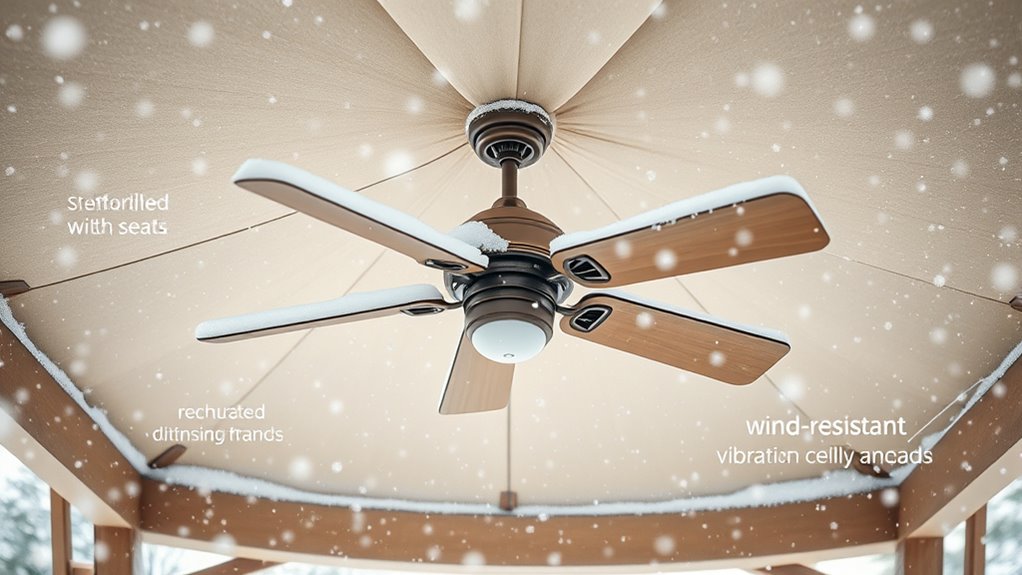
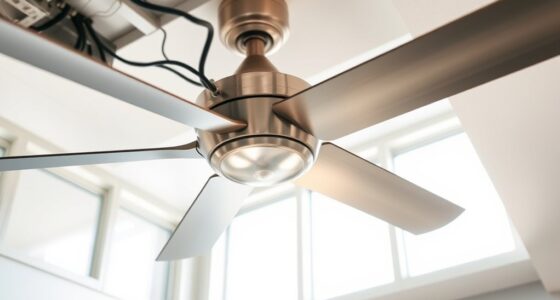
Ceiling fan vibrations can be both noisy and disruptive, but they’re often easy to prevent with some simple adjustments. When your fan wobbles or rattles, it’s usually because of issues like unbalanced fan blades or unstable motor mounts. Addressing these problems early can make a huge difference, especially if you want your gazebo to stay cozy and quiet during snowstorms. Ensuring proper fan blade balance is essential. Over time, blades can become bent or accumulate dust and debris, throwing off the weight distribution. To fix this, turn off the fan and carefully check each blade. Use a fan blade balancing kit or a simple coin to test the blades—place a coin on the edges to see if the wobbling diminishes or worsens. If you find uneven blades, tighten or replace them as needed. Also, checking for dust buildup and cleaning blades can restore proper balance, reducing vibrations notably.
Motor mount stability is equally important. A loose or faulty mounting can cause excessive movement and noise. Inspect the mounting bracket and the screws holding the fan in place. Tighten any loose screws or bolts, ensuring the fan is securely attached to the ceiling or gazebo structure. If the mounting appears damaged or unstable, consider replacing the bracket or using additional support brackets for added stability. A sturdy mount prevents the motor from shifting during operation, which not only reduces vibration but also extends the lifespan of your fan. Remember, a well-secured motor reduces strain on the blades and motor components, keeping everything running smoothly during winter storms. Proper installation techniques are crucial for long-term stability. Regular maintenance, like tightening screws and cleaning blades, is key to preventing vibrations from becoming a bigger problem. Additionally, choosing a fan with a high-quality motor can help reduce vibrations and noise. When your fan operates smoothly and quietly, you’ll enjoy a more comfortable, peaceful environment in your gazebo—no matter how fierce the snowstorm outside. To further diminish vibrations, consider the use of anti-vibration mounts or rubber pads, which can absorb shocks and keep your fan steady even in harsh winter conditions. Properly securing and maintaining your ceiling fan can also help prevent motor imbalance, which is a common cause of excessive vibration. Regularly inspecting and adjusting fan blade alignment can also contribute to smoother operation and reduce unnecessary strain on the motor.
Frequently Asked Questions
How Often Should I Inspect My Gazebo Ceiling Fan for Damage?
You should inspect your gazebo ceiling fan at least once a month as part of your fan maintenance routine. Regular inspections help catch any signs of damage or loose parts early, preventing costly repairs later. During your inspection schedule, check for wobbling, loose screws, or worn blades. Keep the fan clean and tighten any loose components promptly to guarantee safe operation, especially during storms or harsh weather conditions.
Can I Retrofit an Outdoor Fan With Vibration Dampers?
Yes, you can retrofit an outdoor fan with vibration dampers. Focus on fan mounting to guarantee the dampers fit securely, which helps with vibration absorption. You’ll want to select dampers compatible with your fan’s size and mounting style. Installing these dampers reduces noise and wear, making your outdoor space more comfortable. Just follow the manufacturer’s instructions for proper fitting, and you’ll improve your fan’s stability and longevity.
What Signs Indicate My Fan Needs Urgent Repair or Replacement?
Your fan’s warning signs are like a flashing red light. If you notice fan blade wobble or unusual noise, it’s time to take action. These issues can strain the motor and cause further damage. Don’t ignore these signs—urgent repair or replacement prevents more costly repairs later. Check for loose blades, worn-out bearings, or unbalanced components, and get your fan inspected to keep your space safe and comfortable.
Are There Specific Fan Models Better Suited for Gazebo Use?
You should look for fan models with high fan blade durability and a quiet motor, ideal for gazebo use. Choose fans made from sturdy materials like metal or reinforced plastics to withstand outdoor conditions. Opt for models with sealed motors that reduce noise and resist dust or moisture. These features guarantee your fan remains reliable, quiet, and durable, making them perfect for outdoor gazebos exposed to varying weather.
How Does Climate Affect Ceiling Fan Vibration Over Time?
Climate effects can cause ceiling fan vibration to vary over time, especially in outdoor gazebos. Harsh weather, humidity, and temperature swings can weaken mounting points, leading to increased vibration. To mitigate this, you should regularly check for looseness, provide proper vibration mitigation, and choose weather-resistant fans. This proactive approach helps you maintain fan stability, prevent damage, and ensure consistent comfort, no matter how the climate changes.
Conclusion
So, next time a snowstorm threatens your gazebo, don’t just sit there pretending your ceiling fan’s a fancy sculpture. Secure those blades and mountings, or you might end up with a flying fan and a yard full of debris instead of cozy outdoor vibes. After all, who knew that a winter blast could turn your elegant gazebo into a flying circus? Stay vigilant, stay safe, and keep those fans grounded—literally.