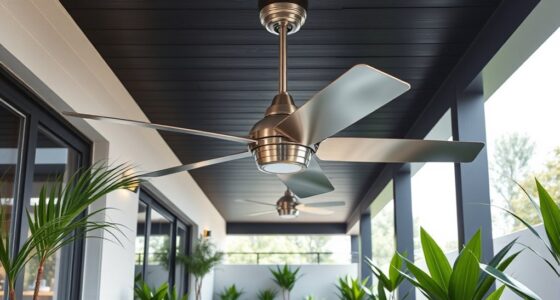

To think about pergola airflow before summer, focus on natural ventilation and design. Identify prevailing wind directions and orient open sides toward breezes. Use lattice panels or open slats to maximize airflow while providing shade. Adjust the height and add gaps or adjustable panels for better circulation. Consider adding fans for extra comfort. These strategies help keep the space cool and inviting. Keep exploring to discover more ways to enhance your pergola’s airflow effectively.

Get garden gear delivered free — and shop member deals
- Fast, free delivery on millions of items
- Access to Prime Big Deal Days deals on October 6–7
- Prime Video, Amazon Music and more included
Key Takeaways
- Assess natural wind patterns to orient open sides toward prevailing breezes for optimal airflow.
- Incorporate adjustable panels or gaps to control ventilation based on weather conditions.
- Use lattice or open slats to facilitate consistent air circulation without sacrificing shade.
- Design taller pergolas with strategic openings to enhance vertical airflow and reduce heat buildup.
- Consider installing fans or other mechanical ventilation to supplement natural airflow during peak heat.

When designing a pergola, understanding airflow is essential for creating a comfortable outdoor space. Good airflow directly influences outdoor comfort, helping you enjoy your patio even during the hottest days. If you overlook ventilation design, your pergola might trap heat and humidity, making it less inviting. To maximize comfort, you need to think about how air moves through and around your structure. This involves considering the placement of openings, the height of the beams, and the overall layout. Proper ventilation design ensures that air circulation flows freely, preventing stagnant, stuffy environments beneath your pergola.
Good airflow is key to a comfortable, inviting pergola space—consider openings, height, and layout for optimal ventilation.
Start by evaluating your outdoor space’s natural wind patterns. If prevailing winds come from one direction, position your pergola to take advantage of that airflow. For instance, orienting the open sides toward prevailing breezes allows air to flow through unobstructed. Avoid placing solid walls or dense plantings directly in the wind’s path, as they can block ventilation and cause heat buildup. Instead, incorporate open slats or lattice panels that allow air to pass while still providing some shade. These design choices foster airflow, making your outdoor area cooler and more comfortable. Additionally, considering ventilation principles can help you optimize your pergola’s design for better airflow.
Height also plays a pivotal role in ventilation design. A taller pergola offers more vertical space for air to circulate, reducing heat accumulation underneath. If your pergola has a roof or canopy, consider adding gaps or adjustable panels that can be opened during hot days. These features help you regulate airflow based on weather conditions, ensuring that your outdoor space remains breezy and inviting. You might also think about incorporating ceiling fans or oscillating fans to augment natural ventilation, especially in zones where airflow is limited. Properly designed ventilation strategies can significantly enhance comfort and airflow efficiency. Paying attention to ventilation during the planning process ensures optimal comfort and air quality beneath your pergola.
As an affiliate, we earn on qualifying purchases.
Frequently Asked Questions
How Does Local Climate Affect Pergola Airflow?
Your local climate impacts pergola airflow through wind patterns and shade effects. In breezy areas, open designs promote better air circulation, keeping you cool. Conversely, in calmer climates, you might need to incorporate additional ventilation features. Shade effects from trees or buildings also influence airflow; dense shading can block wind, reducing cooling. To optimize comfort, consider your area’s typical wind patterns and shade sources when designing your pergola.
Can Plants Improve Pergola Airflow Naturally?
Plants act like natural air conditioners, enhancing pergola airflow through plant shading and natural ventilation. By strategically placing climbing vines or leafy plants, you create a living barrier that cools and directs airflow, much like a gentle breeze through a forest. This not only improves airflow but also provides shade, making your pergola a cooler, more inviting space. Embrace nature’s touch to boost comfort without relying on mechanical solutions.
What Are the Best Materials for Airflow Optimization?
You should choose lightweight, breathable materials like cedar or vinyl for ideal airflow, as they promote better ventilation than heavier options. These materials balance durability with aesthetic appeal, ensuring your pergola withstands weather while maintaining visual charm. Incorporating slats or open-weave designs with these materials encourages airflow, keeping the space cool and comfortable. Prioritizing material durability and aesthetic appeal helps you create a pergola that’s both functional and attractive for summer.
How Does Pergola Design Impact Airflow Efficiency?
Your pergola design directly influences ventilation patterns and airflow barriers, shaping how air circulates around and through it. An open, airy structure promotes smooth airflow, while solid or closed designs hinder it, trapping warm air and reducing cooling efficiency. Incorporate adjustable slats or open sides to optimize ventilation patterns, eliminate airflow barriers, and create a comfortable, breezy outdoor space perfect for summer relaxation.
Are There Safety Considerations for Airflow Modifications?
Yes, you should consider ventilation safety when modifying pergola airflow. Make certain that any adjustments, like adding fans or opening slats, don’t create airflow hazards such as excessive wind or debris buildup. Always check for structural stability and avoid blocking essential vents. Properly maintaining airflow enhances comfort while preventing safety issues, so stay vigilant about potential hazards and keep safety standards in mind during any airflow modifications.
outdoor ceiling fans for pergola
As an affiliate, we earn on qualifying purchases.
As an affiliate, we earn on qualifying purchases.
Conclusion
Now that you know how to optimize your pergola’s airflow, you’re practically a breeze master! With just a few simple tweaks, you’ll turn your outdoor space into a invigorating oasis that feels like a cool mountain breeze on a scorching day. Remember, a well-ventilated pergola isn’t just comfortable—it’s your secret weapon against summer’s sweltering heat. So, get creative, adjust those airflow fans, and prepare to enjoy summer like never before—your backyard will thank you!
lattice panels for pergola ventilation
As an affiliate, we earn on qualifying purchases.
As an affiliate, we earn on qualifying purchases.
As an affiliate, we earn on qualifying purchases.
Fall yard work Picks
leaf blowers
As an affiliate, we earn on qualifying purchases.