To keep your porch cozy in winter, build DIY wind screens using weather-resistant materials like outdoor fabric or repurposed pallets, placing them strategically around seating areas and anchoring securely. Combine these barriers with outdoor fans or heaters to improve airflow and warmth. Adding outdoor rugs or curtains boosts insulation, creating a warm, inviting space. Want to discover more tips on making your porch winter-ready? Keep exploring for practical ideas and expert insights.
Key Takeaways
- Use weather-resistant materials like outdoor fabric or repurposed pallets to build effective, durable wind screens.
- Strategically place and anchor screens around seating areas to block prevailing winter winds.
- Combine DIY wind barriers with patio heaters for maximum warmth and comfort outdoors.
- Add outdoor rugs and weatherproof curtains to enhance insulation and reduce cold drafts.
- Ensure proper ventilation to prevent moisture buildup while maintaining a cozy, safe outdoor space.
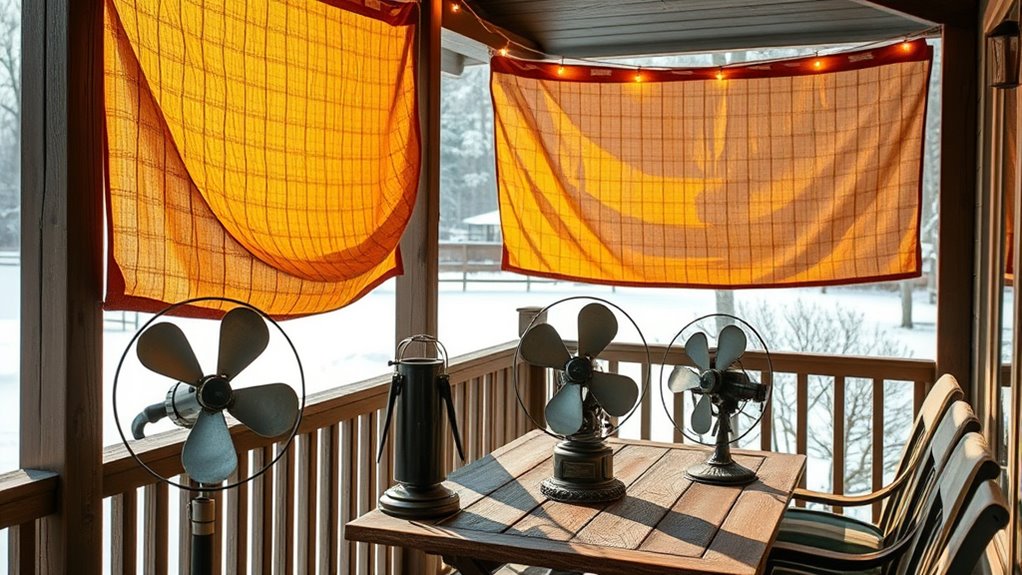
Are you tired of unwanted drafts ruining your outdoor relaxing spots or workspace? If so, creating effective DIY wind screens can make a huge difference. Wind can quickly turn a cozy porch into a freezing zone, especially during winter months. To combat this, you can build your own wind barriers that block gusts and keep your outdoor space comfortable. Incorporating patio heating and outdoor insulation techniques into your setup will enhance warmth and extend your outdoor enjoyment.
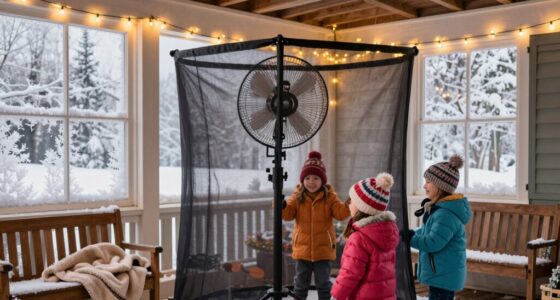
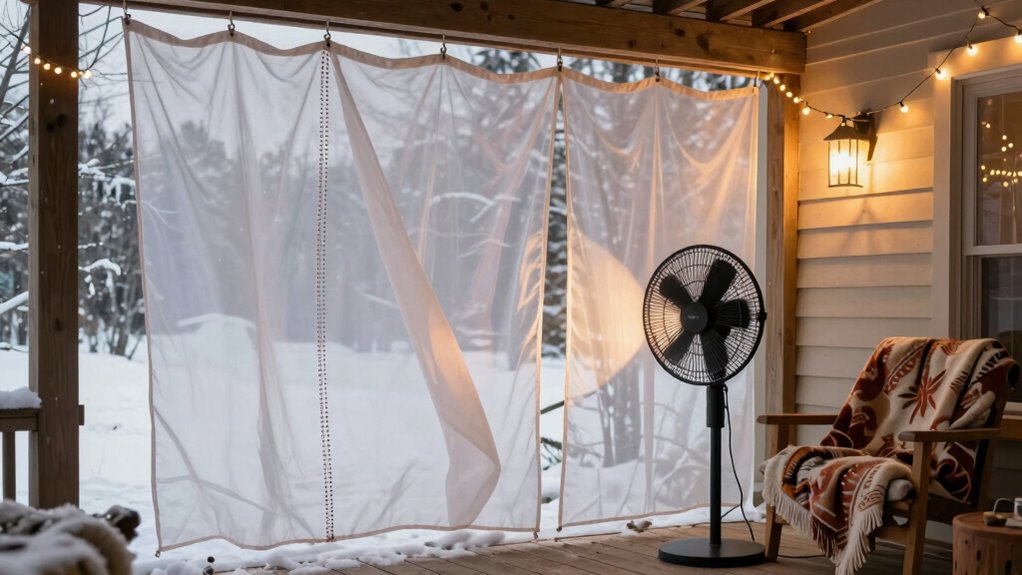
Start by choosing durable materials like heavy-duty plastic sheeting, outdoor fabric, or even repurposed pallets to construct your wind screens. Position them strategically around your porch or seating area to block prevailing winds. For added stability, anchor the screens securely into the ground or attach them to existing structures like railings or posts. The goal is to create a semi-enclosed space that traps warm air and prevents cold drafts from sneaking in. This approach acts as outdoor insulation, reducing heat loss and making your outdoor environment more inviting.
Choose durable materials like plastic sheeting, fabric, or pallets to build effective outdoor wind barriers.
Once your wind screens are in place, consider adding patio heating elements to boost warmth. Portable electric or propane patio heaters are easy to incorporate into your DIY setup. Position them close enough to your seating area so that the heat radiates directly to you and your guests. Combine the physical barrier of your wind screens with the warmth generated by the heater, and you’ll notice a significant difference in comfort. Not only does this setup cut down on cold drafts, but it also helps maintain a consistent temperature, so you stay cozy even in the coldest weather.
You can also improve outdoor insulation by placing thick outdoor rugs or mats on the floor beneath your seating area. These help trap heat from the ground and prevent cold air from seeping upward. Adding curtains or outdoor drapes to the sides of your porch can further block wind and retain heat. These fabric barriers act like additional insulation layers, especially when made from weather-resistant materials. When combined with your DIY wind screens and patio heating, they create a warm, insulated zone perfect for winter outdoor lounging or entertaining.
Furthermore, understanding the importance of ventilation considerations can ensure your outdoor space remains safe and comfortable, preventing moisture buildup and ensuring proper airflow. When combined with your DIY wind screens and insulation techniques, this knowledge helps you craft a well-rounded outdoor retreat. In essence, turning your porch into a cozy winter retreat is all about combining simple DIY wind screens with outdoor insulation techniques and effective patio heating. With some basic materials and a little effort, you’ll create a space that stays warm and inviting, no matter how chilly it gets outside. This way, you can enjoy your outdoor space year-round—without battling cold drafts or sacrificing comfort.
Frequently Asked Questions
What Materials Are Best for DIY Wind Screens?
For DIY wind screens, you should choose materials with good durability and insulation options. Heavy-duty outdoor fabrics like canvas or acrylic are ideal because they resist weather and last longer. PVC or vinyl sheets also work well, providing excellent insulation and wind blocking. Consider using wooden slats or bamboo for a natural look, but guarantee they’re treated for outdoor use. These materials keep your porch cozy and withstand winter conditions.
How Do I Install a Fan on My Porch?
You might find it surprising, but installing a fan on your porch is straightforward. First, choose the right fan placement—ideally where it can circulate air effectively without obstruction. Then, consider your power options: hardwired or plug-in models. Secure the fan to a sturdy ceiling or wall mount, ensuring it’s stable and safe. Double-check electrical connections, and you’re set to enjoy a cozy, breezy porch all winter long.
Are There Safety Tips for Using Fans Outdoors?
Yes, there are safety tips for using fans outdoors. You should keep fire safety in mind by avoiding flammable materials near the fan, and verify the fan is properly grounded to prevent electrical hazards. Always check that outdoor outlets are weatherproof and avoid using damaged cords or plugs. Keep the area clear of debris, and never operate the fan in wet conditions to reduce risks of electrical shock and fire.
Can These Solutions Be Used in Heavy Snow?
Heavy snow can challenge these solutions, as snow accumulation weighs down wind screens and fans. They’re generally not designed to withstand heavy snow or high wind resistance, so you should remove or cover them during storms to prevent damage. If you want to keep your porch cozy, consider using sturdy, snow-resistant materials and regularly clearing snow buildup to maintain their effectiveness and safety during winter weather.
How Much Do DIY Wind Screens Cost?
You can DIY wind screens for around $20 to $50, depending on materials. While some worry about cost comparison, investing in durable materials like heavy-duty plastic or weather-resistant fabric guarantees longevity. Cheaper options may save money upfront but won’t last as long. By choosing sturdy, weatherproof materials, you get better value over time, keeping your porch cozy without frequent replacements.
Conclusion
With a little effort, you might find that your porch becomes a warm retreat just when you need it most. Sometimes, the simplest DIY solutions unexpectedly transform chilly evenings into cozy gatherings. As you craft your wind screens and set up fans, it’s almost as if the universe conspired to make your outdoor space more inviting. So, embrace these small projects—they might just turn your winter nights into some of your favorite moments.