
TL;DR

Get garden gear delivered free with Prime
- Fast, free delivery on millions of items
- Prime Video, Amazon Music and more included
- Member-only deals all year
A Homes and Gardens guide says October is the last major planting window in most temperate US regions, when warm soil and cool air let spring bulbs, cool-season vegetables, hardy perennials, and deciduous trees and shrubs establish roots before winter. The exact timing depends on USDA hardiness zone and first hard frost date, with colder zones needing to act early and warmer zones gaining flexibility.
A seasonal guide from Homes and Gardens says October is the final major planting window in most temperate US regions, giving gardeners a chance to establish spring bulbs, cool-season vegetables, hardy perennials, and deciduous trees and shrubs while soil is still warm but air temperatures have cooled. The guide, organized by USDA hardiness zone, says the deciding factor is not the calendar date but the first hard frost: once ground is frozen or waterlogged, most planting should wait until spring.
According to the guide, Zones 6–8 can plant nearly the full range of recommended species through much of October, while Zones 4–5 should move quickly and favor bulbs, hardy trees, and protected crops. In Zones 9–11, October often marks the beginning of the main growing season for vegetables and flowers rather than a winding-down period.
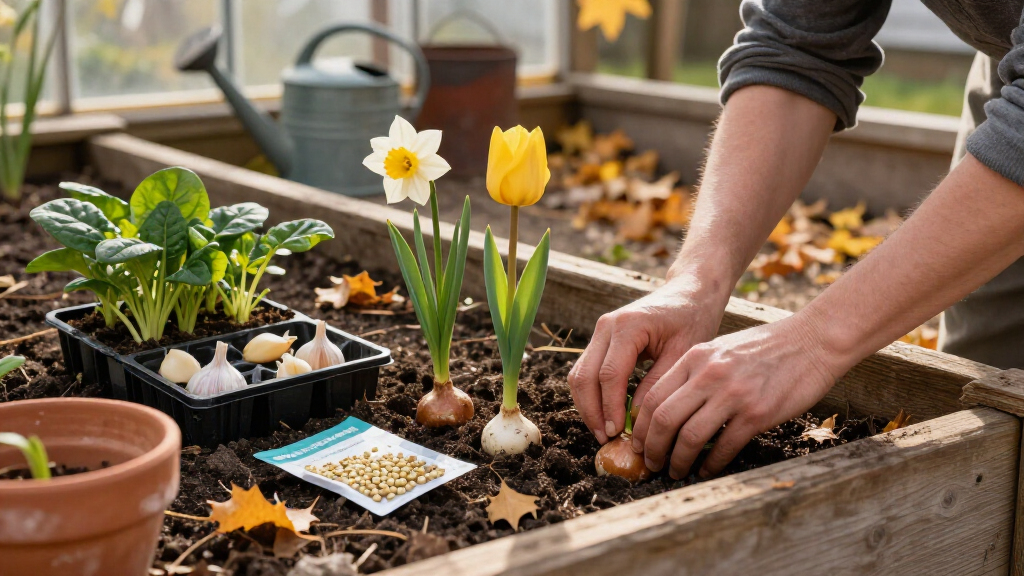
For spring flowers, the guide recommends tulips, daffodils, alliums, crocuses, and hyacinths, which need a cold spell to form flowers properly and use autumn’s lingering soil warmth to begin rooting. October is described as ideal for most spring bulbs in Zones 3–7. In warmer Zones 8–10, the guide advises chilling tulips and hyacinth bulbs in a refrigerator for several weeks before planting and choosing heat-tolerant varieties.
On the vegetable side, recommended October crops include garlic, spinach, arugula, kale, lettuce, radishes, peas, and fava beans. In Zones 7–10, salad leaves, radishes, spinach, Asian greens, and carrots can be sown directly outdoors. In Zones 4–6, the guide recommends quick crops under protection, such as spinach and lettuce sown in a cold frame. Garlic can go in across most temperate zones from October into November as long as the soil has not frozen.
For perennials and woody plants, the guide names peonies, coneflowers, hardy geraniums, asters, sedums, and ornamental grasses as strong fall candidates, along with deciduous trees and shrubs including maples, serviceberries, redbuds, viburnums, hydrangeas, lilacs, and ninebarks. Bare-root plants, the guide notes, offer good value once nurseries begin shipping in dormancy.
Why Fall Root Growth Matters
The guide’s central argument is that roots keep growing after top growth slows, so plants put in during October can settle in over winter without the stress of simultaneously producing leaves and flowers. By spring, the guide’s author writes, bulbs are positioned to bloom, shrubs have working root systems, and vegetable beds are already productive rather than empty.
For gardeners, the practical stakes are straightforward: October planting spreads spring workload backward into autumn, shortens the wait for spring flowers, and can improve survival rates for perennials and woody plants compared with spring planting, when plants must cope with both establishment and summer heat. Timing errors carry real costs — bulbs planted too late in cold zones may fail to root, and peas or fava beans sown into cold, wet northern soil are described as likely to fail.
Zone-by-Zone Timing Differences
USDA hardiness zones divide the country by average annual minimum winter temperature, and the guide treats them as the main variable in what can safely be planted in October. Zones 3–7 are described as ideal for most spring bulbs this month. Zones 7–10 can direct-sow salad crops outdoors. Zones 4–6 should focus on protected or very quick crops.
The guide also offers specific technique advice: bulbs should be planted in natural drifts rather than rows, at a depth roughly two to three times the bulb’s height, in freely draining soil. Perennials should be planted at the same depth they sat in their pots, watered deeply, and mulched without piling mulch against stems and crowns. In Zones 3–5, perennials should go in early in the month and be mulched after the ground freezes.
“October is the gardener’s last generous window. Plant spring bulbs, cool-season vegetables, hardy perennials, deciduous trees, shrubs, and bare-root roses while the soil is still warm enough to make roots but the air is cool enough.”
— Homes and Gardens guide
Limits of the Zone Guidance
The guide is general advice and does not account for every local condition. It does not specify exact planting cutoff dates for individual zones, and outcomes will vary with local rainfall, soil drainage, and the timing of each garden’s actual first frost in a given year. The recommendation to refrigerate tulip and hyacinth bulbs in Zones 8–10 gives a range of “several weeks” without a precise chill duration. Readers in microclimates — urban heat islands, elevated sites, or coastal areas — may find their effective conditions differ from their stated zone. The guide also does not address pest or disease pressures specific to fall planting, such as rodent damage to bulbs.
The Countdown to First Frost
Gardeners in colder zones have the tightest deadline: bulbs, perennials, and woody plants should be in the ground as early in October as possible, with any remaining planting finished before the first hard frost. Gardeners in Zones 9–11 can continue sowing cool-season vegetables as their main growing season gets underway. Through late October and into November, garlic remains plantable in most temperate zones while soil stays unfrozen. Once the ground freezes in Zones 3–5, the guide advises mulching newly planted perennials, and bare-root roses and trees become available as nurseries begin dormant-season shipping.
Key Questions
What can I plant in October?
According to the Homes and Gardens guide, October suits spring bulbs (tulips, daffodils, alliums, crocuses, hyacinths), cool-season vegetables (garlic, spinach, lettuce, kale, radishes, arugula, peas, fava beans), hardy perennials (peonies, coneflowers, asters, sedums), and deciduous trees and shrubs such as maples, redbuds, and hydrangeas.
How deep should I plant spring bulbs?
The guide recommends a hole roughly two to three times the bulb’s height, with the pointed end facing up, in freely draining soil. Bulbs planted in drifts rather than straight rows produce a more natural look.
Is October too late to plant in colder climates?
Not for everything. In Zones 4–5, the guide recommends moving quickly and favoring bulbs, hardy trees, and crops grown under protection such as cold frames. The key test is the first hard frost: if the ground is frozen, waterlogged, or likely to freeze within about two weeks, trees, shrubs, and perennials should wait until spring.
Do I need to chill tulip bulbs in warm climates?
Yes, according to the guide. In Zones 8–10, tulips and hyacinths should be chilled in a refrigerator for several weeks before planting, since these bulbs need a cold period to flower properly and warm-region winters may not provide enough chilling.
Can I still plant garlic after October?
In most temperate zones, garlic can be planted from October into November as long as the soil has not frozen, the guide says. Cloves should go into a sunny, composted bed with the pointed end up and adequate spacing.
Source: rss
Fall yard work Picks
leaf blowers
As an affiliate, we earn on qualifying purchases.