To create a DIY anti-freeze solution for your misting system in an unheated shed, mix equal parts propylene glycol and glycerin, then add distilled water if needed to suit your climate. Turn off the system, drain residual water, and thoroughly fill the reservoir with this mixture to coat all parts. Regularly check for issues and adjust your mixture for ideal freeze protection. Keep learning to guarantee your system stays safe during winter.
Key Takeaways
- Mix equal parts propylene glycol and glycerin (50/50 ratio) to create a non-toxic anti-freeze solution.
- Turn off the misting system, drain residual water, then thoroughly fill with the prepared mixture.
- Regularly test for leaks, clogs, and proper freezing point to ensure system protection during cold weather.
- Add extra anti-freeze or insulate exposed pipes in extreme cold conditions for enhanced protection.
- Store the mixture in a cool, dark place and clearly label it for safety and future use.
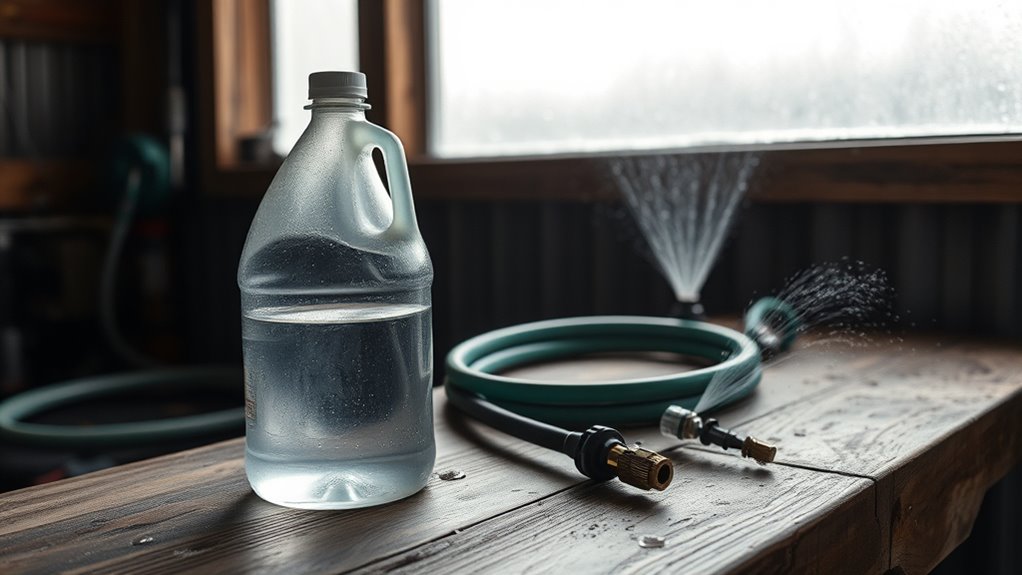
Are you looking for an effective way to protect your vehicle or plumbing from freezing temperatures? If you have a misting system in an unheated shed, creating a DIY anti-freeze solution is a smart move to prevent costly damage during cold snaps. One of the most reliable mixtures involves propylene glycol combined with glycerin, which lowers the freezing point of water without being overly toxic or corrosive. This combination is popular because it’s safe for plants, animals, and most equipment, making it ideal for outdoor or semi-enclosed environments.
To prepare your anti-freeze solution, start with a clean container and mix equal parts of propylene glycol and glycerin. This 50/50 mixture effectively depresses the freezing point of water, ensuring your misting system remains functional even when temperatures plummet below freezing. You might also consider adding a small amount of distilled water to adjust the mixture based on local climate conditions. The key is to strike a balance: too much glycerin or propylene glycol can reduce the effectiveness, while too little won’t prevent freezing. Always follow manufacturer guidelines for the specific products you’re using. Proper mixture ratios are crucial for optimal performance and protection.
Mix equal parts propylene glycol and glycerin to create an effective, non-toxic anti-freeze solution for your misting system.
Once your mixture is ready, turn off your misting system and drain any remaining water. Carefully disconnect the spray lines and fill the system’s reservoir with your DIY anti-freeze solution. Make sure all parts are thoroughly coated and that the mixture circulates through the nozzles and tubing. This helps prevent ice formation inside the lines, which can cause cracks or blockages. After filling, reconnect the lines and run a short test cycle to ensure the solution flows freely and no leaks are present. Recognizing the importance of proper mixture ratios can significantly enhance the effectiveness of your anti-freeze solution. Additionally, selecting appropriate materials for your system components can help prevent corrosion and prolong lifespan.
It’s important to check your system periodically throughout the cold season. Look for any signs of leaks, clogs, or freezing points. In especially cold weather, it might be helpful to add extra anti-freeze solution or insulate exposed pipes to further prevent freezing. Remember, the propylene glycol and glycerin mixture isn’t just about keeping things from freezing; it also reduces corrosion and extends the lifespan of your misting components. Keep your mixture stored in a cool, dark place when not in use, and always label it clearly, so you know exactly what’s inside. Additionally, understanding proper system maintenance can help you avoid potential issues caused by freezing.
Creating your own anti-freeze solution with propylene glycol and glycerin mixture is cost-effective, simple, and customizable. It protects your misting system and other vulnerable equipment during winter without relying on commercial products. With proper preparation and regular maintenance, you’ll keep your shed’s environment safe from freezing temperatures, ensuring your system remains functional and your property stays protected all season long. Proper mixture ratios are essential for optimal performance and protection.
Frequently Asked Questions
Can I Use Homemade Anti-Freeze in Commercial Misting Systems?
You shouldn’t use homemade anti-freeze in commercial misting systems because it could compromise commercial compatibility and chemical safety. Commercial systems are designed for specific, approved solutions that ensure safety and performance. Homemade mixes may contain harmful chemicals or inconsistent concentrations, risking damage to equipment or health hazards. Always use manufacturer-recommended anti-freeze products to maintain safety standards and guarantee your system functions correctly during cold weather.
How Often Should I Refill or Check the Anti-Freeze Solution?
Think of your anti-freeze solution like a car’s oil—regular checks keep it running smoothly. You should refill or check it at least once before each cold season and periodically throughout, especially after storms or heavy use. Follow a maintenance schedule that includes leak inspections to prevent freezing issues. Staying vigilant guarantees your system functions effectively, protecting your shed from winter damage and avoiding costly repairs down the line.
Are There Environmental Concerns With Homemade Anti-Freeze Chemicals?
You should consider the environmental impact and chemical safety when making homemade anti-freeze. Some ingredients, like alcohol or glycol, can be toxic to wildlife or plants if leaked. Always use non-toxic or biodegradable options when possible, and handle chemicals carefully to prevent spills. By being cautious, you mitigate risks to the environment and ensure your misting system stays safe and effective.
Will the Anti-Freeze Solution Affect Plant or Animal Health?
Your anti-freeze solution could impact plant safety and animal health if not carefully formulated. Some homemade mixes contain chemicals that may be toxic to plants or harmful to animals if ingested or contacted. To protect both, avoid using toxic substances and opt for plant-safe, non-toxic ingredients. Always test your solution on a small area first, and monitor animals around the system to prevent accidental exposure.
What Are the Signs My Misting System Needs Anti-Freeze Replacement?
You need to replace your anti-freeze solution if you notice system leaks or freeze damage. Leaks may cause uneven misting and reduce system efficiency, while freeze damage can crack or break components. Check for unusual noises, reduced misting, or visible cracks in pipes and fittings. If you find these signs, it’s time to refresh the anti-freeze to prevent further damage and guarantee your system works properly.
Conclusion
Now that you’ve crafted your DIY anti-freeze solution, you’re like a guardian shielding your shed’s misting system from winter’s icy grip. With this simple yet powerful shield, you’re turning a fragile glass house into a fortress that withstands the cold. Think of it as arming your shed’s lifeblood against winter’s chill, ensuring your system stays alive and well. So, gear up and embrace your inner winter warrior—your shed’s hydration hero!