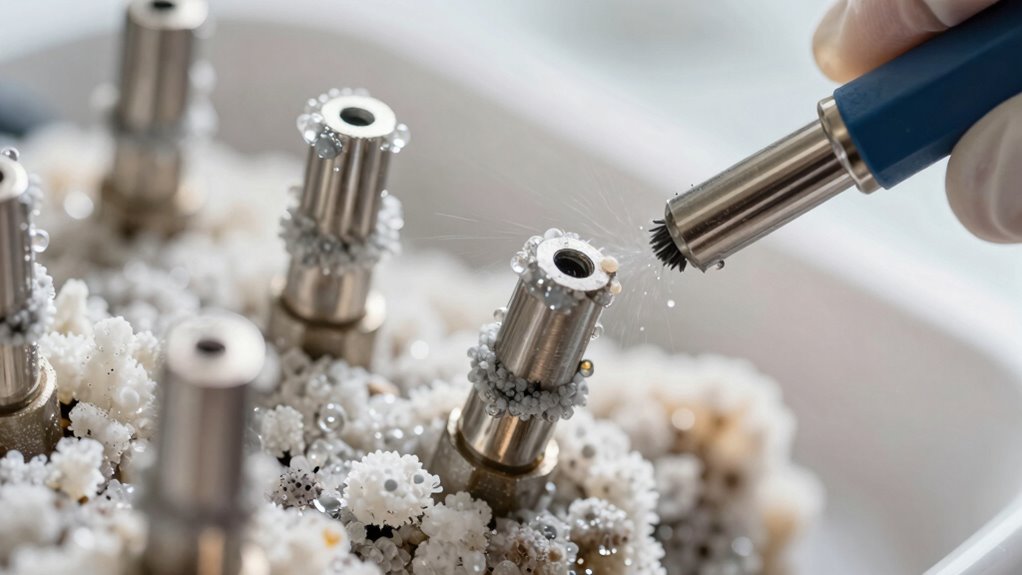

To clean mineral buildup from misting nozzles during the off-season, start by turning off the water supply and removing the nozzles if possible. Soak them in a mixture of equal parts vinegar and water for 30 minutes to dissolve deposits. Use a soft brush or toothpick to clear tiny holes, then rinse with clean water. Properly cleaning and storing your nozzles helps prevent clogs and enhances performance when you restart. Keep going to discover more effective tips for long-term maintenance.

Get garden gear delivered free with Prime
- Fast, free delivery on millions of items
- Prime Video, Amazon Music and more included
- Member-only deals all year
Key Takeaways
- Soak nozzles in a mixture of equal parts vinegar and water for 30 minutes to dissolve mineral deposits.
- Use a soft brush or toothpick to gently clear mineral buildup from tiny nozzle orifices.
- Rinse nozzles thoroughly with clean water to remove residual vinegar and loosened deposits.
- Store nozzles in a dry, clean place and inspect regularly for signs of clogging during the off-season.
- Consider installing water softening systems or using high-quality, anti-clogging nozzles to reduce mineral buildup.
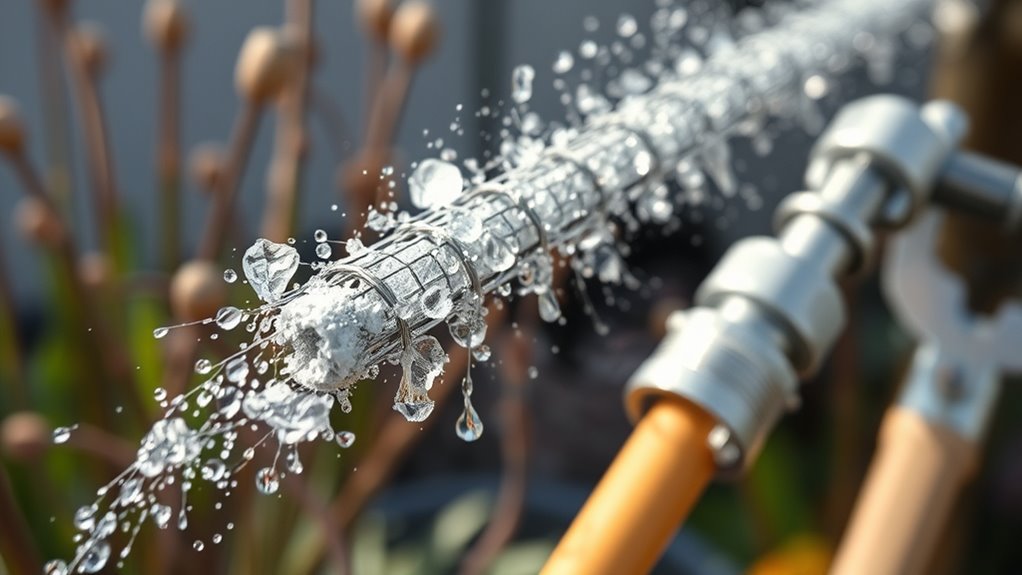
Over time, mineral accumulation can clog your misting nozzles, decreasing their spray quality and efficiency. When your nozzles become blocked with deposits from hard water, the mist disperses unevenly or diminishes altogether, which hampers your garden’s cooling or watering system. To prevent this, it’s essential to perform proper nozzle maintenance during the off-season, ensuring your system remains in top shape for when you need it most. One effective way to minimize mineral buildup is by implementing water softening methods. Softening water reduces the minerals—like calcium and magnesium—that cause deposits, making it easier to keep your nozzles clear and functioning smoothly. Using softened water for your misting system can considerably decrease the frequency of clogs, saving you time and effort in the long run.
When you’re preparing to store your misting system during the off-season, it’s a good idea to clean your nozzles thoroughly. Start by turning off the water supply and removing the nozzles if possible. Soak them in a mixture of equal parts vinegar and water for about 30 minutes. Vinegar breaks down mineral deposits effectively, loosening any buildup inside the nozzle openings. After soaking, use a soft brush or a toothpick to gently clear out any remaining debris, paying close attention to the tiny orifices. Rinsing the nozzles with clean water helps flush out any residual vinegar or loosened deposits and prevents future buildup. This simple maintenance process ensures your nozzles stay free from mineral buildup and are ready to perform at their best when you resume use. Additionally, incorporating proper nozzle design can help reduce clogging and improve overall spray performance. Regular inspections during storage can also help detect early signs of clogging before they become more problematic. Performing routine maintenance is crucial for maintaining optimal misting efficiency and preventing costly repairs later.
Another key aspect of nozzle maintenance involves inspecting the nozzles regularly for signs of clogging or damage. If you notice uneven spray patterns or reduced mist, it’s time to clean or replace the affected nozzles. During the off-season, consider storing your nozzles in a dry, clean place to prevent dust and dirt from settling inside. If your water source is particularly hard, investing in a water softening system or using commercial descaling solutions can further protect your system from mineral buildup. These measures not only extend the lifespan of your nozzles but also ensure consistent misting performance, reducing maintenance needs over time. Regularly checking and maintaining your nozzles is an important preventative measure to keep your system operating efficiently. Also, utilizing high-quality nozzles with anti-clogging features can further minimize the need for frequent cleaning and ensure reliable operation. Proper storage practices during the off-season can help preserve nozzle integrity and prevent unnecessary clogging.
Products Worth Considering

Greenworks 40V 16-Inch Brushless Push Lawn Mower with 4.0 Ah Battery and Charger

Orbit B-hyve Smart Indoor/Outdoor 12-Zone Sprinkler Controller

Greenworks 48V (2 × 24V) 20-Inch Brushless Cordless Push Lawn Mower with Two 4.0Ah Batteries and Dual-Port Charger
As an affiliate, we earn on qualifying purchases.
Frequently Asked Questions
How Often Should I Inspect Misting Nozzles During the Off-Season?
You should inspect your misting nozzles at least once every 2 to 4 weeks during the off-season. Regular inspection guarantees you catch any mineral buildup early and perform off-season maintenance effectively. This frequency helps prevent clogging and keeps your system ready for use. By staying proactive with inspection, you’ll extend the lifespan of your nozzles and maintain ideal performance when you need your misting system most.
Can Mineral Buildup Damage Misting Nozzles Permanently?
Yes, mineral buildup can cause permanent damage to misting nozzles if left untreated. It can lead to corrosion, especially if the nozzle material isn’t resistant to mineral deposits. To prevent this, you should regularly inspect and clean your nozzles, using corrosion prevention methods suitable for the nozzle material. Doing so guarantees your nozzles stay functional and avoid costly replacements due to mineral-related damage.
Are There Eco-Friendly Methods to Remove Mineral Deposits?
Sure, eco-friendly cleaning methods exist for natural descaling your misting nozzles—no need for harsh chemicals that could turn your garden into a science experiment. Use vinegar or lemon juice to dissolve mineral deposits naturally; they’re gentle yet effective. Just soak the nozzles in a solution, and you’ll have them sparkling without harming the environment. Who knew saving the planet could be this simple and satisfying?
Should I Replace Nozzles Instead of Cleaning Them?
You should consider cleaning the nozzles first, as it’s often more cost-effective and eco-friendly than replacing them. If cleaning doesn’t remove stubborn mineral buildup or if the nozzles are damaged, then nozzle replacement becomes necessary. Weigh the benefits of cleaning vs. replacing based on the nozzle’s condition. Regular maintenance can extend their lifespan, saving you money and reducing waste.
What Safety Precautions Are Recommended During Cleaning?
Think of cleaning your misting nozzles as donning armor before battle. Always wear protective gear like gloves and goggles to shield your skin and eyes. Follow chemical safety guidelines by working in well-ventilated areas and using appropriate cleaners. Keep children and pets away, and read labels carefully. These precautions guarantee you stay safe while removing mineral buildup effectively, preventing any mishaps that could turn your maintenance into a hazard.
Conclusion
Don’t let mineral buildup turn your misting nozzles into silent saboteurs. By giving them a quick clean during the off-season, you’re not just maintaining their function—you’re preserving the delicate dance of water and mist that keeps your plants happy. Think of it as giving your garden a gentle whisper of care, ensuring it blooms beautifully when the season returns. After all, a little maintenance now keeps the magic flowing later.