
Yes, cold water temperature can affect your humidifier’s mist output. Cooler water slows down evaporation, which means less mist is produced. If you’re using very cold tap water, try switching to room temperature or slightly warmer water to improve performance. Ensuring your water isn’t too cold can help your device run more efficiently and produce a stronger mist. If you want to discover more tips to fix weak mist, keep exploring the options ahead.
Key Takeaways
- Cold water can reduce ultrasonic vibration efficiency, leading to weaker mist output.
- Using room-temperature or warm water improves ultrasonic diaphragm performance.
- Extremely cold water may cause condensation or freezing, impairing mist production.
- Maintaining consistent water temperature helps ensure stable mist output.
- Avoid filling the humidifier with icy or very cold water to prevent performance issues.
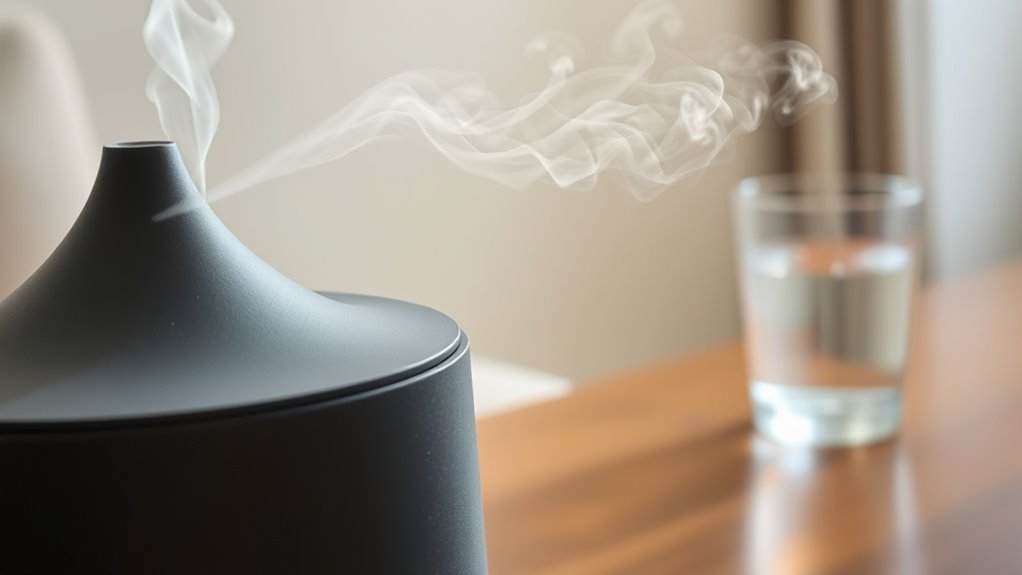
Have you ever been disappointed by your humidifier’s weak mist, leaving your space less comfortable? If so, you’re not alone. Many people experience this issue and wonder what’s causing it. Often, the problem isn’t just the device itself but related to humidifier maintenance and water quality impact. Understanding how these factors influence mist output can help you troubleshoot effectively and restore excellent performance.
One common culprit behind weak mist is mineral buildup inside the device. Hard water contains minerals like calcium and magnesium, which can accumulate on the heating element or ultrasonic diaphragm over time. This buildup hampers the device’s ability to produce a strong mist. Regular humidifier maintenance, such as cleaning the tank and descaling components, is essential to prevent these deposits from forming. Using distilled or filtered water substantially reduces mineral deposits, improving both maintenance ease and mist strength.
Mineral buildup from hard water reduces mist strength; regular cleaning and distilled water help maintain optimal performance.
Water quality impact plays a vital role here. If you’re using tap water with high mineral content, it can lead to mineral clogging, which diminishes the mist output. Switching to distilled or demineralized water can make a noticeable difference. This simple change reduces mineral buildup, ensuring your humidifier functions efficiently for longer periods. Additionally, some humidifiers come with filters designed to trap minerals; replacing these filters as recommended is also crucial for maintaining proper mist output.
Another aspect to consider is the water level inside the tank. If the water isn’t at the recommended level, the device might not produce enough mist. Always check the water level before turning the humidifier on, and ensure you’re filling it with clean, mineral-free water. If you notice the mist suddenly weakens after a period of regular use, it could be due to mineral deposits blocking the ultrasonic diaphragm or heating element. Cleaning these parts with vinegar or manufacturer-recommended solutions can help restore mist strength. Regular inspections and preventive maintenance can help identify issues early before they impact performance.
Furthermore, improper humidifier maintenance routines can lead to mold or bacteria buildup, which may clog internal components and reduce mist output. Regular cleaning, following the manufacturer’s instructions, keeps the system free of debris and microbial growth. This not only improves mist output but also ensures healthier air quality. Additionally, ensuring your humidifier uses the correct filtration system can significantly impact mineral buildup and overall performance.
Frequently Asked Questions
Can Water Impurities Affect Mist Quality?
Yes, water impurities can affect mist quality. High water mineralization and impurity buildup can clog the misting device, reducing the mist’s effectiveness and consistency. When minerals settle or accumulate, they block the nozzle or other parts, causing weak or uneven mist. To improve mist quality, use purified or distilled water, and regularly clean your device to prevent mineral deposits and impurity buildup that hinder performance.
Does Ambient Humidity Impact Mist Strength?
Did you know that ambient humidity levels can considerably impact mist strength? When humidity is low, mist clarity decreases because there’s less moisture in the air to enhance the mist’s appearance. Conversely, higher humidity makes mist appear denser and more vibrant. So, if your mist seems weak, check your environment’s humidity levels. Adjusting room humidity can improve mist quality and ensure it looks full and clear.
How Often Should I Clean the Misting Device?
You should clean your misting device regularly, ideally every 1-2 weeks, to maintain peak performance. Follow proper maintenance routines by disconnecting the device and removing any mineral buildup or debris. Incorporate water quality management by using filtered or distilled water to prevent clogging. Regular cleaning prevents weak mist issues caused by mineral deposits and guarantees your device functions efficiently, providing consistent mist output and prolonging its lifespan.
Are There Specific Water Filters Recommended?
Ever wondered if your water filter could be the culprit behind weak mist? You should choose filters designed specifically for misting devices, such as carbon or reverse osmosis filters. When selecting a filter, consider the filter selection to match your water quality. Regular filter maintenance guarantees peak performance, preventing blockages and mineral buildup that can weaken mist output. Proper filter choices and upkeep make a noticeable difference in misting efficiency.
Can Temperature Fluctuations Damage the Device?
Temperature fluctuations can impact your device’s durability if it lacks proper temperature regulation. When water temperature changes suddenly, it puts stress on internal components, potentially leading to damage over time. To protect your device, avoid exposing it to extreme or rapid temperature shifts. Regular maintenance and ensuring the device is designed with good temperature regulation help prolong its lifespan and maintain peak performance.
Conclusion
So, next time your humidifier barely puts out mist, think of it like brewing tea—you need the right temperature to reveal its full flavor. I once ignored cold water in mine, and it barely fogged up the room. Just like a teapot needs hot water to release steam, your device needs warm water to produce strong mist. Adjusting the temperature could be the simple fix that turns your weak mist into a revitalizing fog.