Adding fans to your greenhouse misting setup helps improve airflow, making certain humidity and temperature distribute evenly. You should use oscillating or wall-mounted fans placed strategically near vents or at different heights to reach every corner. Connecting them to automated systems with thermostats or humidity sensors ensures they turn on only when needed. This creates a healthier environment for your plants and saves energy. Keep exploring to discover how to optimize your greenhouse climate further.
Key Takeaways
- Use oscillating or wall-mounted fans to promote even airflow throughout the greenhouse.
- Position fans near vents, windows, or at different heights to cover all areas effectively.
- Automate fan operation with thermostats and humidity sensors for optimal climate control.
- Ensure fans are strategically placed to eliminate stagnant zones and hot spots.
- Incorporate airflow management principles to optimize fan placement and enhance misting system efficiency.
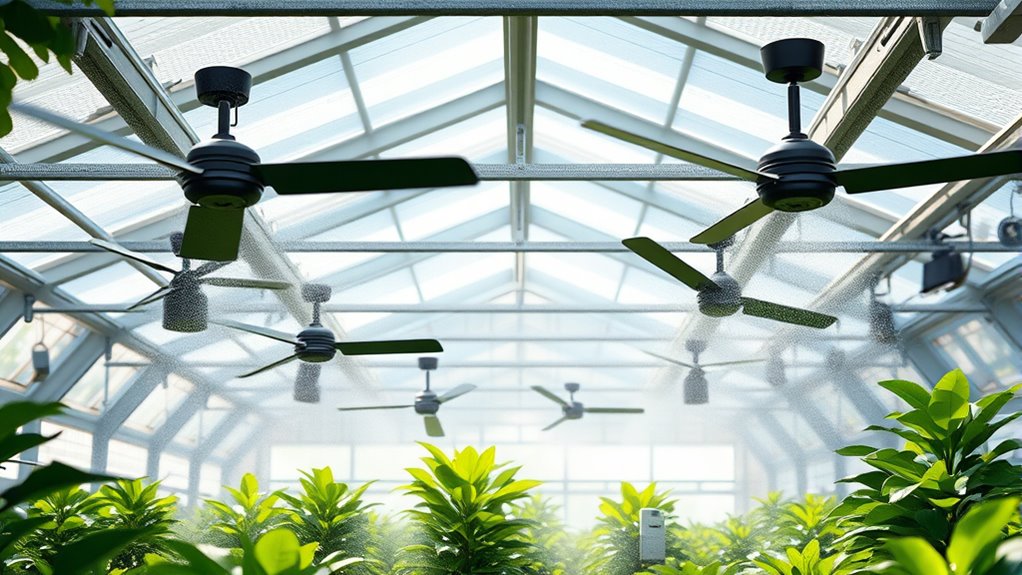
Adding fans to your greenhouse misting setup can substantially improve air circulation and overall climate control. When you implement fans effectively, you optimize airflow, which is vital for maintaining consistent temperature and humidity levels. Proper airflow ensures that cool, moist air from the misting system distributes evenly throughout the space, reducing hot spots and stagnant areas. This not only creates a healthier environment for your plants but also enhances the efficiency of your entire greenhouse operation. By promoting uniform temperature and moisture levels, fans help prevent issues like mold, mildew, and disease, which often thrive in poorly circulated air.
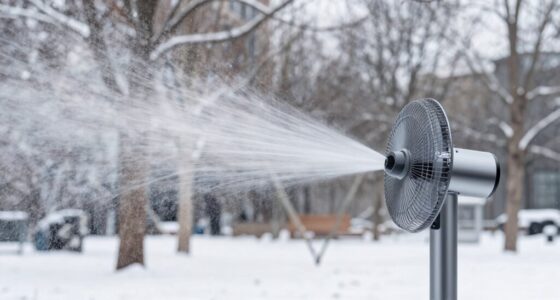
Fans enhance airflow, ensuring even temperature and humidity for healthier plants and increased greenhouse efficiency.
Incorporating fans into your setup also notably boosts energy efficiency. Instead of relying solely on misting to regulate climate, fans work to circulate air passively, meaning you can often run your misting system less frequently or at lower settings. This reduces the amount of water and energy used, lowering operational costs over time. Additionally, well-placed fans can facilitate better heat dissipation during warmer months, decreasing the load on cooling systems and saving electricity. When you prioritize airflow enhancement, you’re making your greenhouse more sustainable and cost-effective, which is especially beneficial if you’re managing a larger operation or aiming to cut down on utility expenses.
Choosing the right type and size of fans is key for maximizing airflow without wasting energy. Oscillating fans or wall-mounted exhaust fans are popular choices because they distribute air evenly and can be adjusted to suit your space. Positioning fans strategically—near vents, windows, or at different heights—ensures the air moves consistently throughout your greenhouse, reaching all corners and avoiding stagnant zones. Proper airflow management allows for more effective climate control and healthier plant growth. When your fans work in concert with your misting system, you create a dynamic environment where moisture and temperature are evenly balanced, promoting healthy plant growth. Implementing climate control technology can further automate and optimize this process, saving you time and effort.
Additionally, integrating thermostats and humidity sensors can help automate fan operation, further enhancing energy efficiency. These devices turn fans on only when necessary, preventing unnecessary power use and ensuring ideal climate conditions at all times. This automation not only improves climate regulation but also reduces manual oversight. Furthermore, understanding the importance of airflow can guide you in designing a more efficient and healthy greenhouse environment.
Frequently Asked Questions
How Do I Choose the Right Fan Size for My Greenhouse?
You should choose a fan size based on your greenhouse’s ventilation planning and the need for proper airflow distribution. Measure your space to determine the cubic footage, then select fans capable of exchanging the air multiple times per hour, typically 6-8 air changes. Larger fans or multiple units guarantee even airflow, preventing hot spots and humidity issues. Always opt for fans that match your greenhouse’s size and ventilation needs.
Can Fans Be Automated to Adjust Airflow Based on Temperature?
Yes, you can automate fans to adjust airflow based on temperature. Ventilation automation systems use airflow sensors to monitor conditions and automatically control fan speed. When temperatures rise, these sensors trigger the fans to increase airflow, helping maintain ideal greenhouse climate. This setup reduces manual adjustments and keeps your plants comfortable and healthy, ensuring consistent conditions without constant supervision.
What Safety Precautions Should Be Taken When Installing Fans?
When installing fans, prioritize electrical safety by ensuring proper grounding to prevent shocks. Always turn off power before installation, and use weatherproof, outdoor-rated wiring and outlets. Check that all electrical connections are secure and protected from moisture. Avoid overloading circuits and follow manufacturer instructions carefully. Regularly inspect the wiring and fans for damage or corrosion. These precautions help keep your setup safe and functioning efficiently.
How Often Should I Clean or Maintain the Fans?
Imagine your fans as the heartbeat of your greenhouse, tirelessly pumping life into the space. You should clean and maintain them every few months to prevent dust buildup from clogging their rhythm. Regular upkeep extends their lifespan, keeping airflow smooth and efficient. Check for dust, debris, and any signs of wear, ensuring your fans continue to circulate fresh air seamlessly, nurturing your plants and maintaining a healthy environment.
Are There Energy-Efficient Fan Options for Large Greenhouses?
Yes, you can choose energy-saving fans like solar ventilation options for large greenhouses. These fans use solar power, reducing your electricity costs and environmental impact. Look for models with high efficiency ratings and adjustable speeds to optimize airflow and energy use. Installing solar ventilation guarantees even airflow, keeps your greenhouse cooler, and saves you money over time. It’s a smart, eco-friendly choice for maintaining a productive greenhouse environment.
Conclusion
By adding fans to your greenhouse misting setup, you’ll foster fresh, friendly airflow that fuels flourishing foliage. Feel the freedom of consistent circulation, and watch your plants thrive with increased vigor. With well-placed fans, you’ll create a cool, comfortable climate that keeps pests at bay and promotes healthy growth. Embrace this effortless enhancement, and experience the endless excitement of a flourishing, fabulous greenhouse filled with vibrant, vivacious plants.