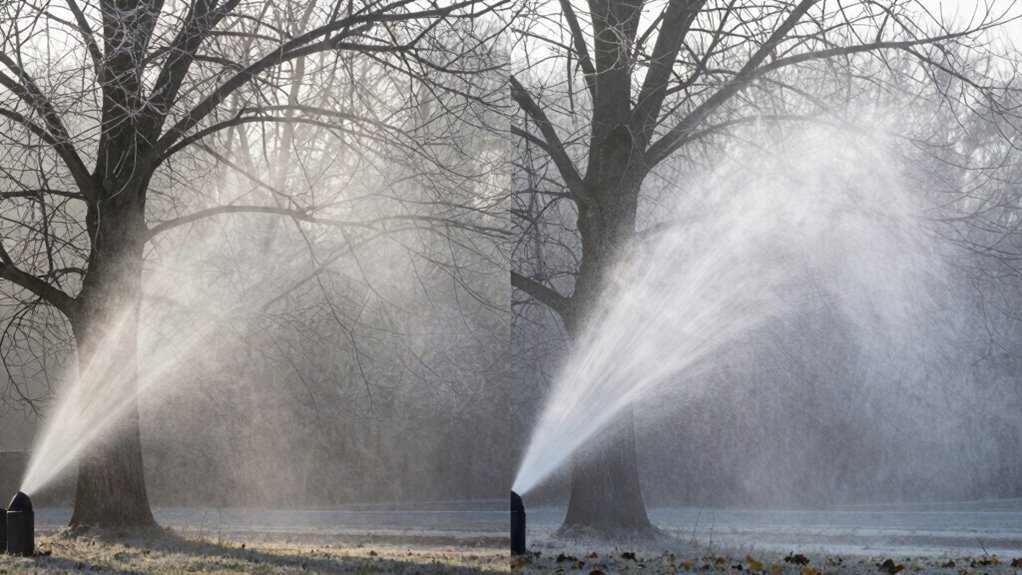
In cool weather, choosing between low and high pressure misting systems impacts your comfort and water use. High pressure systems produce finer mist particles that evaporate quickly, providing better cooling even in cooler conditions. Low pressure systems are less efficient and may not offer much relief in cool weather. Understanding these differences helps you pick the right system for outdoor comfort. To discover more about how pressure levels affect performance, keep exploring.
Key Takeaways
- In cool weather, high pressure misting offers less noticeable cooling due to lower evaporation rates.
- Low pressure systems are generally sufficient for cooling in mild, cool conditions, requiring less investment.
- High pressure misting is more effective in hot weather; its benefits diminish in cooler temperatures.
- Finer mist from high pressure systems evaporates quickly, making it less impactful when outdoor temperatures are lower.
- For cool weather, the choice between low and high pressure systems matters less since cooling needs are minimal.
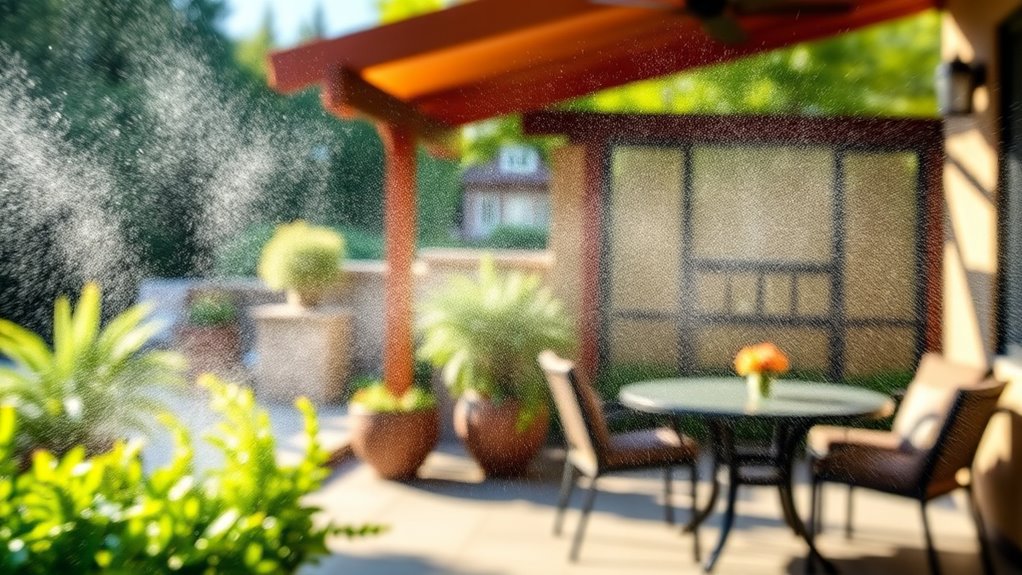
When choosing a misting system for your outdoor space, understanding the differences between low pressure and high pressure options is essential. Both systems serve to cool your environment, but they do so differently, influencing factors like cost efficiency and installation ease. Low pressure systems operate at lower PSI levels, typically between 50 and 100 PSI, and use standard hoses and fittings. This simplicity often translates to lower initial costs and easier installation, especially if you’re a DIY enthusiast. You won’t need specialized tools or extensive plumbing knowledge, making it an accessible choice for many homeowners. Because of their straightforward setup, low pressure systems are generally more cost-effective upfront and require less maintenance over time. Additionally, the pressure levels of each system significantly impact their performance and suitability for different outdoor environments. Understanding system performance is crucial to selecting the right misting setup for your needs.
On the other hand, high pressure misting systems work at markedly higher PSI levels, often between 1,000 and 2,000 PSI. They produce finer mist particles that evaporate more quickly, providing a more immediate cooling effect. While they tend to be more expensive initially due to the need for specialized pumps, nozzles, and plumbing, they can be more cost-efficient in the long run if you use your outdoor space frequently. The finer mist can cover larger areas more effectively, potentially reducing the amount of water used, which saves money on water bills. Additionally, the finer mist created by high pressure systems enhances cooling efficiency and comfort, especially in hot weather. Proper system maintenance is crucial for high pressure setups to prevent leaks or pressure issues and ensure optimal performance. However, installing high pressure systems is more complex. They often require professional installation, specialized equipment, and careful maintenance to prevent leaks or pressure issues. This increased setup effort can be a deterrent if you’re looking for a quick, hassle-free solution.
When weighing your options, think about your specific needs and budget. If you want a simple, budget-friendly system that’s easy to set up and maintain, low pressure misting could be ideal. It’s perfect for casual outdoor use or smaller spaces. If you’re seeking a powerful, more efficient cooling solution and don’t mind investing more time and money upfront, high pressure misting might be the better choice. It’s especially advantageous for larger areas or frequent use, where the benefits of finer mist particles and water savings can truly shine. Ultimately, both systems have their merits, but your decision should align with your outdoor setup, cooling needs, and willingness to handle installation and maintenance complexities.
Frequently Asked Questions
Can Misting Systems Function Effectively Indoors in Cool Weather?
Yes, misting systems can work indoors in cool weather, but their effectiveness depends on the system type and indoor conditions. For ideal indoor cooling and system efficiency, low-pressure systems are often better because they produce finer mist without adding humidity. High-pressure systems may be less effective indoors in cool weather, as they can sometimes increase humidity levels, reducing comfort and cooling efficiency. Proper installation and environment control are key.
Do Low Pressure Systems Require Less Maintenance Than High Pressure Ones?
You’ll find that low pressure systems generally require less maintenance than high pressure ones, which need more frequent checks and parts replacement. Studies show that high pressure systems have a 15% higher failure rate due to their complexity. This impacts system durability, making low pressure setups more reliable over time. So, if you want a system with fewer maintenance requirements and greater durability, low pressure misting might be the better choice for you.
How Does Humidity Affect Misting System Performance in Cold Conditions?
Humidity impacts misting system performance in cold weather by causing the mist to evaporate faster or freeze, reducing cooling efficiency. When humidity is high, moisture lingers longer, making the mist less effective at lowering temperatures. Conversely, low humidity allows the mist to evaporate quickly, providing better cooling. In cold conditions, you should monitor humidity levels closely, as they directly influence how well your misting system performs.
Are There Energy Consumption Differences Between Low and High Pressure Systems?
You’ll find that high-pressure systems tend to be more energy-efficient because they produce finer mist with less power consumption. Coincidentally, their advanced technology often results in lower operational costs over time. Low-pressure systems, while cheaper upfront, usually use more energy to generate larger droplets, which can mean higher power bills. So, if you’re aiming for better energy efficiency, high-pressure misting systems are generally the smarter choice.
What Safety Considerations Are There for Misting Systems in Cool Environments?
In cool environments, you should prioritize electrical safety by ensuring all wiring is properly insulated and grounded to prevent shocks. Be aware of chemical hazards, especially if using additives or disinfectants in your misting system; handle and store chemicals carefully. Regularly inspect the system for leaks or damage, and keep electrical components dry to reduce risks. Proper maintenance and awareness help keep your misting setup safe and effective.
Conclusion
So, whether you choose low or high pressure misting systems, don’t underestimate the power of misting in cool weather! It’s like summoning a sudden, invigorating storm right in your backyard—cooling you down faster than you’d ever imagined. The wrong choice could leave you sweating or shivering, but get it right, and you’ll feel like you’ve revealed the secret to eternal coolness. Trust me, your comfort depends on it—so pick wisely before the weather changes again!