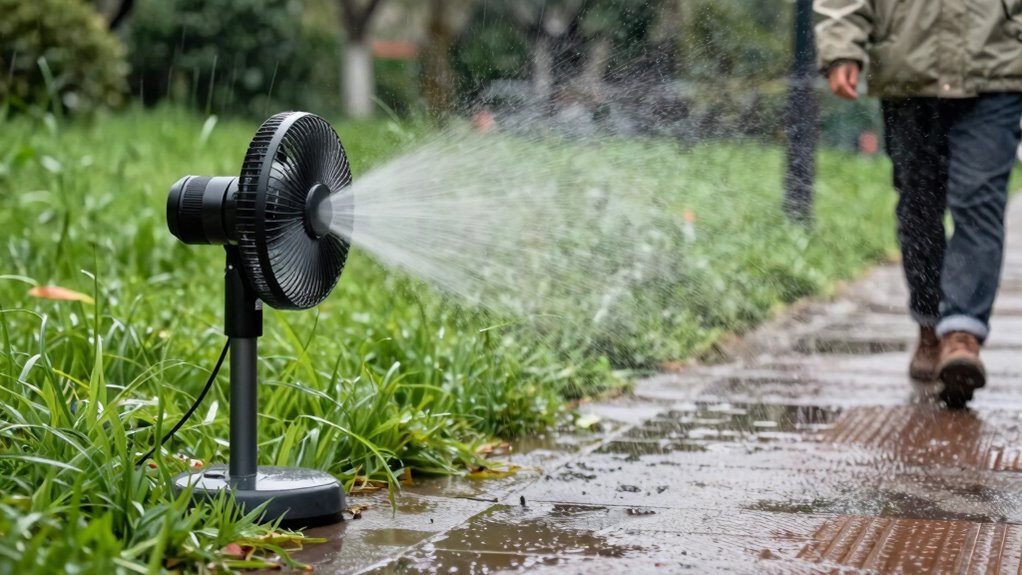

To avoid slippery surfaces when using misting fans in cool weather, keep the area dry and prevent water from pooling on floors or walkways. Install the fan securely away from high-traffic zones, and use non-slip mats to enhance footing. Regularly clean up excess water and check that electrical connections are well sealed and dry. Be mindful of water dripping from the fan, and maintain a safe distance between electrical parts and water sources. If you want detailed safety tips, keep exploring further.
Key Takeaways
- Regularly clean and dry the area around the misting fan to prevent water accumulation and slipping hazards.
- Position the fan’s outlet away from walkways and steps to minimize water dripping onto paths.
- Use non-slip mats or rugs in high-traffic zones to improve footing and reduce slip risks.
- Ensure proper installation on stable surfaces and secure mounting to prevent tipping and water spills.
- Inspect electrical connections for leaks or damage and keep all cords and components dry during use.

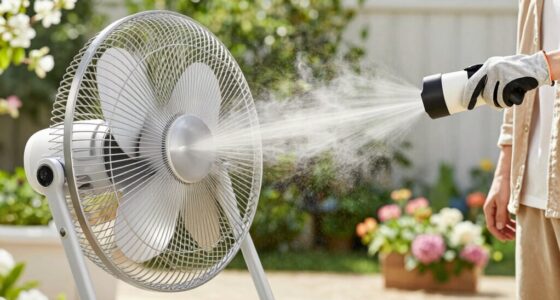
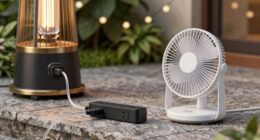
Misting fans can keep you cool during hot weather, but it is essential to prioritize safety when using them. One of the main concerns is electrical hazards. Since misting fans operate with water and electricity, there’s a risk of short circuits or electric shocks if components are damaged or improperly maintained. To reduce this risk, always verify that the fan’s electrical connections are secure and undamaged. Use GFCI outlets, which cut off power if water contact occurs, and avoid overloading circuits. Keep electrical cords away from water splashes, and never handle the plug with wet hands. Regularly inspect the power cord and plug for signs of wear or damage, and replace any faulty parts immediately.
When it comes to installation tips, proper setup is key to safety and performance. Make sure your misting fan is installed on a stable surface or securely mounted to prevent tipping or falling. Keep the fan at a safe distance from water sources and ensure that all connections are tight and sealed. If your fan requires any wiring, follow the manufacturer’s instructions carefully to avoid improper connections that could lead to electrical hazards. Use weather-resistant outdoor extension cords if needed, but never substitute them with indoor cords, which may not withstand outdoor conditions. Additionally, verify that the fan is rated for outdoor use if installed outside, as indoor models may not be designed to handle moisture exposure.
Another important aspect is to be mindful of slippery surfaces. Excess water from misting fans can settle on floors, especially on tiled, wooden, or concrete surfaces, creating a slipping hazard. To avoid accidents, regularly check the area around your misting fan and clean up any pooling water promptly. Use non-slip mats or rugs in high-traffic areas to provide better footing. When setting up your misting fan, consider the airflow path to prevent water from dripping onto walkways or steps. Position the fan’s outlet away from paths and seating areas to minimize water accumulation where people walk.
Frequently Asked Questions
Can Misting Fans Cause Electrical Hazards in Cold Weather?
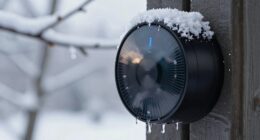
Yes, misting fans can cause electrical hazards in cold weather if you’re not careful. If they’re exposed to moisture, they could lead to electrical shock or moisture damage to the internal components. Always verify your misting fan is properly rated for outdoor use, keep it away from puddles or snow, and unplug it when not in use. Regularly inspect for water intrusion to prevent potential electrical hazards.
Are There Specific Mats or Surfaces Recommended to Prevent Slips?
Think of your safety as a sturdy foundation—without it, everything else crumbles. You should use non-slip mats or textured surfaces around misting fans, especially in cool weather. These surfaces grip your shoes better, preventing slips and falls. Look for rubber or textured mats designed for wet conditions, and guarantee they stay dry and secure. Your careful choice of surfaces keeps everyone safe, turning potential hazards into a stable, slip-free zone.
How Often Should Misting Fans Be Inspected for Safety Issues?
You should inspect your misting fans weekly as part of your maintenance schedule. Use a safety checklist to make certain all components, such as electrical connections and nozzles, are in good condition. Look for leaks, corrosion, or damage that could create slippery surfaces or electrical hazards. Regular inspections help prevent accidents, especially in cooler weather, and keep your equipment functioning safely and efficiently.
Do Misting Fans Pose Any Risk to Children or Pets?
Misting fans can pose risks to children and pets if not used properly. Child safety is vital; keep fans out of reach to prevent accidental injuries. Pet risks include potential exposure to moving parts or electrical components, so supervise your pets around the fan. Always follow manufacturer instructions, and guarantee the misting area is safe and slip-free to protect your little ones and furry friends.
What Are the Best Practices for Storing Misting Fans During Winter?
To keep your misting fan in prime condition, store it securely during winter with proper frost protection. First, drain all water to prevent freezing and damage. Then, place the fan in a dry, sheltered spot—preferably indoors—and cover it with a breathable material. make certain it’s stored on a sturdy surface, away from frost, to avoid freezing and make certain it’s ready for warm weather again.
Conclusion
As you enjoy the cool mist, remember that safety is your shield against unexpected slips. Think of your misting fan as a gentle rain—beautiful but capable of making surfaces slick. Stay vigilant, wipe up excess water promptly, and keep walkways dry. With these simple steps, you’ll turn your outdoor haven into a safe oasis, where every breath of cool air feels like a invigorating breeze—not a slip-and-slide. Stay cautious and enjoy the cool comfort safely.