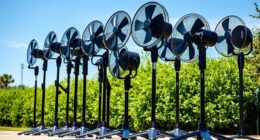
Misting fans can help settle spring pollen by releasing fine water sprays that trap airborne particles and dust, reducing their presence in the air around you. This process creates a cooler, more humid environment that discourages pollen dispersal, making outdoor spaces more comfortable. As pollen settles, your allergy symptoms like sneezing and itchy eyes may decrease. Want to discover more ways misting fans improve allergen management and outdoor comfort? Keep exploring to learn how they can help you.

Get garden gear delivered free with Prime
- Fast, free delivery on millions of items
- Prime Video, Amazon Music and more included
- Member-only deals all year
Key Takeaways
- Misting fans release fine water sprays that trap airborne pollen, reducing its presence in the air.
- The moisture from mist helps settle pollen particles on surfaces, decreasing airborne allergens.
- Misting fans create a cooler, more humid microclimate that discourages pollen dispersal.
- Using mist can lower overall airborne pollen levels, easing allergy symptoms outdoors.
- Misting fans improve outdoor air quality, making springtime activities more comfortable for allergy sufferers.

If you suffer from allergies, misting fans can be a game-changer. These devices help improve air quality around you while providing effective outdoor cooling, which is especially beneficial during peak pollen seasons. When pollen counts are high, outdoor air can become a major trigger for allergy symptoms. Misting fans work by releasing a fine spray of water into the air, which can help settle airborne particles like pollen and dust, reducing their presence in your immediate environment. As a result, you breathe in fewer allergens, and your allergy symptoms may become less severe. This simple mechanism can make spending time outside much more comfortable, whether you’re relaxing in your yard or enjoying outdoor activities.
One of the key benefits of misting fans is their ability to improve air quality. Instead of just blowing hot air around, these fans create a cooler, more humid microclimate that helps trap and settle airborne allergens. This process can considerably cut down the amount of pollen floating around, especially during windy days when pollen disperses widely. The mist creates a barrier that helps bind pollen particles, preventing them from reaching your nose and lungs. As a result, you may notice a reduction in sneezing, itchy eyes, and congestion. Plus, since the misting fans draw in air from the surroundings and distribute it evenly, they help maintain a cleaner, fresher outdoor environment. Additionally, humidification benefits of misting fans can help soothe irritated respiratory passages and promote overall comfort during allergy season. Moreover, the air-purifying effects of misting fans can also help reduce other airborne irritants, making outdoor spaces more tolerable for allergy sufferers. Proper air circulation with misting fans can also prevent stagnant, stale air that might contain additional allergens or pollutants. Enhanced air quality can further improve the outdoor experience for those sensitive to pollen and dust.
Additionally, misting fans are excellent for outdoor cooling. When temperatures soar, hot, dry air can intensify allergy symptoms. Using a misting fan not only cools you down but also adds humidity to the air, which can be a relief if dry, pollen-laden air irritates your respiratory system. The mist creates a comfortable outdoor oasis that reduces the harshness of summer heat and minimizes the dispersal of pollen. With lower temperatures and improved air quality, you can enjoy your outdoor space longer without feeling overwhelmed by allergy triggers. This is especially helpful if you have a garden or patio where you like to spend time during allergy season. Furthermore, maintaining optimal humidity levels can help prevent the spread of airborne allergens, making outdoor environments safer for allergy sufferers.
Products Worth Considering

Orbit B-hyve Smart Indoor/Outdoor 12-Zone Sprinkler Controller

Weber Spirit E-325 3-Burner Gas Grill with Sear Zone

Rachio 3 Smart Sprinkler Controller, 16 Zones
As an affiliate, we earn on qualifying purchases.
Frequently Asked Questions
Do Misting Fans Reduce Pollen Levels Indoors Effectively?
Misting fans don’t directly reduce pollen levels indoors, but they can improve air circulation, which helps disperse pollen particles. To effectively filter pollen, use a HEPA filter or air purifier alongside misting fans. Proper pollen filtration minimizes indoor pollen, while increased air circulation prevents pollen buildup. Combining these methods creates a healthier environment, reducing allergy symptoms and making your indoor space more comfortable during pollen season.
Are Misting Fans Safe for Children and Pets?
Misting fans are generally safe for children and pets when used properly, but don’t assume they’re completely risk-free—they’re not magical shields! Always supervise kids around misting fans, and keep pets from getting too close to avoid any accidental injuries or discomfort. Prioritize child and pet safety by following manufacturer guidelines, ensuring the misting system is well-maintained, and placing fans where little hands or paws can’t reach.
How Often Should I Operate a Misting Fan During Allergy Season?
You should operate your misting fan as needed, typically a few times daily, to help with humidity control and reduce pollen in the air. Keep an eye on fan maintenance, cleaning it regularly to guarantee efficiency and safety. Adjust the operation based on indoor humidity levels and pollen counts outside. Using the fan consistently during peak allergy season can help minimize allergy symptoms, making your environment more comfortable.
Can Misting Fans Help With Outdoor Allergy Relief?
Think of misting fans as your outdoor allergy shield. They can help improve air quality around you by settling pollen and reducing airborne allergens, making it easier to breathe. While they won’t eliminate allergy symptoms entirely, misting fans create a microclimate that minimizes pollen exposure. So, if you’re battling spring allergies, using a misting fan outdoors can be a helpful tool to ease your symptoms and enjoy fresh air.
Do Misting Fans Increase Humidity and Cause Mold Growth?
Misting fans can increase indoor humidity if not properly maintained, potentially leading to mold growth. To prevent this, you should perform regular misting fan maintenance, like cleaning nozzles and checking for leaks. Using misting fans outdoors helps with outdoor allergy relief but keep an eye on indoor humidity control. Maintaining proper humidity levels (30-50%) reduces mold risks and keeps your indoor environment healthy.
Conclusion
So, next time spring pollen invades your space, remember that misting fans aren’t just a simple fix—they’re your secret weapon against allergy chaos. With a gentle spray, you could turn your home into a pollen-free fortress, stopping allergies dead in their tracks. Imagine breathing effortlessly, unaffected by the pollen storm outside. Misting fans might just be the game-changer you need to reclaim your peace and breathe deeply—because you deserve nothing less than allergy-free bliss.