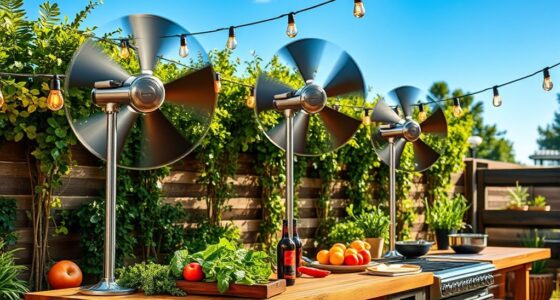
Using a fan and a high-quality furnace filter can effectively reduce dust and airborne particles on your porch. By attaching the filter snugly to the fan’s intake side, you create a simple DIY air purifier that improves outdoor air quality. This budget-friendly setup helps control dust buildup and creates a cleaner, healthier space. Curious how to get the best results? Continue and discover easy tips to maximize your DIY dust control.
Key Takeaways
- A fan with a furnace filter can effectively trap airborne dust, pollen, and pet dander on your porch.
- Properly sealing the filter to the fan ensures maximum dust reduction and optimal airflow.
- Regular filter replacement (every 1–3 months) maintains filtration efficiency and dust control.
- Positioning the DIY filter setup in dust-prone areas can significantly improve porch air quality.
- While not as comprehensive as commercial purifiers, this setup provides an affordable, targeted dust reduction solution.

Ever wondered how to enhance your indoor air quality without spending a fortune? If so, DIY filtration might be just what you need. Creating an effective air purifier at home is surprisingly simple and can substantially reduce dust and other airborne particles, especially on your porch. Instead of buying an expensive commercial air purifier, you can repurpose household items like a fan and a furnace filter to clean the air naturally and cost-effectively. This approach allows you to control dust buildup and create a healthier environment without breaking the bank.
DIY air filtration: an affordable way to improve porch air quality naturally.
To get started, you’ll need a box fan and a good-quality furnace filter. The furnace filter acts as the core of your DIY filtration system, trapping dust, pollen, pet dander, and even some airborne bacteria. When selecting a filter, look for one with a high MERV rating—ideally between 13 and 16—since these are designed to capture smaller particles and provide better filtration. The process is straightforward: attach the furnace filter to the intake side of the fan, making sure it fits snugly so air doesn’t bypass the filter. You can secure it with duct tape or a bungee cord to ensure a tight seal. When the fan runs, it pulls air through the filter, trapping particles before they can settle or circulate. Incorporating a high MERV rating filter ensures optimal particle removal and improves overall air quality. Additionally, ensuring proper airflow through your DIY system maximizes its effectiveness and efficiency.
Position your DIY air purifier on the porch or in any area where dust tends to accumulate. Running the fan for a few hours a day can drastically cut down on airborne dust and allergens, creating a cleaner, more comfortable space. Additionally, choosing the right location and proper placement can maximize its effectiveness in reducing dust levels. Furthermore, using cost-effective materials makes this project accessible to everyone interested in improving air quality. Keep in mind that this DIY filtration setup is most effective for localized areas rather than whole-house purification, but it’s still a powerful tool for targeted dust control. Regularly replace or clean the furnace filter—usually every one to three months—to maintain peak performance. A clogged filter reduces airflow and decreases filtration efficiency, so staying on top of maintenance is key.
While this simple setup isn’t quite the same as a high-end air purifier with HEPA filters, it’s an excellent, budget-friendly way to improve air quality, especially outdoors or in semi-enclosed spaces like porches. It also gives you a sense of control over the dust and allergens that can make outdoor spaces less enjoyable. Incorporating modern kitchen technology principles like automation and precision can further optimize your dust control methods. DIY filtration using a fan and furnace filter is a practical, effective solution that anyone can implement with minimal effort, making it easier to breathe cleaner air and enjoy your porch more comfortably.
Frequently Asked Questions
Will a Fan and Filter Improve Outdoor Air Quality?
A fan and filter can improve outdoor air quality, especially if you include UV sterilization to kill germs and bacteria. While they help reduce dust, adding humidity control can prevent dust from becoming airborne. Keep in mind, though, that outdoor conditions vary and may restrict effectiveness. Regularly maintaining your setup ensures better airflow and filtration, making your porch air cleaner and more comfortable.
How Often Should I Change the Furnace Filter?
Changing your furnace filter is like giving your home a fresh breath of air. You should replace it every 1 to 3 months, depending on your air filter maintenance habits and filter lifespan. If you notice dust buildup or reduced airflow, it’s time to swap it out. Regularly changing your filter keeps your HVAC system running efficiently and helps maintain good indoor air quality.
Can This Setup Filter Pollen and Allergens Effectively?
Yes, a fan with a furnace filter can help with pollen filtration and allergen removal. By choosing a filter with a higher MERV rating, you improve its ability to trap tiny particles like pollen and allergens. Keep the filter clean and replace it regularly to maintain effectiveness. While it won’t completely eliminate all allergens, this setup considerably reduces pollen and allergen levels on your porch, making the air healthier to breathe.
Is DIY Air Filtration Safe for Outdoor Use?
Yes, DIY air filtration can be safe for outdoor use if you follow proper industrial safety guidelines. You should guarantee the fan and filter are designed for outdoor conditions, avoid electrical hazards, and keep the setup stable to prevent accidents. Remember, outdoor pollution varies, so this DIY solution might not fully eliminate all airborne particles. Always prioritize safety and consider professional options for extensive outdoor air quality management.
What Is the Cost Comparison With Commercial Outdoor Air Purifiers?
DIY air filtration with a fan and furnace filter is generally more cost-effective than commercial outdoor air purifiers. You save on initial purchase costs and find maintenance costs lower since replacing filters is simple and inexpensive. However, commercial purifiers often have advanced features and larger coverage areas, which might justify higher prices for some. Overall, DIY setups provide a budget-friendly option, especially if you’re comfortable with regular filter changes.
Conclusion
Now you know that a simple fan and furnace filter can make a noticeable difference in reducing porch dust. While it’s not a silver bullet, it’s a step in the right direction. Just remember, Rome wasn’t built in a day, so don’t expect perfection overnight. Keep tweaking your setup, and you’ll see gradual improvements. Sometimes, small changes can make a big splash, proving that even DIY solutions can go a long way in tackling dust.