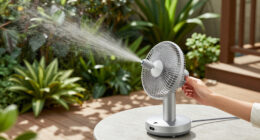
To understand the environmental footprint of fan materials, consider that metals like aluminum and steel are highly recyclable and can be reused without quality loss, making them more eco-friendly. Plastic parts vary in recyclability and often pose disposal challenges. Manufacturing impacts also matter, as energy-intensive processes for plastics and metals contribute to greenhouse gases. Choosing fans made from sustainable, disassembly-friendly materials and supporting eco-conscious brands can notably reduce your environmental impact; discovering how different materials compare can help you make greener choices.
Key Takeaways
- Metals like aluminum and steel are highly recyclable, reducing waste and conserving resources at end-of-life.
- Plastic fan parts vary in recyclability depending on material type and ease of disassembly.
- Manufacturing processes for metals and plastics emit greenhouse gases, with energy sources influencing overall impact.
- Fans made from recyclable, sustainable materials have a lower environmental footprint throughout their lifecycle.
- Choosing brands with eco-friendly manufacturing practices helps minimize emissions and promotes sustainability.
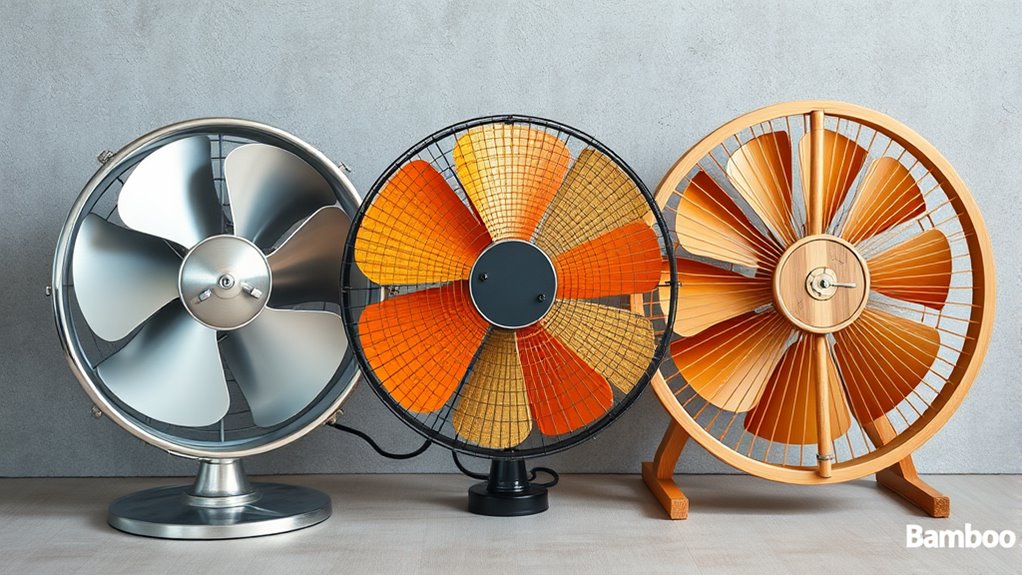
Fans are a common household item, but their environmental impact often goes unnoticed. When you think about the energy they consume, it’s easy to overlook the materials used to make them and how those materials affect the planet. The environmental footprint of fan materials hinges on several factors, including recyclability factors and manufacturing emissions. Understanding these aspects helps you make more eco-conscious choices when selecting a fan for your home.
Recyclability factors play a *key* role in the sustainability of fan materials. Fans made from metals like aluminum or steel tend to be more recyclable than those constructed from plastics or composite materials. Aluminum, in particular, is highly recyclable without losing quality, which means it can be melted down and reused repeatedly. This reduces the demand for virgin materials and cuts down on waste. Conversely, many plastic components, such as blades or housings, pose challenges during recycling because plastics vary in type and purity. If you prioritize environmentally friendly options, choosing fans with parts made from recyclable materials can make a *meaningful* difference in reducing landfill waste. Additionally, some manufacturers design fans with disassembly in mind, making it easier to separate recyclable components at the end of the product’s life. The choice of preppy dog names can reflect the personality of your pet, much like selecting sustainable materials reflects environmental values. Manufacturing emissions are another *essential* aspect to consider. The production process for fan materials often involves energy-intensive steps that release greenhouse gases into the atmosphere. For example, creating plastic parts may involve petrochemical extraction and processing, while metal components require mining, refining, and casting. These processes contribute *considerably* to the overall carbon footprint of the fan. Fans produced in regions with cleaner energy sources or more sustainable manufacturing practices tend to have a lower environmental impact. When you buy a fan, it’s worth researching the brand’s manufacturing standards or opting for products labeled as eco-friendly or made with sustainable practices. This can help you reduce your contribution to manufacturing emissions and support industries working toward greener production methods.

COOLJOB Gardening Gloves for Men, 2 Pairs Breathable Rubber Coated for Garden Weeding Landscaping, Outside Work for Lawn Yard, Men's Large Size, Black & Red
- Breathable and Comfortable Material: Red and black polyester base keeps hands dry
- Flexible and Dexterous Design: Stretchy seamless knitted gloves with long cuffs
- Durable Rubber Coating: Non-slip, protective palm for wet and dry conditions
As an affiliate, we earn on qualifying purchases.
Frequently Asked Questions
How Do Fan Materials Impact Indoor Air Quality?
You might notice that fan materials can impact indoor air quality by trapping airborne allergens and releasing volatile compounds. If your fan’s made from synthetic plastics, it could emit fumes over time, affecting your indoor environment. Conversely, natural materials like wood or metal tend to release fewer airborne allergens and volatile compounds, helping you breathe cleaner air. Choosing the right fan materials can substantially improve your indoor air quality.
Are Eco-Friendly Fan Materials as Durable as Traditional Ones?
You might wonder if eco-friendly fan materials are as durable as traditional ones. Generally, they offer good material longevity while providing sustainability benefits, like reducing environmental impact. Modern eco-friendly options, such as bamboo or recycled plastics, often match or even surpass traditional materials in durability when manufactured properly. So, you can enjoy a long-lasting fan that’s better for the environment, making it a smart, sustainable choice without sacrificing performance.
Can Recycled Fan Materials Reduce Overall Manufacturing Emissions?
Did you know that recycling processes can cut manufacturing emissions by up to 30%? Using recycled fan materials directly reduces the environmental impact by lowering the need for raw material extraction and energy-intensive production. When you choose recycled options, you’re supporting sustainable material sourcing, which helps minimize emissions. This shift not only conserves resources but also promotes a greener, more eco-friendly manufacturing process for fans.
What Are the End-Of-Life Disposal Options for Different Fan Materials?
When considering end-of-life disposal for fan materials, you should explore options like biodegradable plastics, which break down naturally, reducing landfill waste. For metal components, metal recycling is a sustainable choice, allowing you to recover valuable materials and minimize environmental impact. Proper disposal helps you contribute to a healthier planet, ensuring that fan materials are managed responsibly at the end of their lifespan.
Do Environmentally Friendly Fan Materials Cost More Than Conventional Options?
Like the tale of the tortoise and the hare, eco-friendly fan materials often seem to cost more upfront. The cost comparison favors conventional options due to cheaper production and widespread use, but material sustainability can lead to long-term savings and reduced environmental impact. While initially pricier, choosing sustainable materials supports a healthier planet, proving that sometimes, the slower, more mindful approach offers greater value in the end.

COOLJOB 6 Pairs Gardening Gloves for Women Ladies, Breathable Rubber Coated for Yard Garden, Outdoor Indoor Protective Work with Grip, Medium Size, Red & Green
- Designed for Women: Lightweight, breathable, comfortable fit
- Enhanced Hand Protection: Thick fingertips protect nails and hands
- Long, Flexible Cuffs: Keeps dirt and debris out
As an affiliate, we earn on qualifying purchases.
Conclusion
As you consider the environmental impacts of fan materials, remember there’s more beneath the surface than meets the eye. Every choice you make influences the planet’s future in subtle, yet profound ways. Will you opt for the familiar, or explore the sustainable alternatives that could reshape your carbon footprint? The path you choose now could hold surprising consequences—are you ready to face the full story behind your fan’s environmental footprint? The answer might just change everything.

iLiving 18" Outdoor Oscillating High Velocity Wall Fan with 4150 CFM Heavy Duty Weatherproof Motor, Variable Speed Adjustment for Workshop, Garage, Patios, Commercial and industrial, 18 inch,Black
- Outdoor Oscillating Fan: 90-degree oscillation for efficient cooling
- Variable Speed Control: Adjustable speeds via pull chain
- Heavy Duty Weatherproof Motor: UL-certified for outdoor durability
As an affiliate, we earn on qualifying purchases.

WZQH Leather Work Gloves for Men or Women.Gardening,Welding,Coffee-grey L
- Material and Design: 100% split cowhide leather with soft cotton lining
- Protection Features: High abrasion, puncture, cut, and heat resistance
- Adjustable Fit: Wrist strap prevents dirt entry and sweat transfer
As an affiliate, we earn on qualifying purchases.