Combining fans with plants outdoors creates a natural air filtration system that improves air quality around you. Use fans to boost circulation, dispersing pollutants away from seating or living spots while plants absorb airborne toxins like formaldehyde and benzene. Strategic placement of both ensures pollutants are caught and pushed away effectively. Keep an eye on plant health and fan settings for ideal results—exploring tips here can help you create a healthier outdoor space.
Key Takeaways
- Position fans to enhance air circulation, dispersing pollutants away from plants and living areas outdoors.
- Select and place air-purifying plants near pollution sources to maximize toxin absorption with the help of fans.
- Adjust fan speed to optimize airflow without harming plant health or soil moisture.
- Use fans and plants together to create a natural filtration system that improves outdoor air quality.
- Organize outdoor space efficiently, leveraging vertical storage and strategic placement for easier maintenance and effective filtration.
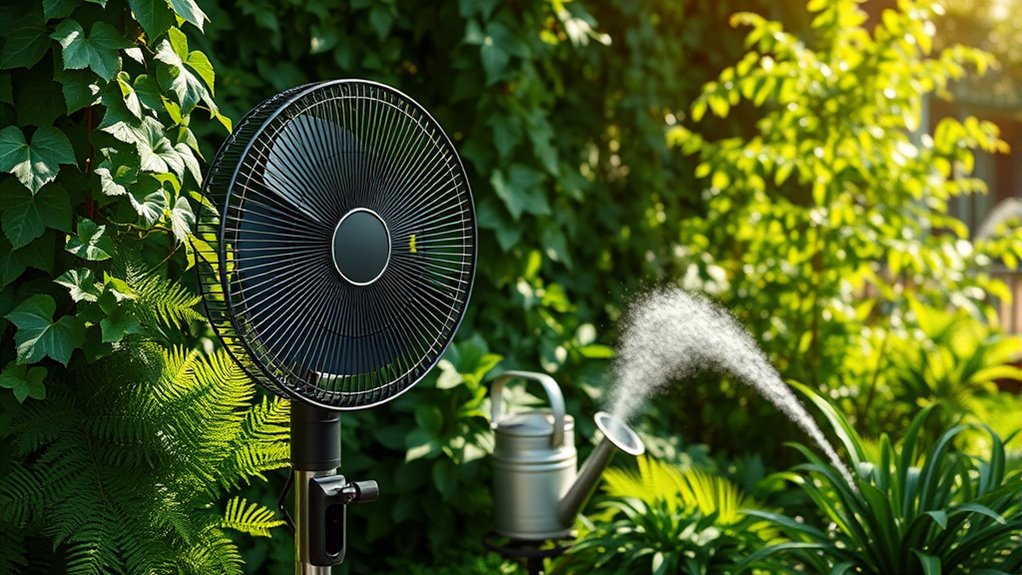
Outdoor air quality can substantially impact your health and well-being, especially in urban or polluted areas. When trying to improve the air around you, combining fans with plants can be an effective natural solution. Fans help boost air circulation, pushing stale or polluted air away and allowing fresh air to flow in more freely. This increased air movement prevents pollutants from settling and accumulating in one spot, making the environment healthier and more breathable. But to maximize their effectiveness, you need to think about plant selection carefully. Certain plants are better at filtering pollutants and releasing oxygen, so choosing the right types can greatly enhance your outdoor air quality.
In selecting plants, you want to focus on species known for their air-purifying qualities. Plants like ferns, spider plants, and certain succulents are popular choices because they can absorb airborne toxins such as formaldehyde, benzene, and trichloroethylene. When combined with good air circulation from fans, these plants can create a more effective natural filtration system. You might place plants in strategic locations where fans can help disperse pollutants away from your seating or living areas. Positioning plants near the source of pollution, like near streets or busy pathways, helps trap and filter pollutants before they reach you. Simultaneously, fans create a breeze that helps disperse these filtered air particles, preventing them from lingering in one spot.
Maintaining a healthy balance between air circulation and plant health is key. Too much airflow can dry out soil or damage delicate leaves, so you need to adjust fan speed accordingly. Conversely, insufficient airflow can leave pollutants stagnant, reducing the plants’ ability to purify the air effectively. Proper plant placement takes into account both sunlight exposure and proximity to sources of pollution. For example, placing larger, leafy plants in shaded areas with a steady breeze can optimize their filtering capabilities. Regularly watering and caring for your plants ensures they stay healthy and continue to perform their natural air-cleaning functions. Additionally, understanding the benefits of vertical storage solutions can help you organize your outdoor space efficiently, making it easier to maintain your plants and fans.
Frequently Asked Questions
How Do Outdoor Weather Conditions Affect Fan and Plant Effectiveness?
Outdoor weather conditions can substantially impact fan and plant effectiveness. Wind chill may reduce the airflow efficiency and make fans less effective, while heavy rainfall can water plants excessively and diminish their filtration ability. Strong winds might also disperse airborne particles differently, affecting air quality. To maximize performance, you should consider weather patterns, protect equipment from rain, and choose resilient plants that can withstand changing outdoor conditions.
Can Specific Plant Varieties Enhance Air Filtration More Than Others?
Yes, plant selection can substantially enhance air purification outdoors. Certain varieties like ferns, spider plants, and peace lilies are known for their superior ability to filter pollutants and improve air quality. By choosing these plants, you can maximize the air purification benefits in your outdoor space. Combining them with fans helps circulate air more effectively, creating a healthier environment. Focus on selecting plants with proven air filtration qualities for the best results.
What Maintenance Is Required for Outdoor Fans and Plants?
Think of maintaining outdoor fans and plants like tending a garden; regular care keeps everything flourishing. You’ll need to check fans for dust buildup and clean blades occasionally, while watering needs vary by plant type. Pest control is key—inspect leaves regularly and use natural deterrents. By staying attentive and proactive, you guarantee your setup works efficiently, transforming your outdoor space into a fresh, healthy oasis.
Are There Safety Concerns With Using Fans Outdoors Near Plants?
Yes, there are safety concerns when using fans outdoors near plants. You should guarantee fan blade safety by keeping fans stable and away from children or pets to prevent accidents. Be aware of plant toxicity; some plants might be harmful if touched or ingested, so place them safely out of reach. Regularly check the fan’s condition and avoid using damaged fans that could pose electrical hazards or risk to nearby plants.
How Long Does It Take to See Noticeable Air Quality Improvements?
Think of it like a garden waking up; you’ll notice improved air quality in about one to two weeks. As your plants grow and flourish, they filter more pollutants, enhancing the effect. Keep in mind, fan noise might be noticeable at first but diminishes over time. With consistent care and patience, your outdoor space transforms into a cleaner, fresher haven faster than you’d expect.
Conclusion
By combining fans with plants outdoors, you’re creating an unstoppable fortress of pure, pristine air—so powerful, it could rival the cleanliness of a high-tech lab. This simple yet revolutionary approach transforms your outdoor space into a sanctuary of freshness, making pollutants tremble and nature flourish. Embrace this natural revolution, and watch your environment evolve into an air-purifying masterpiece so extraordinary, it’ll leave everyone breathless—literally and figuratively.