
Using fans outdoors for your sauna or hot tub helps control humidity and keeps the area comfortable. Proper airflow prevents moisture buildup, mold, and wood damage, especially in cooler weather. Position fans strategically to move moist air away from structures and improve ventilation. Weather-resistant fans are best for outdoor use. Managing humidity isn’t only about comfort but also about longevity. Keep exploring to discover more ways to optimize your outdoor relaxation space.

Get garden gear delivered free with Prime
- Fast, free delivery on millions of items
- Prime Video, Amazon Music and more included
- Member-only deals all year
Key Takeaways
- Properly placed exhaust fans help remove excess moisture from outdoor saunas and hot tubs.
- Outdoor-rated fans improve airflow, reducing humidity buildup and preventing mold or wood damage.
- Strategic fan placement directs moist air away from structures, enhancing comfort and longevity.
- Using humidity monitors with fans ensures optimal moisture levels for outdoor relaxation spaces.
- Regular maintenance of ventilation systems maintains effective moisture control and outdoor environment health.

Are you torn between installing an outdoor sauna or a hot tub? Making this decision can feel overwhelming, especially when considering how each option impacts your outdoor space. One vital factor to think about is how you’ll manage humidity and airflow, since both structures generate considerable moisture. Proper ventilation strategies are essential to prevent issues like mold, wood rot, or uncomfortable dampness. Using fans effectively outdoors can help you balance humidity levels, making your experience more enjoyable and protecting your investment.
When installing an sauna outdoors, understanding ventilation strategies becomes even more essential. Saunas produce high heat and moisture, which, if not properly ventilated, can lead to excessive humidity buildup. You’ll want to incorporate exhaust fans or vents that allow moist air to escape and fresh air to circulate. Positioning fans to promote airflow away from the sauna’s interior helps maintain a comfortable environment while preventing excess humidity from seeping into surrounding structures or furniture. This approach not only keeps the sauna in good condition but also reduces the risk of mold forming on nearby wood or decking. Additionally, selecting outdoor-rated fans designed to withstand weather conditions ensures long-term performance and durability. Proper ventilation practices are critical to maintaining a healthy outdoor environment around your sauna. Incorporating humidity control systems can further optimize moisture management, especially during seasonal changes. Regular maintenance of your ventilation system ensures consistent moisture control and prolongs the lifespan of your outdoor features.
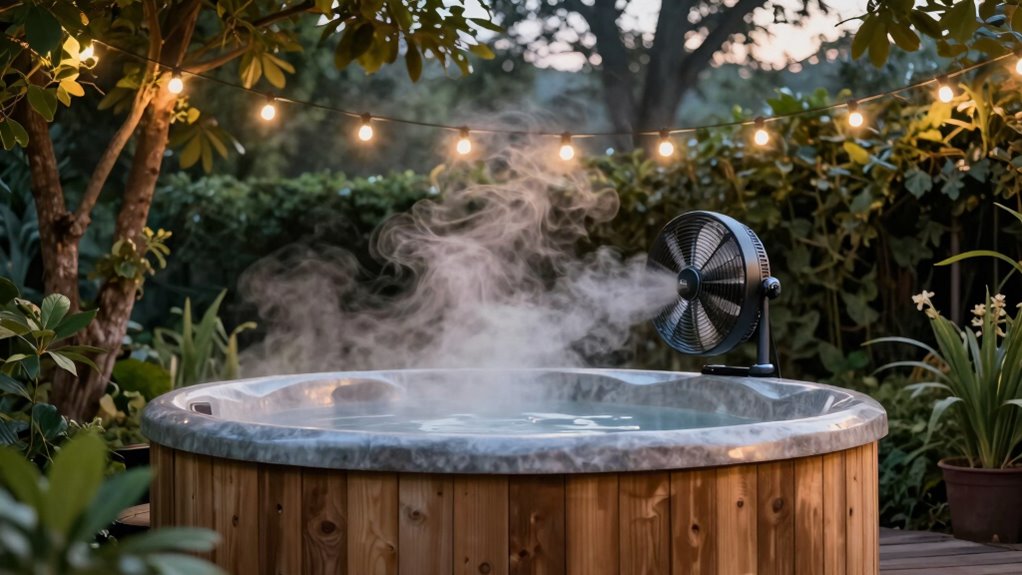
Similarly, hot tubs release a considerable amount of moisture into the air, especially in cooler outdoor conditions. Without adequate humidity control, you might notice condensation forming on nearby surfaces or excessive dampness that affects your outdoor furniture and decking. Installing fans nearby can greatly improve air circulation, dispersing humid air and preventing moisture from settling. You should also consider creating a slight breeze around your hot tub area—this natural or mechanical airflow aids in maintaining a balanced humidity level. Combining fans with strategic placement of vents or screens ensures that moisture doesn’t linger, keeping your outdoor space dry and inviting. Incorporating humidity monitors can help you keep track of moisture levels and adjust your ventilation accordingly.
In both cases, the key is continuous air movement. Fans act as your first line of defense against excess humidity, helping you implement effective ventilation strategies tailored to your outdoor setup. Regularly monitoring humidity levels and adjusting fan placement or speed allows you to adapt to changing weather conditions, ensuring your outdoor retreat remains comfortable and well-maintained. Remember, the goal is to keep moisture in check without creating drafts or discomfort, so choose fans that are suitable for outdoor use and weather-resistant. Proper airflow management is also critical to prevent stagnant air pockets that can lead to mold growth.
Ultimately, whether you decide on a sauna or a hot tub, employing proper ventilation strategies with well-placed fans will enhance your outdoor experience. They help you control humidity, preserve your structure, and create a welcoming environment. With the right approach, you can enjoy your outdoor relaxation space year-round, knowing you’ve effectively managed moisture and airflow.
Frequently Asked Questions
Can Fans Prevent Moisture Damage to Outdoor Structures?
Fans can help prevent moisture damage to outdoor structures if you use proper fan placement and incorporate moisture barriers. By strategically positioning fans, you promote airflow that reduces humidity buildup. Combined with moisture barriers like waterproof paint or sealants, fans help protect wood and other materials from rot and mold. Regularly adjusting fan direction and ensuring good ventilation keeps outdoor spaces dry, extending their lifespan and maintaining their appearance.
What Type of Fan Is Best for Outdoor Humidity Control?
The best fan for outdoor humidity control is a high-velocity, weather-resistant fan designed for outdoor use. You should opt for one that enhances wind circulation and airflow, effectively dispersing moisture and preventing buildup. Look for models with adjustable speed settings and durable materials to withstand the elements. Proper airflow enhancement keeps humidity levels balanced, protecting your structures from moisture damage while maintaining a comfortable outdoor environment.
How Often Should Fans Be Used Outdoors With Hot Tubs?
You should use fans outdoors with hot tubs regularly, ideally every few hours, especially during peak use, to prevent excess humidity buildup. Proper fan placement around the hot tub helps circulate air effectively, while humidity monitoring guarantees you’re adjusting usage as needed. Keep an eye on moisture levels, and increase fan use during hot tub sessions or humid weather to maintain a comfortable, mold-free environment.
Are There Safety Concerns for Outdoor Fans Near Water?
Think of outdoor fans near water like a brave swimmer steering waves—careful placement is key. Yes, there are electrical safety concerns if fans are placed too close to water, risking short circuits or shocks. To stay safe, make certain proper fan placement is away from splashes, and use outdoor-rated fans with weatherproof wiring. Always follow manufacturer guidelines and avoid operating fans with damaged cords or outlets to prevent hazards.
Can Fans Reduce Humidity Faster Than Natural Evaporation?
Fans can often reduce humidity faster than natural evaporation because they improve evaporation efficiency by increasing airflow dynamics around the water surface. When you use fans outdoors, they actively move moist air away, promoting quicker evaporation. This enhanced airflow helps dry the area faster, especially compared to relying solely on natural evaporation, which is slower and less controlled. So, yes, fans are effective tools for faster humidity reduction outdoors.
Conclusion
Whether you choose an outdoor sauna or hot tub, using fans helps balance humidity and keeps your space comfortable. Did you know that humidity levels above 60% can increase the risk of mold and mildew? By strategically placing fans, you can reduce humidity by up to 30%, making your outdoor oasis more enjoyable and safer. So, next time you relax outside, remember that a simple fan can make a big difference in your experience.
Halloween Picks
halloween
As an affiliate, we earn on qualifying purchases.