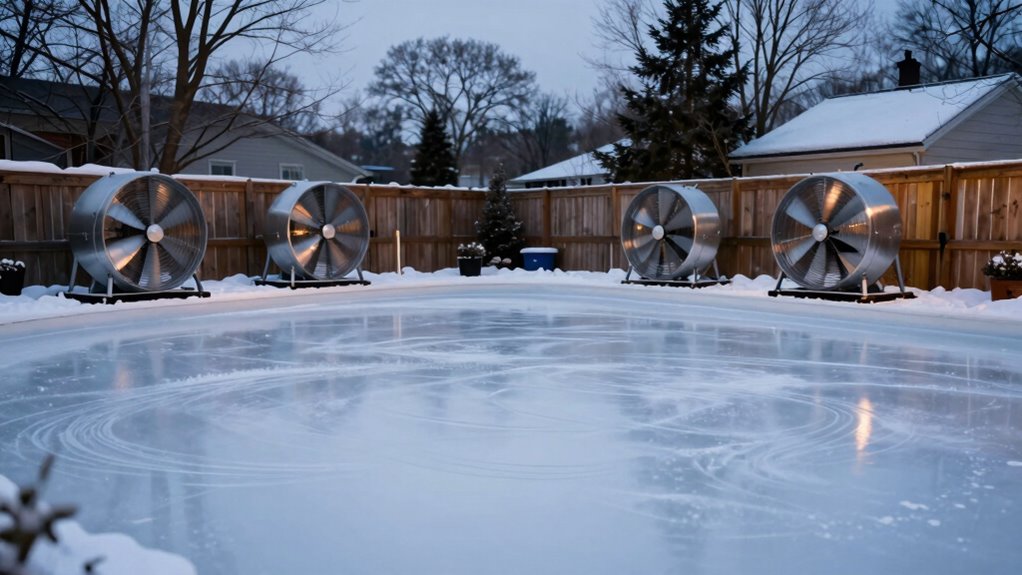

To keep your backyard ice rink smooth using fans, position outdoor-specific fans at a safe distance to promote even airflow across the surface. Turn them on after freezing layers to blow away fog or frost and help settle the ice. Adjust fan speeds based on weather conditions and verify they’re clear of debris. Combining proper insulation with strategic fan use can extend the ice’s lifespan and maintain ideal smoothness — keep going to discover more expert tips.
Key Takeaways
- Position fans at a safe distance to promote even airflow and prevent uneven ice buildup.
- Use fans to blow away fog and frost after each freezing layer for a smoother surface.
- Incorporate outdoor-specific, adjustable fans to control airflow based on weather conditions.
- Combine fan use with proper insulation to slow melting and maintain ice quality longer.
- Regularly check fan placement and clear debris to ensure optimal circulation and surface smoothness.

Creating a backyard ice rink can be a fun and rewarding winter project, but it often requires some clever tricks to get it just right. One of the biggest challenges is maintaining a smooth, even ice surface, especially when Mother Nature throws her unpredictable weather your way. That’s where using fans to keep the ice smooth can make a real difference. Fans help with ice surface maintenance by circulating cold air over the surface, which can prevent ice from becoming uneven or developing rough patches. When you set up a fan to blow across the rink, it encourages a more uniform freezing process, helping to reduce the formation of bumps or cracks.
Fans help keep your ice smooth by circulating cold air and promoting even freezing.
But before you even get to using fans, you need to ensure your outdoor rink insulation is up to par. Proper insulation minimizes heat transfer from the environment, slowing the melting process and allowing your ice to stay solid longer. Think of it as giving your rink a protective blanket that keeps warmth out and cold in. You can insulate the edges of your rink with foam boards or even old carpets, which act as barriers against warmer air seeping in from the ground or surrounding environment. When your ice is well-insulated, it’s easier to maintain a consistent thickness and quality, reducing the need for frequent resurfacing or patching. Using insulation materials effectively can significantly improve ice longevity and quality.
Once the insulation is in place, you can focus on the ice surface maintenance. After a fresh layer of water has frozen, placing a fan nearby can help smooth out the surface. Turn it on after each layer of freezing to blow away any fog or frost that might form, and to keep the cold air moving evenly across the ice. This continuous airflow prevents the formation of ice jaggedness and promotes a clearer, glossier surface. It’s especially useful during cold snaps when the ice might otherwise develop a rough texture. Keep the fan at a safe distance so it doesn’t disturb the ice or blow debris onto the surface, but close enough to promote air circulation. Proper fan placement is essential to avoid uneven cooling or accidental damage to the ice surface. Incorporating appropriate fan types designed for outdoor use can also enhance the effectiveness of your setup. Using fans with adjustable speed can help you better control airflow depending on weather conditions.
Using fans effectively can also help prevent ice from melting prematurely, especially during warmer days or when there is wind exposure. In addition to the fan, regularly checking your outdoor rink insulation and addressing any weak spots will extend the life of your ice. Use the fan strategically—on windy or warmer days, it can help maintain a smoother surface and slow down melting. By combining effective ice surface maintenance techniques with proper insulation, you’ll enjoy a pristine, safe skating surface throughout the winter. These hacks aren’t just simple tricks—they’re essential tools for transforming your backyard into a winter wonderland that stays perfect from first ice to last skate.
Frequently Asked Questions
Can Fans Be Used for Ice Rinks in Warm Climates?
Yes, you can use fans for ice rinks in warm climates, but climate considerations matter. You’ll need powerful fans placed strategically to promote air circulation and slow melting. Proper fan placement ensures even cooling and prevents hot spots. Keep in mind, fans won’t replace refrigeration, but they can help maintain smoother ice temporarily. Adjust your setup based on weather conditions for best results and always monitor temperature and humidity.
What Safety Precautions Are Needed When Using Fans Outdoors?
Sure, you’ll want to be a safety superstar when using fans outdoors. First, prioritize electrical safety—use GFCI outlets and keep cords away from water. Carefully plan fan placement, avoiding windy spots that could topple your equipment. And, of course, stay vigilant, always unplugging fans when not in use. Your ice rink’s smooth surface depends on your ability to keep that power safe and sound—so don’t skimp on precautions!
How Loud Are the Fans During Operation?
Fan noise during operation varies depending on the model, but generally, you can expect a moderate level of sound. Outdoor acoustics influence how loud it feels; open space tends to diffuse sound, making it less intrusive. Some fans are quieter, perfect for keeping your ice smooth without disturbing neighbors or outdoor gatherings. If noise is a concern, look for fans specifically designed with quieter motors to minimize disruption.
Do Fans Need Regular Maintenance or Cleaning?
Yes, fans need regular maintenance and cleaning to stay effective. You should check the fan blades and motor monthly, especially during heavy use, and clean off any dirt or debris with a soft cloth. The cleaning frequency depends on your environment; if dust or leaves are common, clean more often. Proper fan maintenance guarantees ideal airflow and keeps your ice smooth and clear, reducing strain on the equipment.
Can Multiple Fans Be Used Together for Larger Rinks?
Imagine a well-orchestrated symphony where each instrument plays in harmony. Yes, you can use multiple fans together for larger rinks. To do this effectively, focus on strategic fan placement and airflow optimization. Position fans evenly across the rink to ensure consistent ice coverage. By coordinating their operation, you’ll create a seamless breeze that keeps your larger surface smooth and icy, just like a perfectly tuned orchestra.
Conclusion
You might wonder if fans really keep your ice smooth, and the truth is, they can work surprisingly well. While they won’t turn a rough patch into perfect ice overnight, using fans helps slow down melting and creates a more even surface. It’s a simple hack that could make your backyard rink safer and more enjoyable. So give it a try—sometimes, small tricks make all the difference in turning your winter dreams into reality.