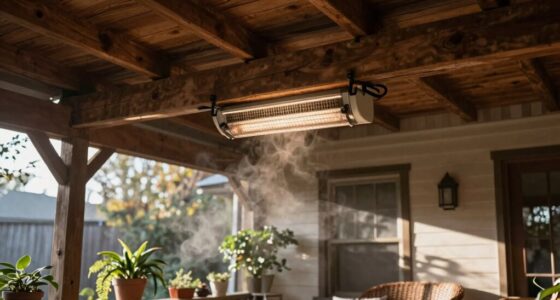
When designing outdoor fans for tiny houses and micro cabins, focus on weatherproof, durable materials like corrosion-resistant metals and sealed motors to withstand the elements. Incorporate energy-efficient features such as modern DC motors and aerodynamic blades, and include noise-reduction elements like balanced blades and sound-dampening housings. Ensuring the fan’s design balances durability, efficiency, and quiet operation keeps it reliable over time. Explore these key principles to create a practical outdoor fan tailored to your small space’s needs.

Get garden gear delivered free with Prime
- Fast, free delivery on millions of items
- Prime Video, Amazon Music and more included
- Member-only deals all year
Key Takeaways
- Use weatherproof, corrosion-resistant materials and sealed motors to ensure longevity in outdoor environments.
- Optimize blade design for efficient airflow while minimizing energy consumption, compatible with limited power sources.
- Incorporate noise-reduction features like sound-dampening housings and balanced blades for quiet operation.
- Design with adjustable speeds and energy-efficient motors to manage power use effectively.
- Ensure the fan’s housing and components are weatherproof and rust-proof for durable outdoor performance.

Have you ever wondered how outdoor fans are designed to withstand the elements while providing cool comfort? When creating outdoor fans for tiny houses and micro cabins, durability and efficiency are your top priorities. You need a fan that can handle exposure to weather—rain, wind, dust—without losing performance. To achieve this, designers incorporate weather-resistant materials like corrosion-proof metals, sealed motors, and protective coatings. These features ensure the fan remains functional over time, even with constant outdoor use. Think about the importance of a sturdy, rust-proof housing that shields internal components from moisture and debris. Such attention to durability not only prolongs the lifespan of your fan but also reduces the need for frequent repairs or replacements. Additionally, selecting components with weatherproof ratings ensures that every part of the fan is suitable for outdoor conditions.
Outdoor fans for tiny homes are built with weatherproof materials to ensure durability and long-lasting performance.
Energy efficiency plays a pivotal role in designing outdoor fans for small structures. Since tiny houses and micro cabins often rely on limited power sources like solar panels or small generators, choosing energy-efficient motors and blades is essential. Modern outdoor fans use DC motors that consume less electricity while delivering strong airflow. This means you get effective cooling without draining your energy supply. Additionally, adjustable speed settings allow you to customize airflow based on your comfort needs, saving power when full blast isn’t necessary. Properly designed fans also feature aerodynamic blades that maximize airflow while minimizing energy use, contributing to lower utility bills and a smaller environmental footprint.
Noise reduction is another vital aspect to consider. When you’re living in a tiny space, loud fans can quickly become disruptive, affecting your comfort and peace. That’s why designing outdoor fans with noise-reduction features matters. Manufacturers often incorporate sound-dampening materials within the motor housing or use specially balanced blades that minimize vibrations and noise. Some fans include quiet operation modes or speed controls that allow you to keep airflow steady without generating excessive sound. The goal is to create a fan that provides effective cooling while remaining unobtrusive, so you can enjoy your outdoor space without constant noise interruptions.
In essence, designing outdoor fans for tiny houses and micro cabins involves balancing durability, energy efficiency, and noise reduction. By selecting weather-resistant materials, energy-saving motors, and quiet operation features, you create a cooling solution that enhances your outdoor experience without demanding excessive power or disturbing your tranquility. When you choose or design a fan with these principles in mind, you guarantee it can withstand the elements, operate efficiently, and maintain a peaceful environment. This thoughtful approach makes your outdoor space more comfortable and sustainable, no matter the weather or the size of your tiny home.
Products Worth Considering

Orbit B-hyve Smart Indoor/Outdoor 12-Zone Sprinkler Controller

Orbit B-hyve XR Smart Indoor/Outdoor Sprinkler Controller, 16 Zones
Orbit B-hyve XR 8-Zone Indoor/Outdoor Smart Sprinkler Controller
As an affiliate, we earn on qualifying purchases.
Frequently Asked Questions
How Do Outdoor Fans Impact Energy Efficiency in Tiny Homes?
Outdoor fans can considerably impact your tiny home’s energy efficiency by reducing overall energy consumption. They improve ventilation efficiency, helping to keep your space cooler without relying heavily on air conditioning. With proper use, outdoor fans circulate air effectively, lowering the need for electrical cooling devices. This not only saves energy but also minimizes your utility bills, making your tiny home more sustainable and comfortable in warm weather.
What Safety Features Are Essential for Outdoor Fans in Small Spaces?
You might worry about safety when choosing outdoor fans, but prioritizing essential features can ease that concern. Make certain your fan has fire safety elements, like thermal cut-offs, to prevent overheating. Weather resistance is vital, so pick models built to withstand rain and wind. These features protect you and your tiny space, making outdoor fan use safer and more reliable, even during unpredictable weather or in case of electrical issues.
Can Outdoor Fans Operate Effectively in High Humidity Environments?
You might wonder if outdoor fans work well in high humidity. They can, if you choose models with humidity resistance features. Proper fan placement is also vital; position fans where airflow can reduce moisture buildup and improve comfort. Look for fans with rust-proof components and sealed motors to withstand humidity. When you combine humidity resistance with strategic placement, your outdoor fan will operate effectively, even in damp environments.
What Maintenance Is Required for Outdoor Fans in Micro Cabins?
You should regularly maintain your outdoor fan in your micro cabin by cleaning the fan blades to remove dust and debris, ensuring efficient airflow. Additionally, check and lubricate the motor as needed to prevent squeaks and ensure smooth operation. This routine maintenance keeps your fan running effectively, extends its lifespan, and maintains ideal cooling during hot days. Remember, proactive care makes all the difference in outdoor fan performance.
Are There Eco-Friendly Outdoor Fan Options Suitable for Tiny Houses?
You might think eco-friendly outdoor fans aren’t powerful enough, but many options actually use solar cooling technology, making them energy-efficient and sustainable. Look for fans with biodegradable blades that break down naturally, reducing environmental impact. These fans are perfect for tiny houses, combining eco-consciousness with performance. Embracing solar cooling and biodegradable materials helps you stay cool while protecting the planet, all without sacrificing comfort or style.
Conclusion
In wrapping up, remember that choosing the right outdoor fan for your tiny house or micro cabin isn’t just about modern convenience; it’s about creating a cozy oasis in the great outdoors. Think of it as your trusty steed in the quest for comfort, much like a knight’s trusted steed in days of yore. With the right fan, you’ll enjoy breezes that keep you cool and a space that feels just right—no time machine required.