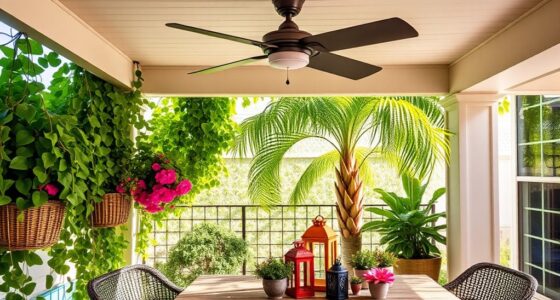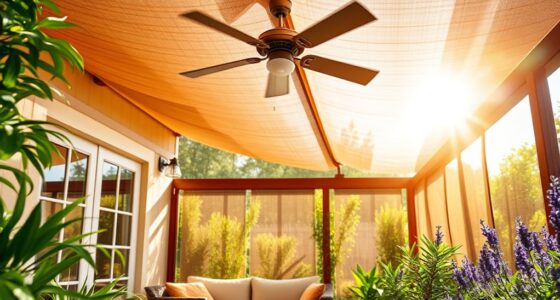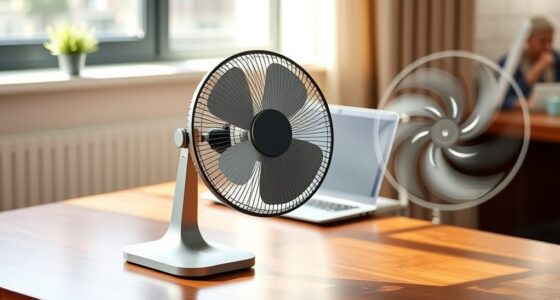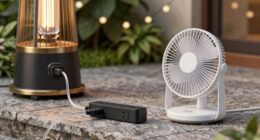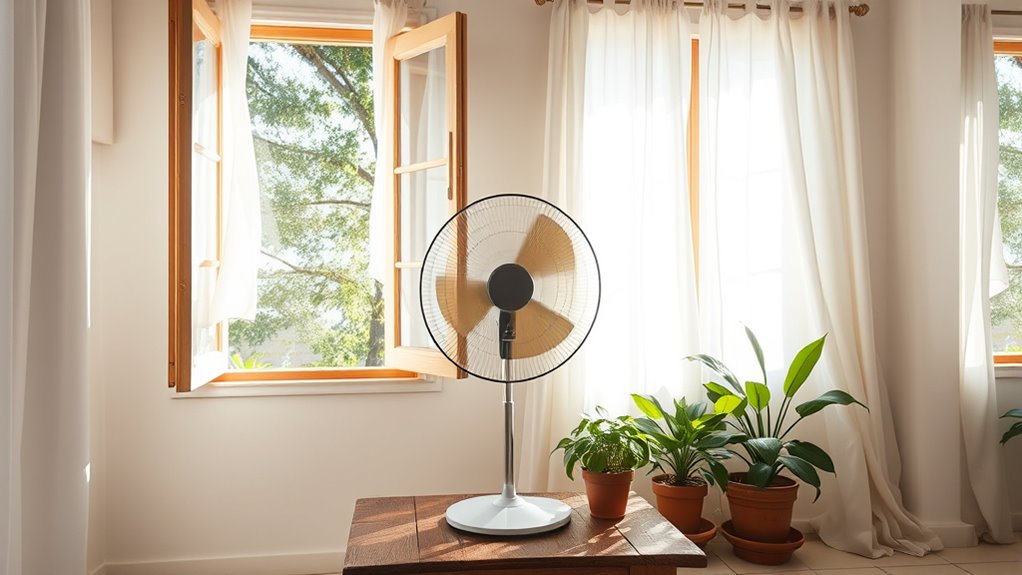

To boost comfort without AC, focus on maximizing natural airflow and using fans strategically. Position windows and vents opposite each other to create cross ventilation, and open them during breezy days for fresh air. Use fans near openings to direct air across your body, enhancing cooling. Incorporate shading devices, external barriers, and greenery to reduce heat gain. Keep exploring ways to create a cooler, more comfortable space without relying on mechanical cooling.
Key Takeaways
- Use strategically placed fans near windows or doorways to enhance cross-ventilation and direct airflow across indoor spaces.
- Open windows on opposite sides of the room to create natural breezes and improve air circulation.
- Avoid blocking airflow with furniture or heavy curtains to maximize natural ventilation efficiency.
- Incorporate shading devices like overhangs and external barriers to reduce indoor heat gain and support passive cooling.
- Enhance airflow with ceiling and portable fans, adjusting angles to cover larger areas or target specific spots for comfort.
Understanding How Airflow Affects Indoor Comfort
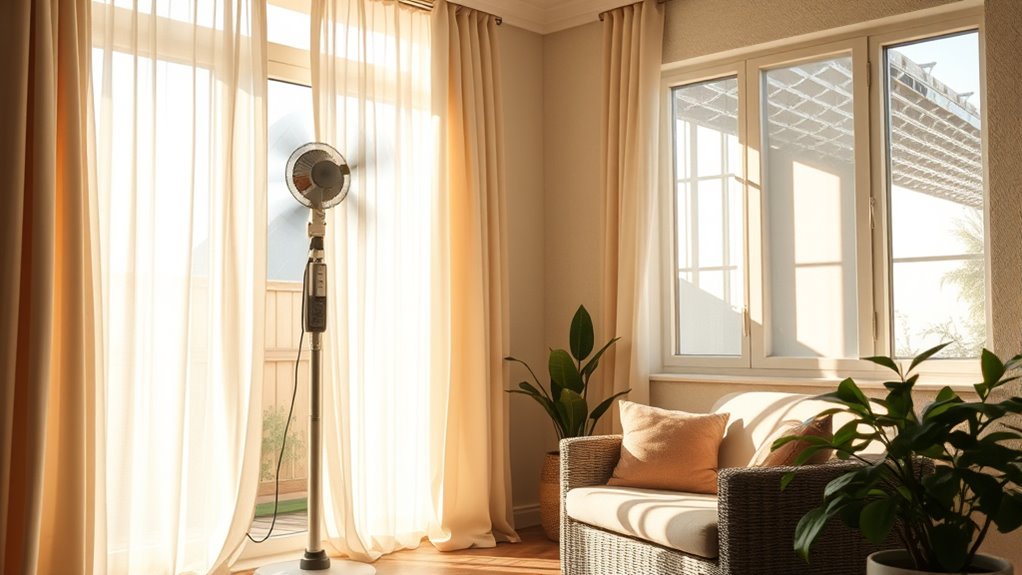
Airflow plays a critical role in determining indoor comfort because it directly influences how you perceive temperature and air quality. Understanding airflow patterns helps you see how air moves within a space, affecting ventilation efficiency. Well-designed airflow ensures fresh air reaches every corner, reducing stuffiness and removing indoor pollutants. When airflow is uneven or stagnant, you might feel uncomfortable, even if the temperature is ideal. Proper airflow encourages air exchange, making your environment feel cooler and fresher without the need for air conditioning. By optimizing airflow patterns, you can create a more comfortable indoor space, improve air quality, and promote a healthier living environment. Recognizing how airflow impacts comfort is key to implementing effective natural ventilation strategies. Additionally, understanding the importance of airflow patterns can help you better manage indoor environments for maximum comfort.
Effective Use of Fans to Enhance Cooling
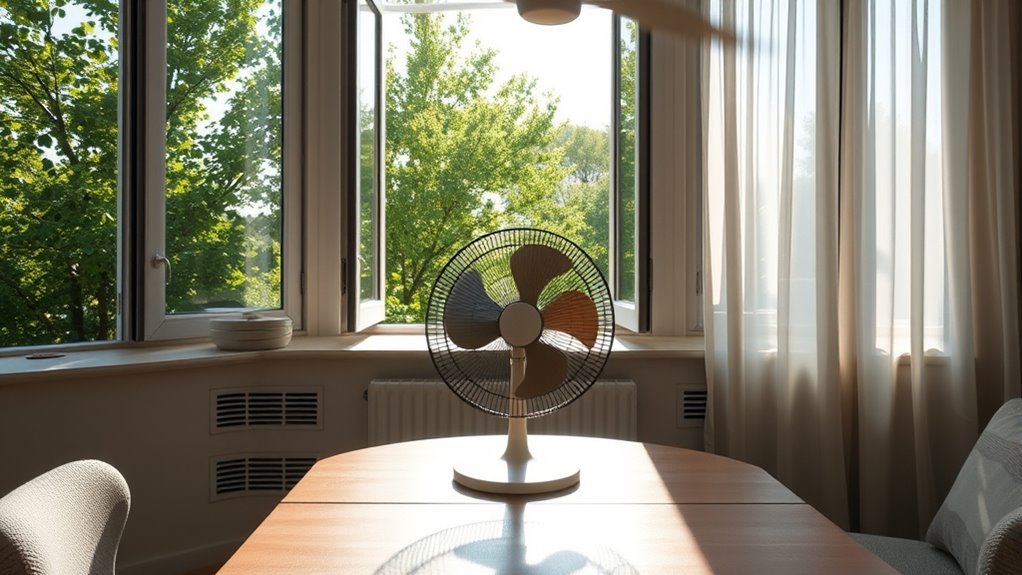
Fans are a practical tool for boosting indoor comfort by enhancing cooling through improved air circulation. To maximize their effectiveness, focus on fan placement. Position fans where they can direct air across your body, such as near windows or doorways, to create a breeze that cools you directly. For ideal air circulation, avoid blocking airflow with furniture or curtains. Adjust fan angles to cover larger areas or target specific spots. Use ceiling fans in tandem with portable fans to circulate air evenly. Here’s a quick guide:
| Fan Placement | Effectiveness |
|---|---|
| Near open windows | Draw in cooler outside air |
| Aiming at ceilings | Distribute air throughout the room |
| Facing downward | Cool the air directly at occupant |
| Moving air across space | Maximize overall air circulation |
Additionally, understanding key traits of successful software quality assurance engineers can help in maintaining consistent quality in your environment.
Cross Ventilation Techniques for Optimal Air Movement
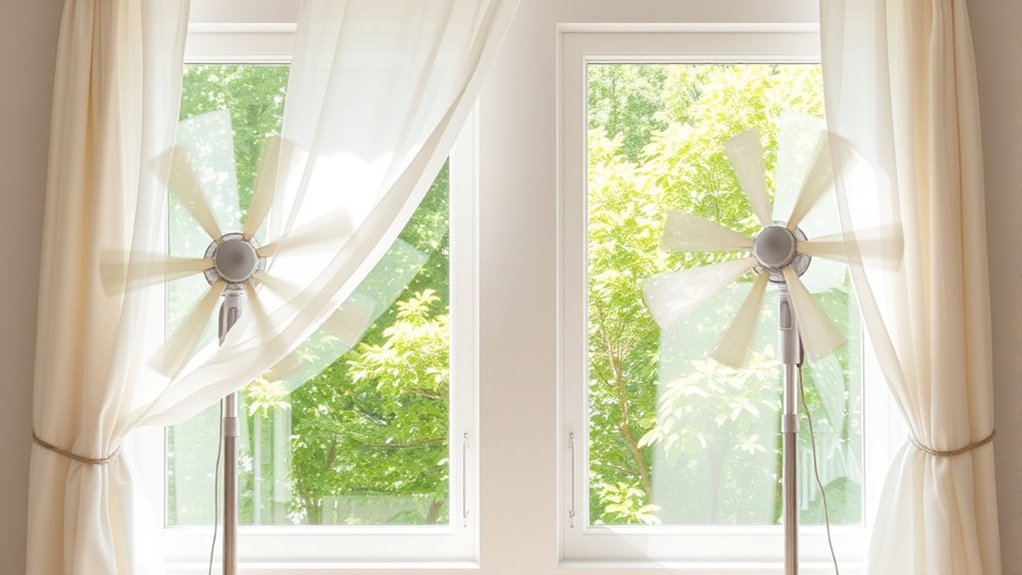
You can improve airflow by strategically placing windows to create effective cross ventilation. When indoor and outdoor air flow work together, fresh air circulates more efficiently through your space. Focusing on proper window placement makes a noticeable difference in maintaining a comfortable environment. Additionally, ensuring that windows are opened in a way that promotes airflow efficiency can enhance the benefits of natural ventilation.
Strategic Window Placement
Have you ever wondered how the strategic placement of windows can substantially enhance cross ventilation? Proper window positioning creates effective airflow pathways, allowing fresh air to enter and stale air to exit naturally. To maximize this, place windows on opposite sides of your space, aligning them with prevailing winds. Consider the height and size of windows; larger and higher openings encourage stronger airflow. Avoid obstructions that block airflow pathways, such as furniture or curtains. Use operable windows to control airflow based on weather conditions. By carefully planning window locations, you can facilitate continuous cross ventilation, reducing indoor temperatures and improving air quality. Strategic window placement isn’t just about aesthetics; it’s a practical way to harness natural airflow for a cooler, more comfortable environment. Understanding natural airflow patterns is essential for designing effective ventilation strategies.
Indoor-Outdoor Air Flow
Effective indoor-outdoor air flow relies on strategic cross ventilation techniques that harness natural breezes to optimize airflow throughout your space. By positioning windows and vents opposite each other, you create a pathway that encourages fresh air to flow continuously, improving indoor air quality and maintaining healthy ventilation rates. Think about how a steady current of air can sweep through your home, reducing stuffiness and pollutants. Visualize:
- Opening windows on opposite sides during breezy days
- Using vents or door gaps to facilitate airflow
- Aligning rooms to maximize cross-ventilation potential
These tactics help you leverage natural breezes, enhancing indoor air quality while reducing reliance on mechanical systems. Proper cross ventilation ensures consistent air movement, boosting comfort and maintaining healthier indoor environments. Incorporating natural ventilation strategies can significantly decrease your dependence on fans and air conditioning, fostering a more sustainable living space.
Strategic Placement of Windows and Vents
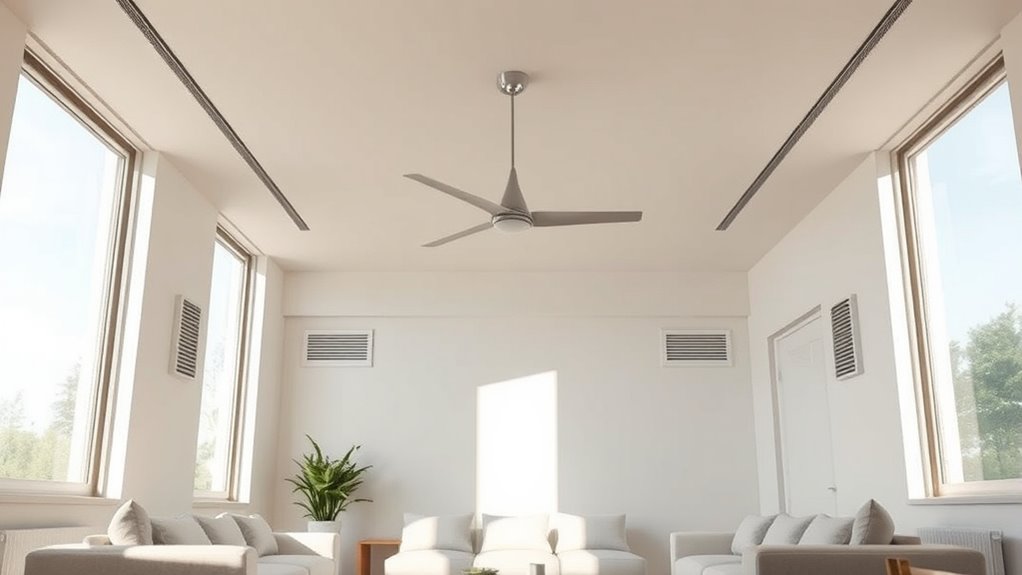
Strategic placement of windows and vents plays a crucial role in harnessing natural ventilation effectively. By positioning windows on opposite sides of a room, you create a cross-breeze that improves indoor air quality and keeps your space cooler. Consider the ventilation system types in your home; some rely on passive airflow, so their effectiveness depends on window placement. High vents can draw stale air out, while lower windows allow fresh air in. You want to optimize airflow paths, ensuring air enters where it’s warmest and exits where it’s most stale. Proper placement minimizes the need for mechanical cooling and enhances comfort naturally. When planning your layout, think about prevailing winds and how you can use window and vent locations to maximize airflow and refresh indoor spaces efficiently.
Utilizing Natural Shading and External Barriers
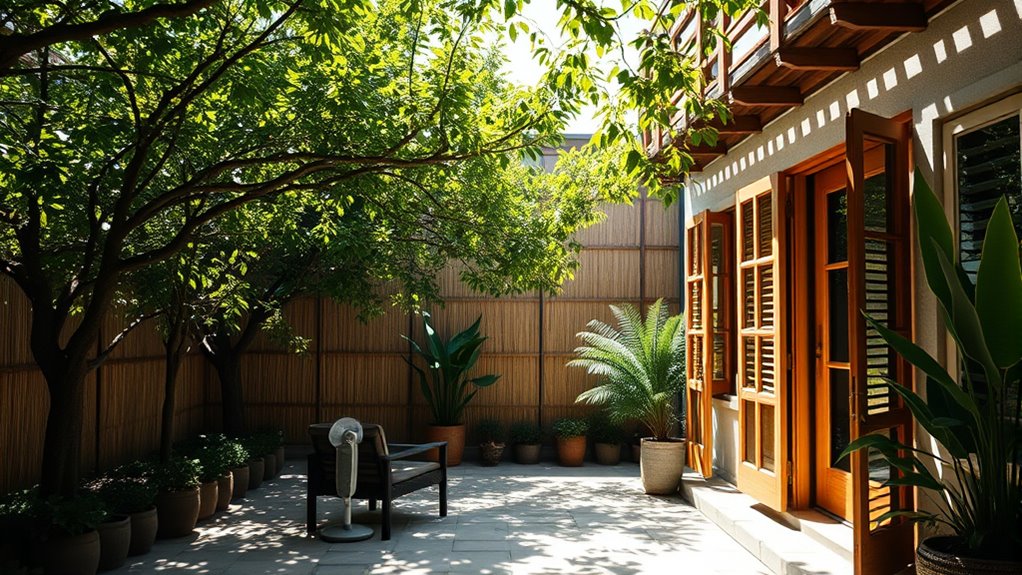
You can reduce indoor heat gain by strategically placing trees to shade your building and using overhangs that block direct sunlight. External barriers, like fences or screens, also help protect your space from unwanted heat and noise. Implementing these natural shading methods enhances ventilation and keeps your environment cooler naturally. Additionally, incorporating ventilation techniques such as cross-ventilation can further improve airflow and comfort inside your space.
Strategic Tree Placement
Planting trees thoughtfully around a building can considerably reduce indoor temperatures by providing natural shade and acting as external barriers against heat gain. Tree shading from shade trees minimizes direct sunlight, lowering indoor heat and creating cooler outdoor spaces. Proper placement guarantees that sunlight is blocked during the hottest parts of the day, while still allowing airflow.
- Position shade trees on the south and west sides for maximum shade during peak heat.
- Select fast-growing, broad-canopied trees to optimize shading effects.
- Maintain distance from building walls to prevent moisture issues and ensure air circulation.
Building Overhangs Effectiveness
Building overhangs are an effective way to enhance natural shading and create external barriers against heat gain. These shade structures block direct sunlight from entering windows and doors, reducing indoor temperatures without mechanical cooling. Properly designed overhangs extend beyond the building facade, providing shade during the hottest parts of the day while allowing sunlight in during cooler periods. They work best when tailored to your climate and sun angles, maximizing their cooling benefits. Building overhangs also protect exterior walls from sun damage and weathering. By incorporating these external barriers, you improve energy efficiency and comfort naturally. Overhangs are a simple yet powerful tool for passive cooling, helping you stay cooler without relying on fans or air conditioning.
External Barriers Benefits
External barriers, such as shade structures and screens, play an essential role in reducing heat gain and enhancing indoor comfort naturally. They block direct sunlight, keeping interiors cooler and less reliant on mechanical cooling. Additionally, external barriers assist in airflow regulation by guiding breezes toward your space while blocking unwanted heat and wind, improving ventilation efficiency. Incorporating natural materials into external barriers can further enhance their effectiveness by blending with the environment and providing additional insulation.
Incorporating Greenery to Cool Indoor Spaces
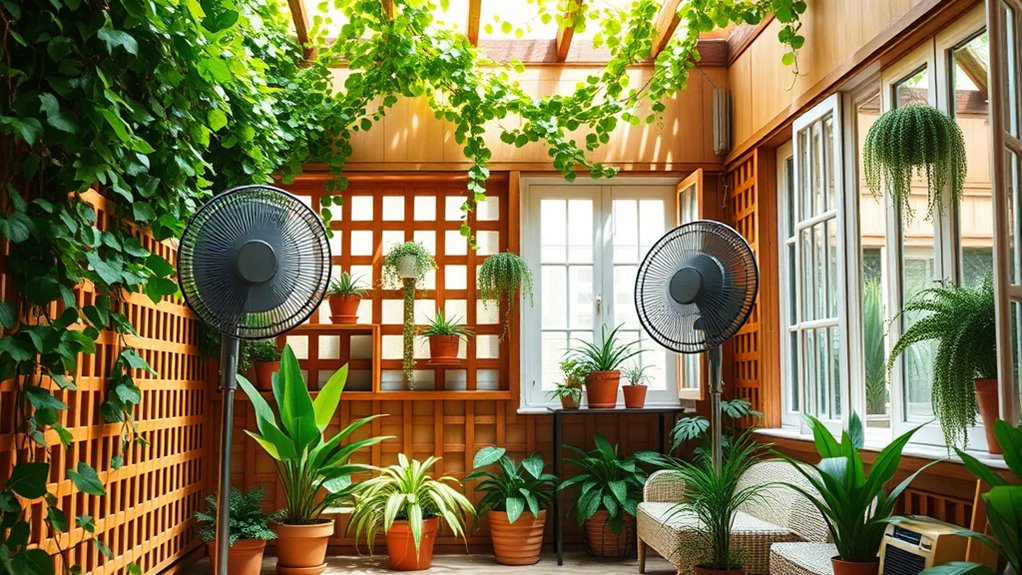
Incorporating greenery into indoor spaces offers an effective way to naturally reduce temperatures and enhance comfort. Plant-based cooling works by lowering ambient temperatures through evapotranspiration, providing a invigorating environment. Green wall benefits extend beyond cooling; they improve air quality, add aesthetic appeal, and promote well-being. By integrating plants strategically, you can create a natural insulation barrier that minimizes heat gain. Green walls and indoor gardens absorb heat and release moisture, helping to keep indoor spaces cooler without relying on energy-consuming systems. Additionally, greenery fosters a calming atmosphere, making your space more inviting. Understanding store hours such as those for Ulta Beauty, Credo Beauty, Sally Beauty Supply, Sephora, and The Detox Market can also help plan visits to pick up plants and supplies conveniently. Embracing plant-based cooling techniques is a simple, sustainable way to boost comfort and reduce reliance on mechanical cooling methods.
Smart Design Tips for Passive Cooling
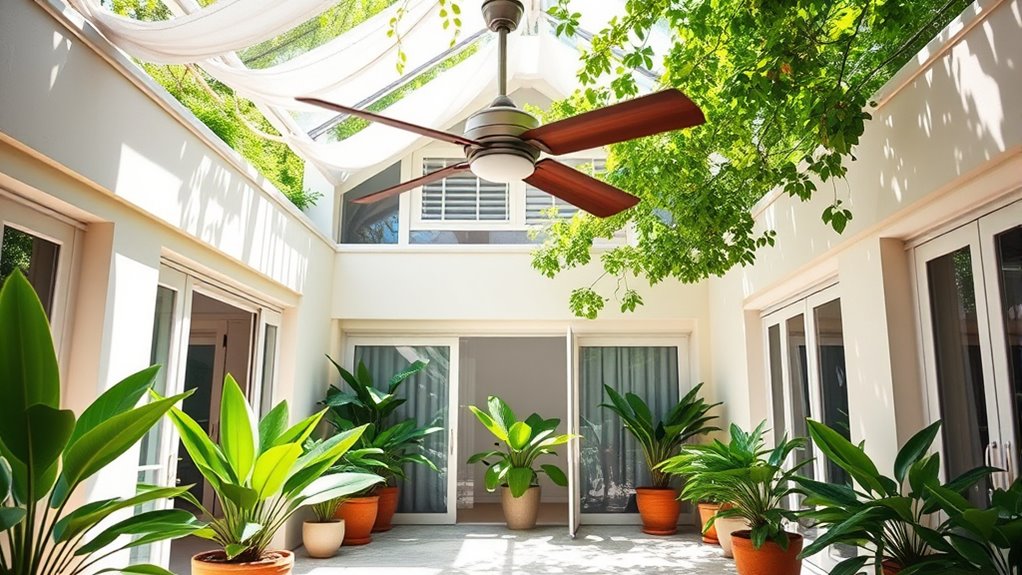
Strategic design choices can markedly enhance passive cooling in indoor environments, reducing reliance on energy-intensive systems. You can optimize thermal insulation to keep heat out during summer and retain warmth in winter, balancing comfort year-round. Incorporate daylight harvesting by designing windows and skylights to maximize natural light without increasing heat gain. Consider the following tips:
- Use high-quality thermal insulation in walls and roofs to minimize heat transfer.
- Design windows and shading devices to control sunlight and prevent overheating.
- Position windows and vents to facilitate cross-ventilation, aided by natural airflow dynamics.
- Employ natural ventilation techniques such as passive cooling strategies to enhance airflow and reduce indoor temperatures.
These strategies work together to create a cooler indoor climate naturally, reducing the need for fans or air conditioning. Smart design not only saves energy but also promotes a healthier, more comfortable living space.
Frequently Asked Questions
How Can Indoor Humidity Levels Impact the Effectiveness of Natural Ventilation?
Indoor humidity levels can substantially affect natural ventilation’s effectiveness. High humidity makes the air feel sticky and uncomfortable, reducing airflow’s cooling benefits. To improve comfort, you should use dehumidification techniques and moisture control methods, like vents or exhaust fans, to lower indoor moisture. This helps promote better air exchange and makes natural ventilation more effective, ensuring you stay comfortable without relying solely on air conditioning.
What Materials Are Best for Enhancing Airflow in Building Design?
When considering materials for enhancing airflow, you should focus on building materials that promote ventilation efficiency. Use porous or perforated materials like brick, timber, or breathable concrete that allow air to pass through easily. Incorporate design features like vents, louvers, or open joints to improve airflow. These choices help create effective natural ventilation, reducing reliance on mechanical systems and increasing comfort in your building.
Can Window Orientation Influence Indoor Temperature Regulation Effectively?
You’ll find that window placement and building orientation play vital roles in regulating indoor temperature effectively. By positioning windows to catch prevailing breezes and aligning your building to optimize airflow, you can naturally cool your space. Proper building orientation ensures better airflow and minimizes heat gain from direct sunlight. These strategies allow you to enhance comfort without relying on air conditioning, making your space more energy-efficient and pleasant.
How Do Climate Differences Affect Natural Cooling Strategies?
You should consider how climate zones and seasonal variations impact natural cooling strategies. In warmer climate zones, you might rely more on natural ventilation and shading, especially during cooler seasons. In contrast, in cooler or more temperate zones, you can optimize cross-ventilation year-round. Understanding seasonal variations helps you adapt your strategies, such as opening windows during cooler nights or using fans to enhance airflow, making your space more comfortable naturally.
Are There Specific Plant Types That Improve Indoor Airflow?
Imagine walking into a room filled with lush, leafy indoor plants like pothos or ferns. These indoor plants naturally enhance airflow by increasing humidity and promoting gentle air circulation. Certain plants, such as snake plants or spider plants, are especially effective for airflow enhancement because they filter air and improve circulation. Incorporating these plants into your space can create a cooler, more comfortable environment without relying on air conditioning.
Conclusion
By harnessing natural breezes and smart design, you transform your home into a invigorating oasis. Picture the gentle sway of curtains as cool air weaves through open windows, whisking away indoor heat. With strategic placement of vents, clever shading, and lush greenery, you create a breezy sanctuary that cools without air conditioning. Embrace these simple strategies, and let your space breathe freely, offering comfort and serenity with every gust of wind.