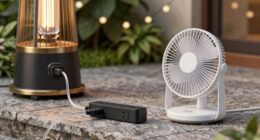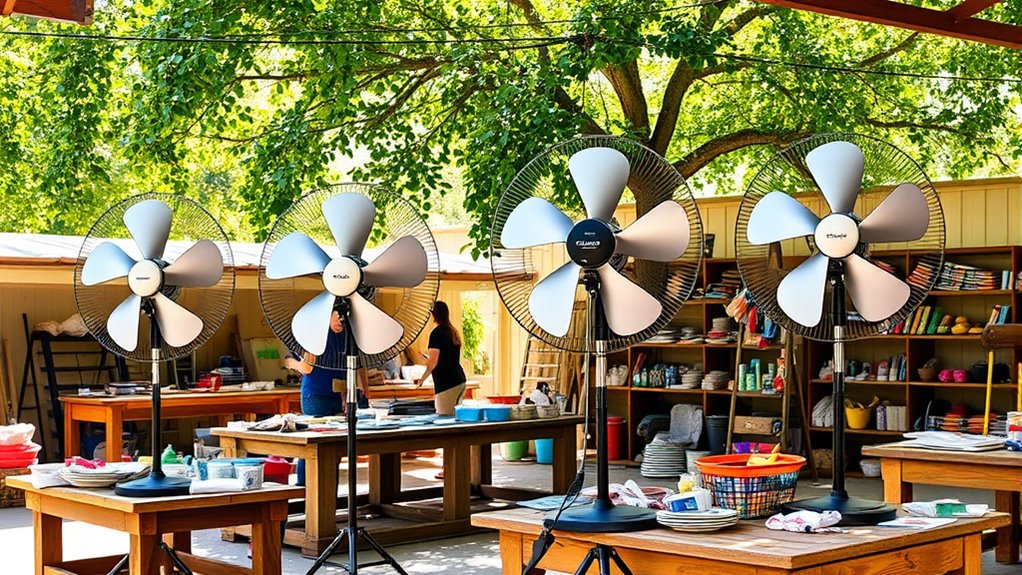

To set up fans in outdoor workshops and craft areas, assess your space to guarantee proper airflow and safety. Position oscillating or ceiling fans to promote cross-ventilation without blowing directly into work zones. Use outdoor-rated fans with secure mounting and keep electrical cords away from water and chemicals. Regularly inspect and maintain fans for safety and efficiency. For detailed tips on choosing and installing the best fans for your workspace, keep exploring this guide.
Key Takeaways
- Assess workspace layout to position fans for optimal cross-ventilation and airflow coverage.
- Use outdoor-rated ceiling or portable fans with adjustable height and tilt features for targeted airflow.
- Place fans securely away from water, chemicals, and flammable materials to ensure safety.
- Incorporate oscillating fans and shields to distribute airflow evenly and prevent blade contact.
- Regularly inspect, clean, and maintain fans and electrical connections for safe, efficient operation.

Are you struggling to keep your outdoor workshop or craft area comfortable during hot days? Installing fans can make a significant difference, but to do it effectively, you need to contemplate proper ventilation strategies and fan safety considerations. Without proper planning, fans might not only be ineffective but could also pose safety risks or cause discomfort. The key is to set up your fans in a way that maximizes airflow while minimizing hazards.
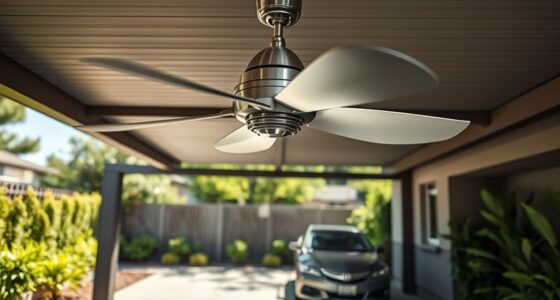
Start by evaluating your space and airflow patterns. Good ventilation strategies involve positioning fans to promote cross-ventilation, which means placing fans on opposite sides of your workspace to encourage a steady flow of air through the area. If natural airflow is limited, consider oscillating fans that can cover a wider area and create more consistent air movement. Ceiling fans can be effective, especially if your workshop has a sturdy structure, but make sure they’re securely installed and rated for outdoor use. For portable fans, choose models with adjustable height and tilt features to direct airflow precisely where it’s needed. Additionally, understanding the different types of fans and their specific benefits can help you select the most suitable options for your outdoor space.
Evaluate your space and use cross-ventilation with oscillating or ceiling fans for optimal airflow.
Fan safety considerations are equally important. Always ensure your fans are rated for outdoor environments to withstand moisture and dust. Keep cords and plugs away from water or damp surfaces to prevent electrical hazards. When setting up fans, avoid placing them near flammable materials or chemicals, and make sure they are stable and secure to prevent falls or tipping over. If you’re using extension cords, use heavy-duty, outdoor-rated ones, and avoid overloading circuits. Regular inspect fans for damage or frayed cords before use. During operation, never leave fans unattended for extended periods, especially if they are oscillating or have exposed blades. Also, make sure that fans are not blowing directly into areas where people are working for extended periods, as this can cause discomfort or respiratory issues. Properly securing and maintaining your fans can help prevent accidents and ensure continuous safe operation.
In addition to positioning, consider airflow direction and speed. High-velocity fans can provide quick relief during extreme heat, but they might also create drafts that cause discomfort or interfere with delicate work. Adjust fan speeds accordingly and use shields or grills if needed to prevent accidental contact with blades. It’s also wise to incorporate safety signage around fans and cords to remind everyone of hazards. Regular maintenance, such as cleaning fan blades and checking electrical connections, ensures safe and effective operation over time. Remember that understanding the Louisiana Alimony Laws and other legal considerations can be crucial if your outdoor workshop is part of a business or shared property, ensuring compliance and safety for all involved.
Frequently Asked Questions
What Safety Precautions Should I Consider When Installing Outdoor Fans?
When installing outdoor fans, you should prioritize safety precautions like ensuring electrical grounding to prevent shocks and short circuits. Check that all wiring is properly protected from moisture and weather elements. Follow fire safety guidelines by avoiding overloading circuits and keeping flammable materials away from the fan. Always turn off power before installation, and consult a professional if you’re unsure about electrical connections. Proper safety measures protect both you and your equipment.
How Do Outdoor Wind Conditions Affect Fan Performance?
Ironically, outdoor wind conditions can sabotage your fan’s performance more than you’d expect. When wind chill is high, it can reduce the fan’s effectiveness by disrupting airflow patterns, making the breeze less noticeable. Strong gusts might even cause instability or redirect airflow, diminishing cooling or ventilation. So, instead of relying solely on fans, you’ll need to take into account wind direction and speed to guarantee ideal airflow and comfort during your outdoor activities.
Are There Specific Fan Models Best Suited for Outdoor Workshops?
When choosing fans for outdoor workshops, you should look for models designed for industrial ventilation, as they handle larger spaces and tougher conditions. Focus on energy efficiency to save costs and guarantee continuous operation. Opt for fans with durable, weather-resistant features, and consider those with adjustable speeds for better airflow control. These factors help you select the best fans to maintain a comfortable, well-ventilated outdoor workspace.
How Should I Maintain Outdoor Fans for Longevity?
Did you know regular fan maintenance can extend an outdoor fan’s lifespan by up to 30%? To keep your outdoor fans in top shape, clean the blades and grills regularly, and check for debris or corrosion. Lubricate moving parts as needed, and store fans properly during harsh weather. These steps help maximize fan maintenance and guarantee your outdoor fans stay effective and durable longer.
Can Outdoor Fans Be Used During Rain or Wet Conditions?
Outdoor fans aren’t designed for use during rain or wet conditions unless they have proper rain protection. You should look for weatherproof fans specifically built for outdoor use, which feature rain protection to prevent electrical hazards. Using regular fans in rain can cause damage or pose safety risks. Always check the manufacturer’s guidelines to make certain your fans are suitable for outdoor environments, especially during wet weather.
Conclusion
Now that you know how to set up fans for your outdoor workshops and craft areas, imagine what you could create with a cool, comfortable space. But don’t forget—proper airflow isn’t just about comfort; it can also be the difference between a successful project and a frustrating one. Are you ready to take the next step and guarantee your workspace stays fresh and inviting? The secret to endless creativity might just be a fan away.