
Patio heaters often fall short of providing the warmth you expect. They usually only heat directly in front of them, so large outdoor areas remain chilly. Wind and weather make them less effective, and you may need multiple units to cover a space, increasing costs. Safety and energy expenses can also be concerns. If you want to understand how to create a more comfortable outdoor space, there’s more to think about beyond just using patio heaters.

Get garden gear delivered free with Prime
- Fast, free delivery on millions of items
- Prime Video, Amazon Music and more included
- Member-only deals all year
Key Takeaways
- Patio heaters often provide uneven warmth, mainly heating only the area directly in front of them.
- Weather conditions like wind and rain significantly reduce heater effectiveness and safety.
- High energy consumption and operating costs may outweigh the perceived comfort benefits.
- Safety risks include fire hazards, burns, and carbon monoxide exposure if not properly maintained.
- They rarely deliver uniform, large-area warmth, making them less effective for overall outdoor comfort.
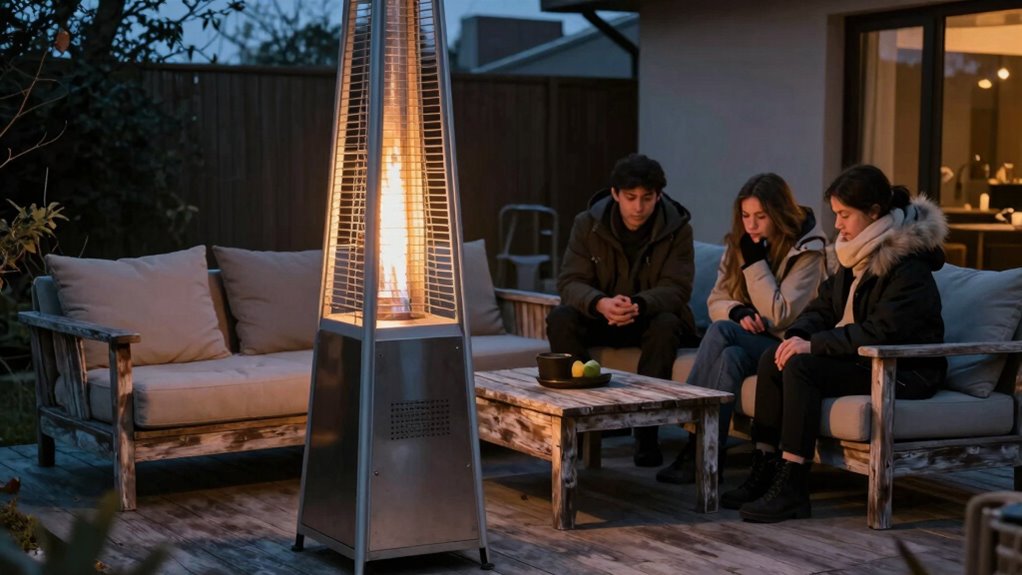
Many people assume that patio heaters will instantly make outdoor spaces comfortable, but in reality, they often fall short. While these devices seem like an easy solution to extend your outdoor living season, their actual performance can be unpredictable. One major issue is energy efficiency. Many patio heaters consume a significant amount of power or fuel, and if you’re not careful, this translates into high operating costs. For example, an outdoor propane heater might keep a small space warm for a few hours, but the cost of refilling tanks can add up quickly. Similarly, electric models often use considerable energy, especially if they’re not well-designed or properly targeted. The result is that you might see only marginal warmth for a hefty energy bill, which defeats the purpose of trying to save money or reduce environmental impact.
Patio heaters often fall short, costing more energy and offering limited, uneven warmth.
Beyond energy concerns, safety issues often make patio heaters less appealing than they seem. Many users underestimate the risks involved. For example, outdoor heaters that rely on open flames or hot surfaces can pose fire hazards if placed too close to furniture, foliage, or other combustible materials. You need to be vigilant about placement and always follow manufacturer safety instructions. Gas-powered models, in particular, require proper ventilation, as the combustion process produces carbon monoxide, which can be dangerous in enclosed or poorly ventilated areas. Even electric heaters aren’t entirely risk-free—overheating or faulty wiring can lead to electrical fires. Plus, the hot surfaces of some models can cause burns if touched accidentally, especially when you’re trying to adjust or move them. Additionally, proper installation and maintenance are crucial for optimal safety and efficiency, as neglecting these can compromise both. Employing preventive safety measures can significantly reduce the risk of accidents and ensure your heater functions properly over time. It’s also important to consider the weather conditions, since wind or rain can further reduce safety and effectiveness, amplifying the need for proper setup.
Another aspect that often gets overlooked is the uneven distribution of heat. Even the most powerful patio heater might only warm a small area directly in front of it, leaving other parts of your outdoor space uncomfortably cold. This means you may end up using multiple units, which increases both energy consumption and safety concerns. Additionally, weather conditions like wind can diminish a heater’s effectiveness, causing you to turn up the heat excessively, further escalating energy use and potential hazards. Moreover, many people don’t realize that proper installation and maintenance are crucial for optimal safety and efficiency. Properly positioned and maintained heaters not only perform better but also reduce the risk of accidents or malfunctions. Without regular upkeep, these units may become less efficient or even dangerous over time.
In the end, patio heaters don’t quite deliver the comfort you expect. They can be costly to operate, pose safety risks if not used properly, and often fail to provide consistent warmth across larger outdoor areas. Before investing in one, it’s wise to weigh these factors carefully. Instead of relying solely on heaters, consider combining them with other strategies like better insulation, outdoor rugs, or windbreaks to truly create a cozy outdoor environment.
outdoor patio heater with wide coverage
As an affiliate, we earn on qualifying purchases.
As an affiliate, we earn on qualifying purchases.
Frequently Asked Questions
Do Patio Heaters Work Effectively in Rain or Snow?
Patio heaters aren’t very effective in rain or snow because their weather resistance is limited, and moisture can hinder their heating efficiency. When rain or snow falls, the heaters can short-circuit or become unsafe to operate. To stay warm in such conditions, you should consider heaters specifically designed for weather resistance, like those with waterproof casings, or use protective covers to guarantee safety and maintain heating efficiency during adverse weather.
How Much Energy Do Patio Heaters Consume Annually?
You might be surprised by the energy consumption of patio heaters, which varies widely depending on size and type. On average, they use about 1000 to 1500 kWh annually, translating to annual costs between $120 and $180. Imagine the flickering glow warming your outdoor space, but keep in mind, this cozy comfort comes with a price—so plan your budget accordingly before turning it on.
Are Patio Heaters Safe for Indoor Use?
Patio heaters aren’t safe for indoor use due to indoor safety and ventilation concerns. They produce carbon monoxide and other fumes that can build up in enclosed spaces, risking poisoning. If you need indoor warmth, opt for electric or vented gas heaters specifically designed for indoor environments. Always prioritize proper ventilation and follow safety guidelines to prevent accidents and health hazards when heating indoor areas.
Can Patio Heaters Be Used for Cooking or Grilling?
Imagine a campfire’s glow, but a patio heater isn’t built for outdoor cooking or grilling. You can’t rely on it for heating effectiveness in preparing meals, as it’s designed solely for warmth, not culinary tasks. Using it for outdoor cooking risks safety hazards and ineffective results. Instead, choose specialized grills or outdoor cookers that deliver the right heat and safety features for delicious, safe meals under the open sky.
What Are the Maintenance Requirements for Patio Heaters?
To keep your patio heater working well, you need regular maintenance. Clean tips include wiping down the exterior and checking for debris, especially around vents. Depending on the fuel type—propane, natural gas, or electric—you’ll have different needs. For propane or natural gas heaters, inspect hoses and connections regularly. Electric heaters require less maintenance but still benefit from dusting and checking for electrical issues to guarantee safety and efficiency.
As an affiliate, we earn on qualifying purchases.
Conclusion
So, next time you reach for that patio heater, think again. Are you truly solving your comfort problem, or just masking it? There’s more beneath the surface—hidden factors that could change everything. Sometimes, what seems like the perfect fix isn’t enough, and the real solution might surprise you. Stay curious, stay cautious. Because when it comes to outdoor comfort, the truth might be more unexpected than you think.
electric patio heater with safety features
As an affiliate, we earn on qualifying purchases.
As an affiliate, we earn on qualifying purchases.
As an affiliate, we earn on qualifying purchases.
Halloween Picks
halloween
As an affiliate, we earn on qualifying purchases.