To support pollinator habitats while staying cool, incorporate native plants with staggered bloom times to provide ongoing food sources and plant them in clusters for easy foraging. Add shade structures like trees, tall grasses, or shaded areas, and mulch around plants to keep soil moist and cool. Include shallow water sources in shaded spots, ensuring they stay clean. By blending habitat features with cooling elements, you’ll create a resilient space for pollinators and learn ways to optimize your garden further.
Key Takeaways
- Incorporate shade trees and tall grasses to provide cooling microhabitats for pollinators.
- Mulch around native plants to retain soil moisture and keep roots cool during hot weather.
- Create shaded water sources like birdbaths or shallow dishes with pebbles for pollinators to hydrate safely.
- Arrange plants with staggered bloom times and clustered groups to reduce pollinator travel and heat stress.
- Avoid pesticides and herbicides; use organic pest control methods to maintain healthy, resilient pollinator habitats.

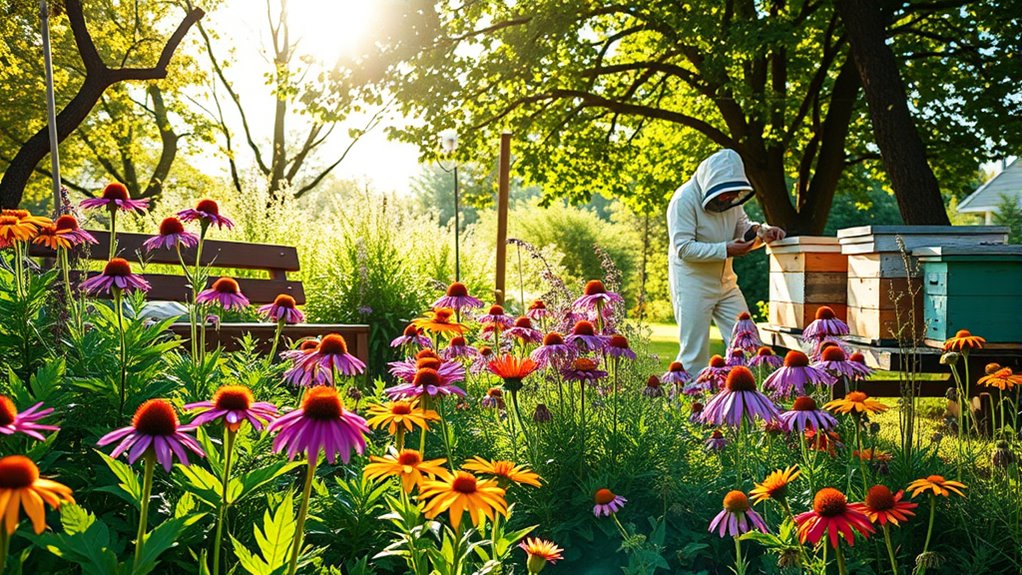
Pollinators like bees, butterflies, and hummingbirds are indispensable for maintaining healthy ecosystems and supporting food production. If you want to boost their populations, focusing on native plantings and thoughtful garden design is key. Native plants are specially adapted to thrive in your local climate and soil, making them more reliable and sustainable choices. When you incorporate native plantings into your landscape, you create a natural food source that attracts pollinators year-round. These plants often produce nectar and pollen that native insects and birds depend on, especially during times when non-native plants might not be blooming. Proper garden design plays an essential role as well. By arranging your garden to include a variety of native flowering plants with staggered bloom times, you guarantee a continuous food supply for pollinators. Positioning these plants in clusters not only makes foraging easier but also creates a more appealing habitat. You should also consider providing shelter elements like small brush piles, nesting boxes, or undisturbed patches of soil to encourage pollinators to settle and reproduce.
When designing your garden, think about creating microhabitats that stay cooler during hot weather. Incorporate shade trees, tall grasses, or shaded areas that reduce the overall temperature, making it more inviting for pollinators during the heat of the day. Mulching around native plantings helps retain soil moisture and keeps roots cool, which benefits both your plants and visiting pollinators. Water sources, such as shallow dishes or birdbaths with pebbles, serve as essential hydration stations, especially during hot weather. Position these in shaded areas to prevent rapid evaporation, and ensure they’re cleaned regularly. This setup provides a safe drinking spot for hummingbirds and bees alike. Additionally, understanding the importance of pollinator habitat preservation can help guide your efforts in creating a more sustainable environment.
In your garden design, avoid using pesticides or herbicides that can harm pollinators. Instead, opt for organic methods and natural pest control techniques. This not only protects the insects but also enhances the overall health of your garden. Creating a diverse landscape filled with native plantings offers continuous blooms and shelter, supporting pollinators throughout their active seasons. By paying attention to garden layout, choosing the right plants, and providing necessary habitat features, you can support essential pollinator populations while keeping your garden cool and thriving during hot days. Your efforts will contribute to healthier ecosystems and a more resilient, productive garden.

Pollinator Garden Live Plant Collection – 8 Perennial Live Plants | Butterfly Weed, Swamp Milkweed, Purple Coneflower & Black-Eyed Susan | Attract Monarchs, Bees & Hummingbirds | Native Perrenials
Plant Size Can Vary with Smaller Foliage Early in Season, but each plug is healthy and ready to…
As an affiliate, we earn on qualifying purchases.
As an affiliate, we earn on qualifying purchases.
Frequently Asked Questions
What Are the Best Plants for Pollinator Habitats in Hot Climates?
In hot climates, choosing the right plants is key for supporting pollinators. You should focus on native plant selection, as these are adapted to your environment and attract local pollinators effectively. Drought-tolerant species like lavender, salvia, and yarrow thrive in high temperatures and require minimal watering. By planting these, you create a sustainable habitat that benefits pollinators while helping you stay cool and conserve water.
How Can I Water Pollinator Gardens Without Increasing Heat?
To water your pollinator gardens effectively without increasing heat, use watering techniques like early morning or late evening to minimize evaporation. Focus on soil moisture strategies such as deep watering to reach roots and mulch to retain moisture. Avoid frequent shallow watering, which can heat the soil further. By sticking to these methods, you help keep the soil cool and moist, supporting healthy pollinator habitats without adding extra heat.
Are There Native Pollinator Species That Tolerate High Temperatures?
Many native pollinator species have high temperature tolerance, making them resilient during hot weather. You can attract these hardy natives, like certain bees and butterflies, by planting drought-resistant flowers that thrive in high temperatures. By choosing species adapted to your local climate, you support pollinators that naturally tolerate heat. This way, your garden remains vibrant and beneficial without worrying about excessive heat stress on the pollinators.
Can Shade Structures Benefit Pollinators During Peak Summer Heat?
Shade structures like shade cloths can substantially benefit pollinators during peak summer heat by aiding temperature regulation. By providing shaded areas, you create a cooler environment that keeps pollinators comfortable and active. Installing shade cloths over flowering plants or nesting sites offers relief from direct sun, helping pollinators thrive and maintain healthy populations. This simple addition supports their well-being while enhancing your garden’s overall health.
How Do I Prevent Pests From Damaging Pollinator-Friendly Plants?
To prevent pests from damaging your pollinator-friendly plants, start by choosing pest-resistant plants that naturally deter pests. Encourage natural pest control by attracting beneficial insects like ladybugs and parasitic wasps, which prey on pests. Keep your garden healthy with proper watering and soil care, and remove any infected plants promptly. Regularly inspect your plants and use organic methods like neem oil or insecticidal soap to manage pests without harming pollinators.

Handmade Metal Flower Garden Stake Small Bird Bath Bowl, Outdoor Pollinator Watering Station for Garden Yard, Hummingbird Fountain Butterfly Bee Water Feeder, Decorative Yard Art Ornament Gift (3 PCS)
Transform your outdoor space with our handmade metal flower garden stakes bird bath—where everlasting garden blooms meet a…
As an affiliate, we earn on qualifying purchases.
As an affiliate, we earn on qualifying purchases.
Conclusion
By planting native flowers, limiting pesticides, and creating sheltered spaces, you become a gardener of hope for pollinators. Think of your efforts as watering a delicate garden of life—each action nurturing tiny wings and busy bodies. Staying cool doesn’t mean you have to turn away from protecting nature’s pollinators; instead, it’s about blending care with comfort. Together, you and your garden can become a thriving oasis, buzzing with vibrant, life-giving energy.

Brut Organic Aspen Mulch 10 QT – Natural Moisture Retainer & Root Protector – Odor-Free, Nutrient-Rich Bark Mulch for Landscaping, Garden Beds & Potted Plants
NATURAL GARDEN COVER: Creates a clean, polished garden surface while helping minimize weed growth naturally. This organic mulch…
As an affiliate, we earn on qualifying purchases.
As an affiliate, we earn on qualifying purchases.

Earth's Ally 3-in-1 Plant Spray for Pests and Disease – Organic Insecticide, Fungicide and Spider Mite Control – OMRI Listed Indoor Outdoor Garden Spray – Safe for Pollinators, Kids and Pets – 32 oz
READY-TO-USE NATURAL SOLUTION – Earth's Ally 3 in 1 Plant Spray is a multi-purpose pest and fungus spray…
As an affiliate, we earn on qualifying purchases.
As an affiliate, we earn on qualifying purchases.