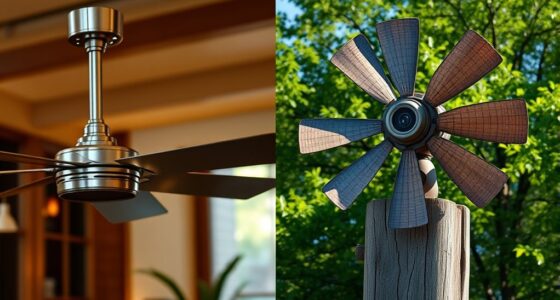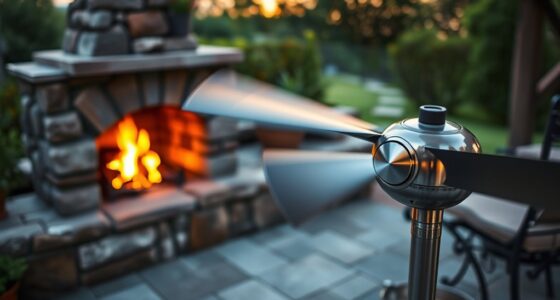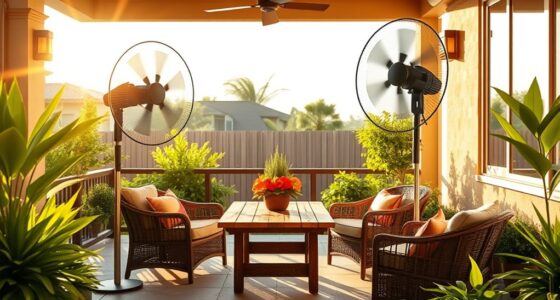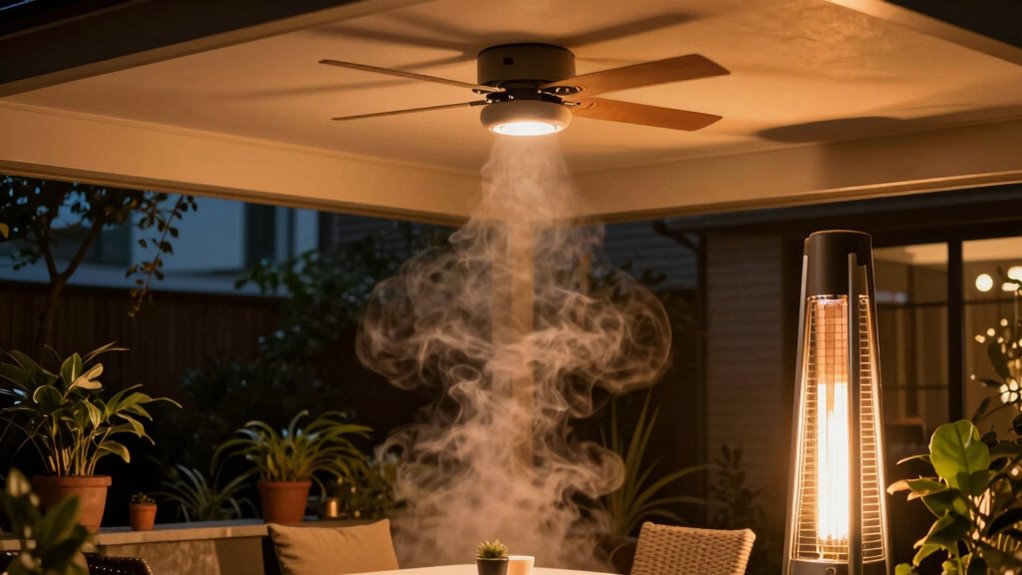

To prevent dangerous CO buildup in enclosed patios with heaters, you need both proper ventilation and fans. Fans help circulate warm air and disperse CO, but they can’t replace venting pathways like exhaust vents or open vents. Continuous airflow from well-placed vents combined with the right fan setup keeps the air fresh and safe. Learn how to balance fans and ventilation for secure heating in your space.
Key Takeaways
- Both ventilation pathways and fans are essential; they work together to ensure proper airflow and prevent CO accumulation.
- Properly installed vents and exhaust systems provide continuous fresh air, reducing the risk of dangerous CO buildup.
- Fans help distribute heat evenly and improve airflow but cannot replace dedicated ventilation routes.
- Regular maintenance and inspection of ventilation and fan systems ensure safety and effective CO dispersal.
- Installing CO detectors adds an extra safety layer, alerting you before CO levels become hazardous.

If you’re heating an enclosed patio, guaranteeing proper ventilation is essential to prevent dangerous carbon monoxide (CO) buildup. When heaters run in an enclosed space, heat distribution becomes a critical factor. Without adequate airflow, heat can concentrate in certain areas, creating hot spots while other zones remain cold. This uneven heat distribution not only affects comfort but also signals poor ventilation. To stay safe, you need to follow safety regulations that specify proper ventilation methods, ensuring fresh air circulates and CO disperses safely. These regulations aren’t just guidelines—they’re legal requirements designed to protect you from health hazards associated with CO poisoning.
Proper ventilation isn’t just about opening windows or doors sporadically; it involves creating a consistent airflow pattern that keeps fresh air entering and stale air, including CO, exiting effectively. Fans are often used to improve heat distribution and air circulation, but they must be employed correctly. Ceiling fans or oscillating fans can help move warm air throughout the space, preventing pockets of stagnant, CO-laden air from forming. However, fans alone won’t replace the need for adequate ventilation pathways—such as vents, windows, or exhaust fans—that ensure continuous airflow. It’s crucial to install and operate these ventilation systems according to safety regulations, which specify airflow rates and proper placement to avoid any buildup. Additionally, proper airflow is vital for maintaining safe indoor air quality and preventing CO accumulation. Ensuring that ventilation systems are regularly inspected and maintained is also key to their effectiveness. Proper airflow management helps optimize safety by reducing the risk of CO buildup while maintaining comfort.
Regularly monitoring CO levels with detectors can help identify dangerous concentrations early, providing an additional safety measure beyond ventilation. When using heaters in enclosed patios, it’s important to keep the area well-ventilated at all times. This means not just relying on fans but also ensuring that ventilation openings are unobstructed and working effectively. You should also regularly check that your heating devices are properly maintained and certified for indoor or semi-enclosed use, as improper or outdated equipment can emit higher levels of CO. Remember, safety regulations often include specific guidelines on the types of heaters permitted and their proper installation. Always follow these standards to minimize risks. Additionally, installing CO detectors in your patio area provides an extra layer of safety, alerting you immediately if CO levels rise. Proper ventilation practices are essential for ensuring a safe environment and minimizing health risks associated with carbon monoxide exposure.
Frequently Asked Questions
Can Electric Heaters Cause Carbon Monoxide Buildup?
Electric heaters don’t produce carbon monoxide, so they’re safe regarding CO buildup. However, for heater safety, it’s vital to ensure proper ventilation strategies in enclosed patios. Always use electric heaters in well-ventilated areas, and consider installing fans or vents to improve airflow. This helps prevent other hazards like overheating or fire risks. Proper ventilation and heater safety measures keep you safe while enjoying your outdoor space.
How Often Should I Check for Gas Leaks?
Ever wonder how often you should check for gas leaks? Regular inspection frequency is key to gas leak prevention. You should check your heaters and connections at least once a month, especially before using the heater. Look for any signs of leaks like smell, hissing sounds, or corrosion. Staying vigilant helps make certain safety and prevents dangerous CO buildup. Don’t skip these checks—your safety depends on it!
Are Portable Fans Effective for Ventilation?
Yes, portable fans can be effective for airflow management, helping to dilute and disperse potentially harmful gases. To maximize their effectiveness, you should focus on proper fan placement—aim the fans toward open spaces or exhaust points. This setup encourages better circulation and reduces the risk of carbon monoxide buildup. Regularly monitor the area with a CO detector, and adjust fan positions as needed to maintain safe, fresh air flow.
What Signs Indicate Dangerous CO Levels?
Imagine smelling a faint, metallic odor—it’s your cue that CO detection is vital. Signs of dangerous CO levels include headache, dizziness, nausea, and confusion. If you feel these symptoms while using heaters, immediately leave the area and seek fresh air. Proper ventilation is essential; make certain your space has good airflow and install CO detectors to alert you early, preventing dangerous build-up of carbon monoxide.
Is It Safe to Leave Heaters on Overnight?
No, it’s not safe to leave heaters on overnight. Proper heater safety involves ensuring good ventilation effectiveness to prevent carbon monoxide buildup. Always turn off heaters when you’re not actively using the space, especially overnight, and never rely solely on fans or ventilation to eliminate CO risks. Regularly check for signs of poor air quality, and use CO detectors to keep your enclosed patio safe while maintaining adequate ventilation.
Conclusion
So, whether you prefer fans or proper ventilation, making certain your patio stays safe is key. Don’t worry—using a fan doesn’t mean sacrificing comfort; it just helps keep fresh air flowing. You can still enjoy cozy evenings without risking carbon monoxide build-up. Just be mindful of your heater’s placement and ensure good airflow. After all, safety and comfort go hand in hand, so relax and enjoy your outdoor space responsibly!