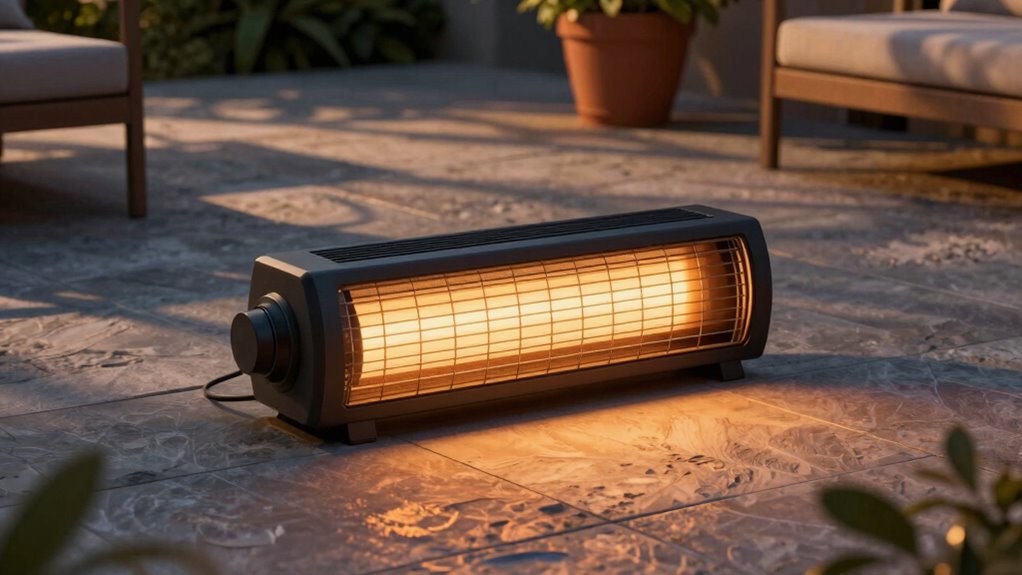

Infrared heat feels different on patios because it warms your body directly, just like natural sunlight, not the air around you. This targeted warmth creates a more comfortable and natural feeling, even in chilly conditions. Unlike traditional heaters, infrared warms your skin and clothes instantly without fumes or smoke. This efficient, personal heat source helps extend outdoor enjoyment while saving energy. If you want to discover why this type of heat is so effective, keep exploring the benefits.

Get garden gear delivered free with Prime
- Fast, free delivery on millions of items
- Prime Video, Amazon Music and more included
- Member-only deals all year
Key Takeaways
- Infrared heat directly warms your body and objects, not the surrounding air, creating a more natural and personal warmth.
- It mimics natural sunlight, providing a comfortable, sun-like sensation rather than the diffuse warmth of traditional heaters.
- Infrared heaters operate silently and without fumes, enhancing outdoor comfort without intrusive noise or odors.
- Targeted heating reduces wind chill effects, making outdoor spaces feel warmer and more inviting.
- The immediate and efficient warmth extends outdoor usability, making patios feel cozier and more comfortable.
Have you ever wished you could enjoy your patio comfortably even during chilly evenings? That’s where infrared heat comes into play, transforming your outdoor space into a cozy retreat. But you might notice that infrared heat feels different from traditional outdoor heaters. The reason lies in how it delivers warmth directly to your body rather than heating the air around you. This targeted warmth creates a unique sensation that’s often described as more natural and comfortable, especially when compared to the diffuse heat from conventional heaters. As you sit under an infrared heater, you’ll feel the heat penetrate your skin, much like the sun’s rays do, which makes it feel more immediate and personal.
One of the biggest advantages of infrared heat on patios is its energy efficiency. Unlike bulky outdoor heaters that consume large amounts of power to warm the surrounding air, infrared heaters focus on heating objects and people directly. This means you use less energy to achieve a comfortable temperature, making it a smarter, more cost-effective choice for outdoor comfort. Because it heats only what’s necessary, you avoid wasting energy on heating empty space, which is common with traditional outdoor heating methods. This efficiency not only helps you save money but also reduces your carbon footprint, making infrared heating an environmentally friendly option for your patio. energy efficiency is a key benefit that aligns with sustainable living practices.
In addition to being energy-efficient, infrared heat enhances outdoor comfort in a way that traditional heaters often can’t match. You won’t feel the chill of the wind as strongly because the heat is absorbed directly into your body. Whether you’re sitting around a table with friends or enjoying a quiet evening alone, infrared warmth creates a cozy environment without the need for excessive or intrusive heating elements. It’s silent, clean, and instantly effective, which adds to the overall outdoor experience. Plus, infrared heaters don’t produce fumes, smoke, or odors, so you can enjoy your patio without any unpleasant smells or health concerns. Interestingly, infrared heat also mimics natural sunlight, which contributes to its comforting and familiar warmth.
In essence, infrared heat feels different because it mimics natural sunlight in how it warms you. It’s more efficient, more targeted, and offers a level of outdoor comfort that traditional heaters struggle to match. When you choose infrared heating for your patio, you’re not just extending your outdoor season—you’re creating a space that feels inviting and warm without wasting energy. That’s a smart, comfortable way to make your outdoor living area more enjoyable year-round.
As an affiliate, we earn on qualifying purchases.
Frequently Asked Questions
How Does Humidity Affect Infrared Heat Perception on Patios?
Humidity levels directly impact your thermal sensation when using infrared heat on patios. Higher humidity makes the air feel warmer because moisture retains heat, enhancing the infrared experience. Conversely, low humidity can make the heat feel less intense and more comfortable. As humidity fluctuates, your perception of infrared warmth changes, either amplifying or diminishing the thermal sensation, so adjusting your setup based on moisture levels can improve your outdoor comfort.
Can Infrared Heaters Cause Skin Burns Outdoors?
Infrared heaters can cause skin burns if you get too close, especially since they deliver intense outdoor warmth. About 10% of outdoor heaters have safety features, but it’s essential to follow infrared safety guidelines. Keep a safe distance, usually around 3 feet, and avoid touching the heating elements. With proper precautions, infrared heat provides cozy, effective warmth outdoors without risking burns, making your patio both warm and safe.
Do Different Materials Absorb Infrared Heat Differently?
Yes, different materials absorb infrared heat differently because of variations in material absorption and surface reflection. You’ll notice that dark, matte surfaces tend to absorb more infrared radiation, warming up faster, while shiny or reflective surfaces bounce it away, reducing heat transfer. When considering infrared heaters, understanding how your patio’s surface interacts with infrared energy can help you optimize warmth and comfort effectively.
How Long Does Infrared Heat Last on Outdoor Surfaces?
Infrared heat typically lasts on outdoor surfaces for about 15 to 30 minutes, depending on the surface’s infrared wavelength and reflectivity. Surfaces with high reflectivity, like metal or polished stone, reflect more infrared energy, so heat dissipates faster. Conversely, porous materials like wood or concrete absorb and retain heat longer. Factors like sunlight, wind, and surface type also influence how long the infrared heat remains noticeable.
Is Infrared Heat Effective in Windy Outdoor Conditions?
They say “a wind can carry away even the warmest words,” and it’s true for infrared heat outdoors. Infrared technology remains effective in windy conditions, but wind can disperse heat faster, reducing outdoor comfort. To maximize warmth, consider shielding your space or choosing infrared heaters with higher power. With proper setup, infrared heat can still provide cozy warmth despite the breeze, making your outdoor space inviting even on blustery days.
outdoor infrared heater for patio
As an affiliate, we earn on qualifying purchases.
As an affiliate, we earn on qualifying purchases.
Conclusion
So, next time you’re basking in that cozy infrared heat on your patio, remember—what feels warm and inviting might actually be a clever illusion. You’re soaking up radiant energy, yet somehow, it’s different than sitting by a traditional fire or heater. Ironically, even though you’re closer to comfort, that infrared warmth can surprise you with its unique feel. It’s a gentle reminder that sometimes, what we expect and what we get are worlds apart—yet, somehow, both still feel pretty good.
electric infrared heater for outdoor use
As an affiliate, we earn on qualifying purchases.
As an affiliate, we earn on qualifying purchases.
portable infrared outdoor heater
As an affiliate, we earn on qualifying purchases.
As an affiliate, we earn on qualifying purchases.
Halloween Picks
halloween
As an affiliate, we earn on qualifying purchases.