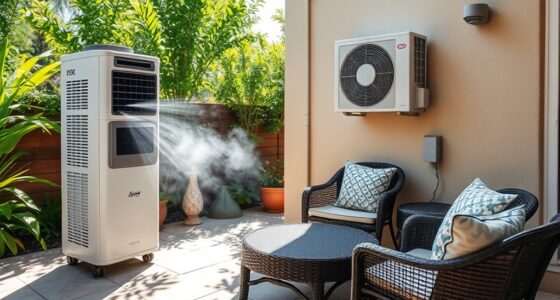
Fans cool you in winter because they increase air movement around your body, speeding up heat transfer through convection and evaporation. Even in cold weather, moving air strips away the warm layer of air that surrounds your skin, making you feel colder. This process, known as wind chill, heightens the sensation of cold by accelerating heat loss. Understanding the science behind this can help you better protect yourself from the chills—keep exploring to learn more.
Key Takeaways
- Fans increase heat transfer from skin through convection, making you feel cooler even in winter.
- Wind accelerates heat loss by removing the warm air layer surrounding your body.
- The sensation of cold depends on air movement, not just actual temperature.
- Wind chill effect causes perceived coldness by enhancing heat transfer from the body.
- Proper clothing and wind barriers reduce heat loss caused by airflow, maintaining warmth indoors or outdoors.
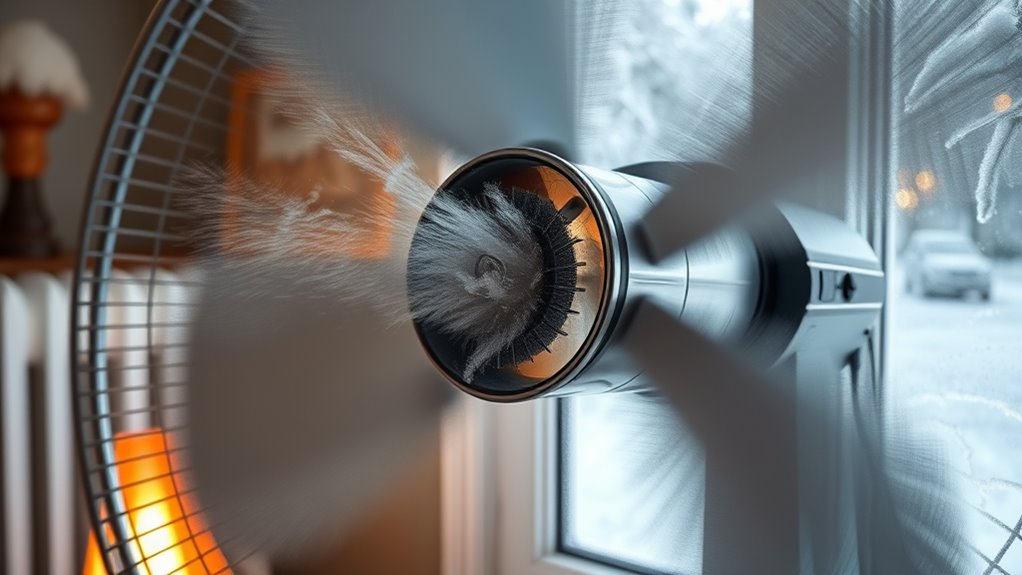
When it’s cold outside and the wind starts to blow, you might notice that it feels even colder than the actual temperature. That sensation isn’t just in your head; it’s rooted in the science of wind chill and how it affects thermal comfort. Wind accelerates heat transfer away from your body, making you feel colder than the thermometer suggests. Your skin loses heat more rapidly because the moving air strips away the warm layer of air that normally surrounds your body, increasing heat transfer from your skin to the environment. This process markedly impacts how cold you perceive the weather to be, even if the actual temperature remains unchanged.
Wind increases heat loss from your skin, making you feel colder than the actual temperature.
In winter, when you’re exposed to wind, the wind chill factor kicks in, lowering your perceived temperature. It’s not just about the air temperature but how quickly your body loses heat through convection and evaporation. Normally, your body maintains thermal comfort through a delicate balance of heat production and heat loss. But when wind speeds pick up, heat transfer from your skin to the surrounding air speeds up, throwing that balance off. That’s why, even on a relatively mild winter day, a brisk wind can make you feel freezing. Your body responds by shivering, trying to generate more heat, but the wind keeps stealing that warmth away. It’s a constant battle between your heat production and the heat transfer caused by the wind.
Understanding the science behind wind chill reveals why fans, even in winter, can cool you down. Fans don’t just circulate air; they increase the rate of heat transfer from your skin through convection. When you’re indoors, a fan can make you feel cooler by removing the thin layer of warm air that clings to your skin. This enhances heat transfer away from your body, lowering your thermal comfort. The same principle applies outdoors during winter, where wind acts like a giant fan, dramatically increasing heat transfer and making you feel colder than the temperature indicates. Wearing appropriate clothing and windbreakers can help reduce this heat transfer, maintaining your thermal comfort despite the chill. Additionally, understanding heat transfer mechanisms helps in designing effective winter clothing and wind barriers.
Furthermore, the concept of convection explains how moving air or water efficiently carries heat away from surfaces, including your skin, which is why enhancing airflow can intensify the feeling of cold. Recognizing the role of air movement in heat transfer can help you better prepare for winter conditions and stay warm. Ultimately, the science of wind chill shows that air movement is a powerful factor in how cold you feel. It’s about more than just temperature; it’s about how quickly heat moves from your body to the environment. Whether it’s a fan indoors or the wind outdoors, accelerating heat transfer can profoundly influence your perception of cold and your body’s ability to stay warm. Recognizing this helps you better prepare for winter weather and understand why protective clothing and wind barriers are essential during chilly, windy days. Knowing how thermal transfer works can also guide the development of more effective winter gear to keep heat in.
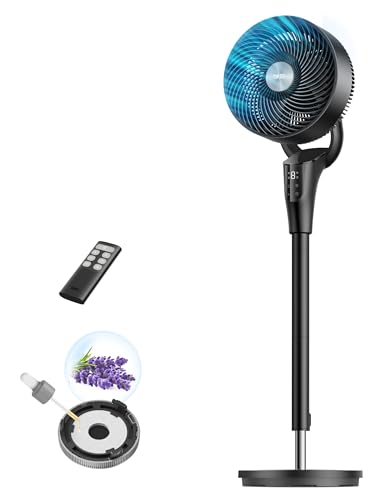
DREO Fan for Bedroom, 2026 Upgraded, 90ft Airflow, 20dB Quiet Fan, 90° Oscillating Standing Fan for Whole Room, DC Motor, 8+H Speeds, 3 Modes, 38-42'' Adjustable Height, 8H Timer, 105° Manual Vertical
𝙐𝙡𝙩𝙧𝙖 𝙋𝙤𝙬𝙚𝙧𝙛𝙪𝙡 𝘼𝙞𝙧 𝘾𝙞𝙧𝙘𝙪𝙡𝙖𝙩𝙤𝙧 𝘽𝙮 𝙐𝙥𝙜𝙧𝙖𝙙𝙚𝙙: Compared with traditional fan for bedroom, the 2026 upgraded air circulator fan…
As an affiliate, we earn on qualifying purchases.
As an affiliate, we earn on qualifying purchases.
Frequently Asked Questions
How Does Wind Chill Affect Human Comfort Indoors?
Wind chill can decrease your indoor comfort by creating drafts that make you feel colder, even if the actual temperature isn’t low. When fans circulate air indoors, they increase the sensation of coolness through evaporation and airflow, disrupting thermal comfort. This effect makes you feel chilly, especially near windows or poorly insulated areas. To stay comfortable, minimize drafts and adjust your heating system accordingly, ensuring a cozy indoor environment despite the indoor airflow.
Can Wind Chill Harm Electronics or Other Sensitive Equipment?
While wind chill isn’t a direct threat to electronics, it can lead to overcooling, which might affect equipment safety. Fans actively promote electronic cooling, preventing overheating but potentially causing excessive cold exposure in sensitive components. To protect your gear, guarantee proper insulation and avoid prolonged exposure to cold drafts. Using fans wisely helps maintain ideal temperatures and keeps your electronics functioning smoothly without risking damage.
Does Wind Chill Impact Outdoor Plants and Gardening?
Wind chill can harm outdoor plants by increasing cold stress, especially during harsh winter days. To protect your garden, use plant protection techniques like mulching, covering vulnerable plants, or moving potted plants indoors. Implement smart gardening strategies such as choosing hardy plant varieties and timing your planting to avoid peak cold. These steps help your garden withstand the cold, ensuring healthier plants and a successful winter garden.
Are There Health Risks Associated With Wind Chill Exposure?
The wind chill can cut through your defenses like a icy blade, posing serious health risks. You’re vulnerable to skin frostbite when exposed too long, and hypothermia risk spikes as your body loses heat faster than it can produce it. Don’t ignore the cold’s silent threat—dress warmly, limit exposure, and stay aware. Your skin’s safety depends on recognizing wind chill’s chill factor before it turns dangerous.
How Does Wind Chill Influence Energy Efficiency in Winter Heating?
Wind chill impacts your winter heating efficiency by increasing heat transfer from your body and indoor spaces. When drafts or wind remove warm air near walls and windows, insulation effectiveness drops, making it harder to retain heat. You can save energy by sealing leaks and improving insulation, reducing the need for continuous heating. This way, you keep your home warmer longer while using less energy, even when wind chill is high outside.

33,000ft Men's Hooded Softshell Jacket Waterproof Lightweight Insulated Windbreaker Fleece Lined Rain Shell Jacket
【WATERPROOF & BREATHABLE】33,000ft men's softshell jacket with hood features 3-layered material with outer soft shell, TPU membrane mid-layer…
As an affiliate, we earn on qualifying purchases.
As an affiliate, we earn on qualifying purchases.
Conclusion
Understanding wind chill helps you see why fans can cool you even in winter. Did you know that wind speed can make the air feel up to 30°F colder than the actual temperature? So, next time you feel a sudden chill from a fan on a chilly day, remember it’s not just the air but how moving air speeds up heat loss from your skin. Stay cozy, but don’t underestimate the power of wind chill!

33,000ft Men's Hooded Softshell Jacket Waterproof Lightweight Insulated Windbreaker Fleece Lined Rain Shell Jacket
【WATERPROOF & BREATHABLE】33,000ft men's softshell jacket with hood features 3-layered material with outer soft shell, TPU membrane mid-layer…
As an affiliate, we earn on qualifying purchases.
As an affiliate, we earn on qualifying purchases.

PlayHot Portable Handheld Turbo Fan with Ice Cooling, Rechargeable Personal Fan, Up tp 12Hrs Cooling, 5 Speed 25550RPM Powerful Portable Fan for Travel, Outdoor, Camping, Hiking (Black)
One Touch Cooling to 60°F – The PlayHot hand hald fan can lower the surface temperature to 60°F…
As an affiliate, we earn on qualifying purchases.
As an affiliate, we earn on qualifying purchases.