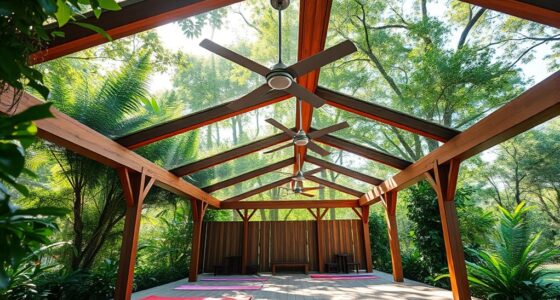
To create a Zen garden with subtle airflow and water elements, start by arranging natural, balanced rocks as focal points and surround them with smaller stones to enhance harmony. Incorporate gentle water features like small streams or basins that produce soft sounds, and position elements to encourage a gentle breeze that moves leaves or moss subtly. Use minimal, low-maintenance plants to maintain serenity. For more ideas on cultivating peaceful design, explore further details below.

Get garden gear delivered free with Prime
- Fast, free delivery on millions of items
- Prime Video, Amazon Music and more included
- Member-only deals all year
Key Takeaways
- Incorporate small, gentle water features like basins or streams to produce soothing sounds and subtle movement.
- Use natural rock arrangements with larger focal stones and surrounding smaller stones for organic flow.
- Select low-maintenance plants such as moss or bamboo to enhance serenity without clutter.
- Position elements to promote a natural airflow, enhancing the calming atmosphere with gentle breezes.
- Maintain simplicity and harmony in design, balancing water, rocks, and plants for a peaceful retreat.

Have you ever wondered how to bring a peaceful, meditative space into your own backyard? Creating a Zen garden is a perfect way to achieve that calm, centered environment. It starts with understanding the importance of thoughtful design, where every element encourages tranquility. One of the foundational aspects is working with rock arrangements. You want to select stones that feel natural and balanced, avoiding overly uniform shapes or sizes. Place larger rocks as focal points, anchoring your design, and arrange smaller stones around them to create harmony. The goal is to mimic natural landscapes, so try to position rocks in a way that feels organic, as if they were part of the landscape long before your garden was designed. This arrangement invites your eye to explore and relax as you move through the space.
Next, you should pay close attention to plant selection. In a Zen garden, plants play a subtle but essential role. Opt for low-maintenance greenery that enhances the sense of simplicity and peace. Consider incorporating moss, bamboo, or Japanese maples—plants that evoke serenity and require minimal fuss. Keep the plant palette restrained; too many varieties can clutter the peaceful aesthetic. Instead, focus on a few well-chosen species that provide texture and contrast without overwhelming the space. When selecting plants, think about their growth habits and how they will complement the rocks and open areas. For example, delicate grasses can soften the edges of stone arrangements, while moss can cover bare soil or rocks, creating a seamless natural look.
As you design your garden, remember that the placement of each element matters. You want to create a sense of flow, guiding your gaze and movement naturally. The rocks should be arranged to foster a feeling of stability and balance, while the plants should be positioned to add subtle color and texture without dominating the scene. Incorporate some gravel or sand to mimic water, and consider adding a small water feature like a basin or a gentle stream to introduce subtle airflow and soothing sound. These water elements, combined with your carefully curated rock arrangements and plant selection, establish a tranquil environment where you can meditate or simply enjoy peaceful moments. Understanding auditory cues such as the gentle sound of water can enhance the calming atmosphere of your Zen garden.
In essence, creating a Zen garden with subtle airflow and water involves deliberate choices in rock arrangements and plant selection. Focus on simplicity, natural harmony, and balance, and your backyard will transform into a serene retreat that promotes mindfulness and relaxation.
Products Worth Considering

Orbit B-hyve XD 4-Port Smart Hose Watering Timer with Wi-Fi Hub

Solo Stove 52.6 Fire Pit Surround – Protective Barrier & Outdoor Tabletop

Orbit B-hyve Smart Indoor/Outdoor 12-Zone Sprinkler Controller
As an affiliate, we earn on qualifying purchases.
Frequently Asked Questions
How Can I Control Airflow Intensity Without Disrupting the Garden’S Tranquility?
To control airflow intensity without disrupting your garden’s tranquility, focus on airflow noise reduction and garden breeze control. Use adjustable vents or dampers to fine-tune airflow, ensuring it remains soft and gentle. Incorporate natural barriers like shrubs or screens to diffuse the breeze subtly. This way, you maintain a peaceful atmosphere, enjoying a gentle airflow that enhances your garden’s serenity without causing noise or disturbance.
What Are the Best Water Features to Enhance Subtle Airflow in a Zen Garden?
To enhance subtle airflow, consider installing a water fountain that gently circulates water, creating calming sounds and light movement. You could also incorporate a misting system that releases fine mist, adding a soothing visual element without disrupting tranquility. These features work together to complement airflow, making your Zen garden more serene. Just guarantee the water features are quiet and discreet to maintain the peaceful ambiance you’re aiming for.
How Do I Maintain the Water Elements to Prevent Algae and Debris Buildup?
To keep your water elements clear, focus on algae prevention by installing a small pump with a filter to circulate water constantly. Regular debris removal is essential—skim leaves and dirt promptly, especially after storms. You can also add beneficial aquatic plants that naturally inhibit algae growth. Maintaining proper water levels and cleaning filters weekly helps prevent buildup, ensuring your water features stay beautiful and healthy with minimal effort.
Can I Incorporate Renewable Energy Sources to Power Airflow and Water Features?
Think of your garden as a symphony where renewable energy plays a crucial role. Yes, you can incorporate solar panels and wind turbines to power airflow and water features sustainably. These sources harness nature’s power, reducing your carbon footprint. By integrating solar and wind energy, you create a harmonious balance between your Zen garden and the environment, allowing your tranquil space to thrive in sync with nature’s gentle rhythm.
What Safety Precautions Are Recommended for Integrated Airflow and Water Systems?
When integrating airflow and water systems, you should prioritize safety by ensuring proper electrical wiring and waterproof fixtures, especially for garden lighting. Use non-toxic, plant-friendly materials and choose your plant selection carefully to prevent damage from moisture. Regularly inspect the system for leaks or electrical issues, and keep electrical components away from water sources. These precautions help maintain a safe, tranquil Zen garden environment.
Conclusion
By designing your Zen garden with subtle airflow and water features, you create a calming retreat that reduces stress and boosts relaxation. Did you know that exposure to calming outdoor spaces can decrease cortisol levels by up to 20%? Incorporating gentle breezes and soothing water sounds transforms your garden into a sanctuary of peace. So, take your time, focus on harmony, and enjoy a serene space that nurtures your well-being every day.