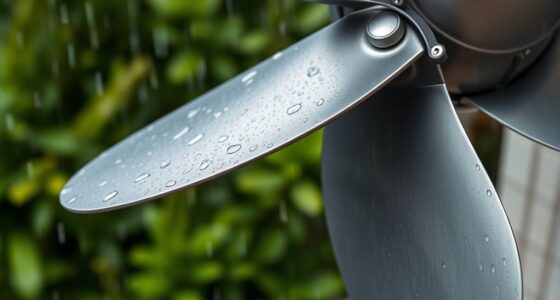
To balance your fan in high wind areas, start by inspecting the blades for dirt, damage, or uneven wear, and clean them thoroughly. Turn on the fan at low speed to observe wobbling, then use a balancing kit with clips and weights to identify and correct imbalances. Attach small weights to the heavier blades and test again. Proper installation and regular maintenance are essential—continue exploring these tips to keep your fan operating smoothly during gusty conditions.

Get garden gear delivered free with Prime
- Fast, free delivery on millions of items
- Prime Video, Amazon Music and more included
- Member-only deals all year
Key Takeaways
- Use a balancing kit with clips and weights to identify and correct blade imbalance.
- Turn on the fan at low speed to observe wobbling and pinpoint uneven blades.
- Attach small weights to heavier blades and adjust until wobbling reduces.
- Ensure blades are clean, damage-free, and properly aligned before balancing.
- Regularly inspect and re-balance the fan, especially after high winds or storms.

When installing fans in high wind areas, proper balancing is vital to guarantee safety and ideal performance. Wind resistance can put extra stress on your fan blades and mounting, so ensuring the fan is well-balanced helps prevent vibrations, noise, and potential damage. To achieve this, start with solid installation tips: choose a sturdy mounting bracket that can withstand gusts, and double-check that all fasteners are tight. A loose connection can compromise the fan’s stability when wind pressure increases, so secure everything carefully.
Once your fan is installed, the next step is to focus on balancing the blades. Imbalanced blades can cause wobbling and uneven wear, especially when strong winds hit. To assess this, turn on the fan at low speed and observe its operation. If it wobbles or makes noise, it’s a sign that the blades need adjusting. You can use a balancing kit, which typically includes clips and weights, to fine-tune the blades. Attach the clip to a blade and run the fan again. If the wobbling diminishes, move the clip to other blades until you identify the one causing the imbalance. Once identified, add small weights to the heavier blade to offset the imbalance.
Balance fan blades with a kit to reduce wobbling and noise during high winds.
Wind resistance plays a major role in how your fan performs under high wind conditions, so it’s vital to choose the right blades designed for such environments. Look for fans with aerodynamic blades that are specifically made to handle gusts without losing stability. When balancing, ensure the blades are free of dirt, debris, or damage, as these can affect wind resistance and cause uneven rotation. Additionally, selecting a reliable custodian for your fan’s maintenance can help ensure proper servicing and prolong its lifespan.
Regular maintenance is key to keeping your fan balanced. Over time, dust and debris can accumulate on blades, shifting the balance. Periodically inspect and clean the blades, and recheck their balance if you notice unusual vibrations or noise. During storms or high wind events, consider temporarily shutting down the fan if you see excessive wobbling or damage, as operating under imbalance can worsen wear or cause failure.
fan balancing kit with clips and weights
As an affiliate, we earn on qualifying purchases.
As an affiliate, we earn on qualifying purchases.
Frequently Asked Questions
Can Balancing a Fan Reduce Noise Caused by High Winds?
Balancing a fan can definitely help reduce noise caused by high winds. When you perform fan blade adjustments, you guarantee the blades spin smoothly, which minimizes vibrations and noise. Applying noise reduction techniques, like tightening loose parts and cleaning blades, also helps. Your goal is to create a balanced, smooth rotation, so the fan runs quietly even in windy conditions. Proper balancing keeps your fan quieter and more efficient.
How Often Should I Check Fan Balance in Windy Areas?
You should check your fan balance regularly, especially in windy areas, to prevent noise and damage. Follow a maintenance schedule that includes inspecting the blades and mounting hardware. Keep an eye on weather monitoring reports and perform checks after storms or high winds. Frequent inspections help catch imbalance issues early, ensuring your fan runs smoothly and quietly, even in challenging weather conditions.
Are There Specific Fan Types Better Suited for Windy Environments?
Think of your fan as a steady sailor in turbulent seas. For windy environments, opt for fans with sturdy blades and robust motors designed for high wind resilience. You want perfect fan blade alignment and exceptional motor stability to prevent wobbling or damage. Look for models with reinforced blades and secure mounts, ensuring your fan can navigate gusty conditions smoothly without losing balance or efficiency, just like a skilled captain steering through storms.
Does Outdoor Fan Placement Affect Balancing Effectiveness?
Your outdoor fan’s placement definitely impacts balancing effectiveness. Proper fan mounting guarantees stability, preventing unnecessary vibrations that can cause imbalance. Additionally, wind shielding around the fan helps protect it from strong gusts, reducing movement and strain. Position your fan in a sheltered spot, away from direct wind exposure, and securely mount it. This setup minimizes imbalance issues and maintains smooth operation, even in high wind areas.
Can Balancing Techniques Prevent Fan Damage During Storms?
Balancing techniques mainly focus on fan blade alignment, which helps reduce vibrations. While proper balancing can minimize wear and tear, it doesn’t fully prevent fan damage during storms. High winds can cause sudden impacts or bending, so it’s essential to secure your fan and check blade alignment regularly. Combining balancing with sturdy mounting and wind-resistant placement offers better vibration mitigation and protects your fan during severe weather.
As an affiliate, we earn on qualifying purchases.
Conclusion
Balancing your fan in high wind areas might seem like a small fix, but it makes a big difference—like quieting a noisy engine or calming a stormy sky. When you take the time to guarantee your fan is properly balanced, you’ll enjoy smoother operation and longer lifespan, even in harsh conditions. Just as a gentle breeze can soothe a restless mind, a balanced fan brings peace of mind, proving that small adjustments can create calm amidst chaos.
As an affiliate, we earn on qualifying purchases.
fan blade cleaning and maintenance tools
As an affiliate, we earn on qualifying purchases.
As an affiliate, we earn on qualifying purchases.
Halloween Picks
halloween
As an affiliate, we earn on qualifying purchases.