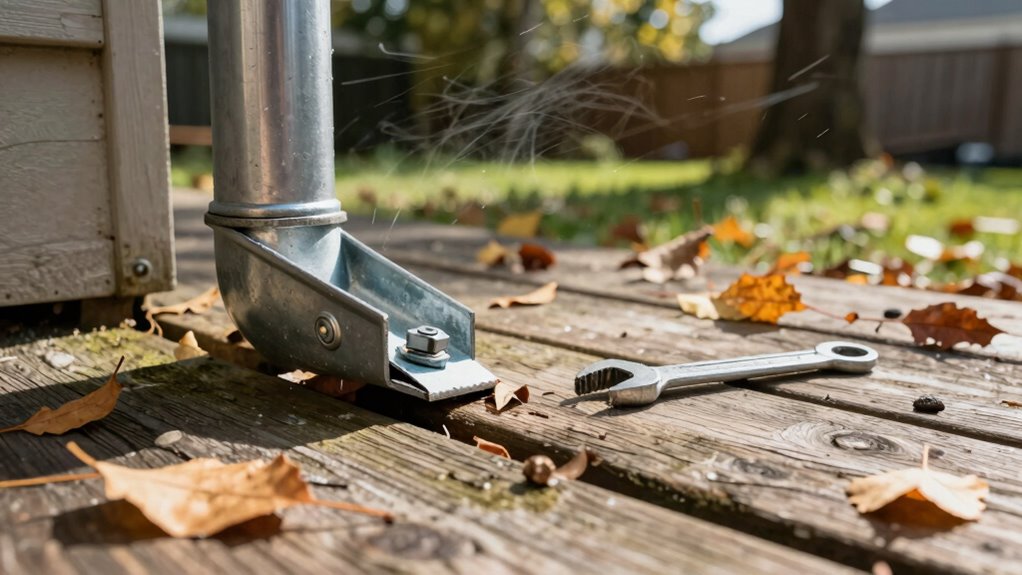

After windy weather, start with a quick visual check of your home’s exterior. Look for gaps, loose shingles, or visible movement around gutters, fascia, and roof edges. Use binoculars from the ground or safely climb a ladder to inspect for any sagging or displaced hardware. Firmly press on gutter corners and flashing to spot loose components. Staying vigilant helps you catch issues early—continue exploring to find more expert tips on keeping your home safe.

Get garden gear delivered free with Prime
- Fast, free delivery on millions of items
- Prime Video, Amazon Music and more included
- Member-only deals all year
Key Takeaways
- Use binoculars from the ground to quickly identify loose or missing shingles and damaged flashing.
- Safely climb a sturdy ladder to visually inspect accessible roof edges, vents, and chimneys for loose hardware.
- Check gutters and downspouts for sagging, detachment, or debris buildup indicating possible loose fasteners.
- Examine fascia and soffits for looseness, cracks, or signs of warping caused by wind impact.
- Conduct a visual walk-around of the exterior, focusing on areas prone to wind damage, to spot loose hardware promptly.

After a windy storm, checking for loose hardware is essential to prevent further damage or accidents. Wind can loosen nails, screws, and other fasteners on your roof and gutters, creating vulnerabilities that might lead to leaks or structural issues. Your first step should be a quick roof inspection. Climb up safely, or use binoculars from the ground if you prefer not to get on the roof, to examine shingles, flashing, and roof edges. Look for missing or damaged shingles, curling edges, or any exposed fasteners. Pay special attention to areas around vents, chimneys, and skylights, as these spots are more prone to wind damage. Tightening loose nails or screws can often be a quick fix, but if you notice widespread damage, consider calling a professional to assess the entire roof’s integrity.
Gutter maintenance is equally important after a storm. Gutters act as your home’s drainage system, and loose or damaged hardware can cause them to sag or detach, leading to water overflow and potential water damage to your siding or foundation. Check the gutters and downspouts for loose brackets and fasteners. If you find any hanging or loose sections, secure them with the appropriate tools and replacement hardware. Clearing out debris is also critical—storm debris can clog gutters and downspouts, preventing proper drainage. Use gloves and a sturdy ladder to remove leaves, twigs, and dirt, ensuring water flows freely. When inspecting gutters, look for any signs of warping or cracks that might have been caused or worsened by the storm, and address these issues promptly.
While inspecting, don’t forget to also examine the fascia and soffits, as these areas are connected to your gutter system and can also sustain storm damage. Loose or damaged fascia boards can cause gutters to become unstable, so tighten or replace any compromised sections. For safety, always use a sturdy ladder and have someone assist you if possible. If you notice extensive damage or aren’t comfortable doing the inspection yourself, it’s wise to hire a professional roofing or gutter specialist. Regular maintenance, especially after severe weather, can save you money and prevent bigger problems down the line. Staying vigilant and proactive ensures your home stays safe and protected from future storms. Additionally, inspecting storm-damaged hardware can help prevent potential safety hazards and ensure your home remains structurally sound. Conducting a hardware inspection periodically is a good practice to catch issues early before they worsen. Using storm damage prevention strategies can also mitigate future risks and extend the life of your home’s exterior components.
As an affiliate, we earn on qualifying purchases.
Frequently Asked Questions
How Often Should I Inspect Hardware After a Storm?
After a storm, you should inspect your hardware immediately and then again within a week to guarantee storm safety and maintain hardware longevity. Regular checks help catch loose or damaged parts early, preventing potential accidents or costly repairs. If you notice any issues, tighten or replace hardware promptly. Consistent inspections after storms keep your property safe and extend the life of your fixtures, giving you peace of mind.
Can Loose Hardware Cause Structural Damage?
Loose hardware can cause significant structural damage, enough to make a building collapse like a house of cards in a hurricane. It compromises material durability and can lead to corrosion, weakening the structure further. Regular inspections help catch these issues early, preventing costly repairs. By ensuring proper corrosion prevention and tight hardware, you protect your structure from the destructive effects of loose fittings and weather-related stress, maintaining safety and longevity.
What Tools Are Best for Quick Hardware Checks?
For quick hardware checks, use a screwdriver or wrench suited to the fasteners you’re inspecting. Keep your tools in good condition through regular tool maintenance to guarantee safety and accuracy during DIY projects. Always prioritize DIY safety by wearing gloves and eye protection while checking hardware. These tools help you efficiently identify loose components, preventing potential damage or accidents. Regular inspections with well-maintained tools keep your property secure and safe after windy weather.
Should I Hire a Professional for Hardware Inspection?
Did you know that improper hardware checks can lead to accidents or damage? Hiring a professional isn’t always necessary, especially if you’re confident with DIY tips and follow safety precautions. For minor issues, you can inspect and tighten hardware yourself. However, if you’re unsure or dealing with complex structures, it’s best to call an expert. Prioritize safety and don’t hesitate to seek professional help when needed.
Are Certain Types of Hardware More Prone to Loosening?
Yes, some hardware types are more prone to loosening due to lower hardware durability or material corrosion. For instance, softer metals or hardware exposed to harsh weather conditions tend to weaken faster, increasing the risk of loosening. Regularly inspecting and tightening these components helps prevent problems. You should focus on hardware made of corrosion-resistant materials like stainless steel or galvanized options, especially in exterior or high-wind areas, to guarantee long-lasting stability.
As an affiliate, we earn on qualifying purchases.
Conclusion
After a storm, think of your home like a ship in choppy waters—small leaks or loose fittings are like tiny leaks in the hull that can sink you later. Just as a captain inspects the ship before setting sail, take a few minutes to check your hardware. I once skipped this step, and a loose shingle caused a small leak that became a bigger problem. Regular inspections keep your home steady and secure, preventing minor issues from turning into major repairs.
As an affiliate, we earn on qualifying purchases.
storm damage gutter cleaning tools
As an affiliate, we earn on qualifying purchases.
As an affiliate, we earn on qualifying purchases.
Fall Picks
fall essentials
As an affiliate, we earn on qualifying purchases.