To check your outdoor fan’s GFCI outlet, press the test button to verify it trips and cuts power, then press reset to restore it. Make sure the weatherproof cover is intact and fully closed to protect against moisture. Inspect the area for water or dampness that could affect safety. Regularly perform these checks and replace any damaged covers or faulty outlets promptly. If you want tips on maintaining safe outdoor electrical setups, keep exploring further.
Key Takeaways
- Regularly press the GFCI’s test button to ensure it trips and cuts power properly.
- Reset the GFCI after testing to confirm it restores power correctly.
- Inspect weatherproof covers for cracks, damage, or missing parts and replace if necessary.
- Check for moisture or standing water around outlets and ensure proper drainage and clearance.
- Test the GFCI outlet periodically to verify it functions reliably for outdoor fan safety.
Outdoor fans can enhance your space, but ensuring their safety is imperative. One of the most important steps is checking your GFCI outlets regularly, especially since outdoor environments expose electrical components to moisture and weather elements. GFCI, or Ground Fault Circuit Interrupter outlets, are designed to cut off power quickly if they detect a ground fault—an unintended electrical path that could lead to shock or electrocution. By testing these outlets often, you help prevent potential hazards, especially when using outdoor fans that are powered by these circuits.
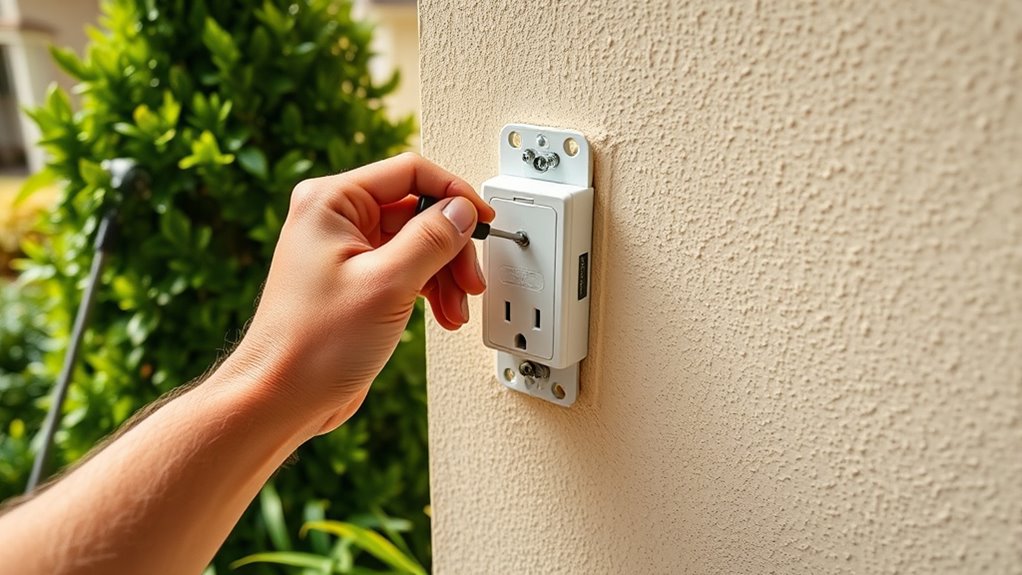
When inspecting your GFCI outlet, start by pressing the test button to ensure it trips and cuts power. Then, press the reset button to restore power. If the outlet doesn’t trip when testing or won’t reset afterward, don’t take any chances—these outlets may be faulty or damaged and should be replaced immediately. Proper functioning GFCIs are essential because they reduce the risk of electrical shock if the outdoor fan or its wiring develops a ground fault. Remember, moisture can cause insulation to deteriorate or create pathways for current to leak, which is why a reliable GFCI outlet is indispensable for outdoor use.
Additionally, it’s imperative to examine the weatherproof cover of your GFCI outlet. Weatherproof covers protect your electrical connections from rain, snow, and humidity, which can compromise safety. A weatherproof cover should fully enclose the outlet, preventing water from seeping inside when your outdoor fan isn’t in use or during storms. Some covers are designed to close automatically when the outlet isn’t in use, adding an extra layer of protection. If your current cover is cracked, broken, or missing, replace it immediately. This simple step goes a long way in preventing electrical shorts, corrosion, and potential shocks.
Keep an eye on the surrounding area of the outlet as well. Ensure there’s no standing water or excessive moisture that could seep into the outlet or wiring. Proper drainage and clearance from wet surfaces are essential, especially when your outdoor fan is in use. If your outdoor fan uses a weatherproof cover, confirm it’s properly installed and functioning as intended. Taking these precautions ensures that your outdoor fan remains a safe and enjoyable feature of your space, without risking electrical hazards caused by ground faults or exposure to weather elements. Regular inspections of your GFCI outlet safety and understanding its features can significantly improve outdoor electrical safety.
Frequently Asked Questions
How Often Should GFCI Outlets Be Tested Outdoors?
You should test outdoor GFCI outlets at least once a month to make certain electrical safety. Regular testing helps prevent electrical hazards, especially during outdoor maintenance or when using outdoor fans. Simply press the test button, then the reset button, to confirm the outlet works properly. Consistent testing keeps your outdoor electrical system safe, reduces the risk of shock, and ensures your outdoor fan and other equipment function reliably in all weather conditions.
Can I Install a GFCI Outlet Myself Without Professional Help?
Think of installing a GFCI outlet as opening a door to safety. You can do a DIY installation if you understand electrical safety and follow proper procedures carefully. However, if you’re unsure or unfamiliar with electrical work, it’s best to consult a professional. Handling electricity with care is essential, and professional help ensures your outdoor fan remains protected without risking accidents or code violations.
What Signs Indicate a GFCI Outlet Needs Replacement?
You’ll want to substitute a GFCI outlet if it trips frequently or won’t reset, which can indicate a ground fault or internal damage. Also, if the outlet shows signs of corrosion, burn marks, or a loose connection, it’s time for a replacement. These issues compromise safety, increasing the risk of electrical shock. Regular testing and inspection help make sure your outdoor fan’s GFCI outlet functions properly and keeps you safe.
Are There Specific GFCI Models Best for Outdoor Fan Safety?
Think of the ideal GFCI as a guardian shield, symbolizing unwavering protection. For outdoor fan safety, you want models renowned for durability and outdoor outlet compatibility. Look for GFCIs rated specifically for exterior use, with weather-resistant features that stand up to the elements. Brands like Leviton and Eaton often lead, offering reliable, heavy-duty options. Choosing the right GFCI guarantees your outdoor fan remains safe and functional in all conditions.
How Does Weather Affect GFCI Outlet Performance Over Time?
Weather can impact your GFCI outlet’s performance over time. Exposure to moisture ingress and corrosion issues can cause the device to malfunction or trip unexpectedly. Rain, humidity, and snow increase the risk of corrosion, degrading internal components. To guarantee safety, regularly inspect your GFCI for signs of corrosion or moisture damage, and consider using weatherproof covers. Proper maintenance helps keep your outdoor fan safe and functioning properly.
Conclusion
Regularly checking your GFCI outlets guarantees your outdoor fan remains safe and functional, preventing electrical hazards. By staying vigilant, you protect yourself and your loved ones from potential shocks or fires. Isn’t it worth taking a few moments now to verify your outlets and enjoy peace of mind during outdoor gatherings? Remember, safety starts with awareness—so make these checks a routine part of your outdoor maintenance. Your safety depends on it.